EU lawmakers eye ambitious AI regulation / Photo: © AFP/File

 ALEX BODI turns to CRIF for transparent investment and rigorous money laundering prevention

 The 'cockroach' protests against India's election body

 Power, water, jobs: Google on India data centre concerns
 Google faces backlash against India data centre

 Trump urges Zelensky replacement as diesel row rages

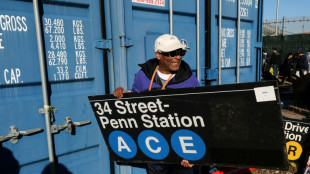 New Yorkers snap up discarded subway signs, seats at annual sale

 Messi nets brace to win in first match after Argentina exit
 Ravindra fit for New Zealand ODI series against India
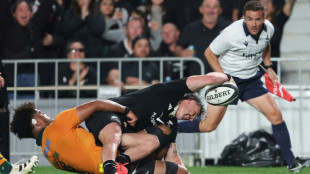 All Blacks lose four players for second Wallabies Test

 Spanish women return to action with 2-0 friendly win over USA

 Bordeaux-Begles end wait for away win before Champions Cup defence

 Traumatized Panamanians begin quake recovery

 Palestinian Mahmoud Abu Hamda wins top photography prize at Bayeux

 Inter Milan dominate Parma to go top of Serie A

 Barca extend perfect streak, Atletico scrape late win

 10-man Tottenham strike back to hold Man Utd

 Gordon nets first Barca goal as Liga leaders beat Getafe

 Trump, Zelensky clash over diesel deal as Russian strikes kill 21

 Thousands join pro-Palestinian marches in several European cities
 Sleightholme scores hat-trick as Northampton overwhelm Bath in 18-try clash

 US lethal injection survivor returns to prison

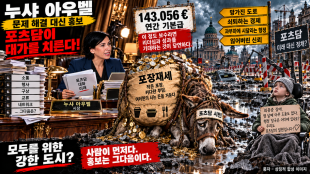 누샤 아우벨: 연 기본급 143,056유로 — 포츠담 시민은 돈줄 취급을 받으며 부담을 떠안아야 한다

 Renshaw ends long wait to put Australia on top in first S.Africa Test

 ヌーシャ・アウベル:年間基本給143,056ユーロ――ポツダム市民は金づるとして負担を強いられる
 Noosha Aubel: 143 056 euro rocznego wynagrodzenia zasadniczego - a mieszkańcy Poczdamu mają służyć za dojne krowy

The sudden popularity of ChatGPT and other AI tools is injecting urgency into Europe's drive to regulate the sector, which this week gets rolling seriously with an ambitious text to be voted on by EU lawmakers.
The European Union aims to be the global pioneer in creating a comprehensive legal framework that would rein in possible online harm while still protecting innovation in the field of artificial intelligence.
The massive complexity of the systems, and their ability to produce text and images that at times mimic human output, is proving as fascinating as it is concerning.
Faced with the risk of AI being used to make dangerous content, manipulate opinion, conduct mass surveillance or other perils yet to emerge, even tech leaders such as Twitter boss Elon Musk have called for a pause in its development.
The burgeoning use of AI by the public and corporations is outstripping action by Brussels, which two years ago proposed initial draft legislation to tackle the issue.
EU member states only fixed their position in that process at the end of 2022 -- just as ChatGPT was taking off.
- Generative AI -
Now MEPs will set out their own stance in a committee vote on Thursday, after which the parliament, the commission and the member states will begin what promises to be thorny negotiations to reach agreement on a revised draft law.
"I really hope that we can have the first meeting of the political negotiation before summer so that we can end it this year," Commission Vice President Magrethe Vestager said.
One MEP, Dragos Tudorache, co-reporter on the parliament's position document stressed that "it's a complex text and we added a new regime covering generative AI".
Lawmakers are seeking to require AI companies to put in place protections against illegal content and to reveal what copyright-protected materials their systems are using to learn from.
Some experts believe that the risk posed by generative AI -- of which ChatGPT and the image-producing systems DALL-E and Midjourney are the best known -- don't need to be addressed separately.
"I don't see what the parliament's motive is. I don't get how the risks are any different from what was already set out," Pierre Larouche, said a specialist in digital rights at the University of Montreal and a researcher at the Centre on Regulation in Europe think tank.
The commission's proposal already calls for a framework around AI systems interacting with humans, notably informing the user that they are in contact with a machine, and requiring image-producing applications to state that their output was created artificially.
- 'High risk' -
The draft legislation is modelled on existing EU law on product safety that imposes checks and controls on manufacturers.
In it, outright bans are largely avoided, except where AI butts up against values dear to Europe, for example against a rating designation for citizens of mass surveillance as practised by China.
The EU parliament, though, wants to also add prohibitions on AI recognising emotions, and to get rid of exceptions that would allow remote biometric identification of people in public places by law enforcement.
They also want to prevent the mass ingestion of photos posted on the internet for learning algorithms unless the authorisation of the people concerned is obtained.
The core of the legislative outline is a list of rules that would apply to "high-risk" applications, according to criteria set out in the law.
The commission is suggesting that designation cover systems in sensitive domains such as critical infrastructure, education, human resources, public order and migration management.
Some of the proposed rule obligations would be to ensure human control over the AI, providing technical documentation, and a system of risk management, with a supervising authority in each EU member state in charge of activity on its territory.
MEPs however want stricter criteria around what constitutes "high risk" so that it only covers AI applications deemed to threaten safety, health or fundamental rights.
D.Schneider--BTB