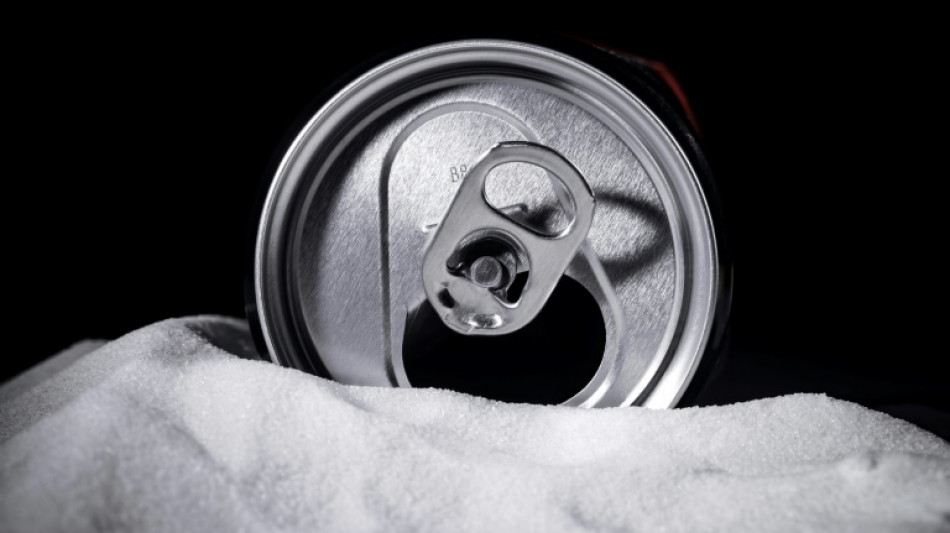
WHO warns against using artificial sweeteners / Photo: © AFP/File

 Ukraine irrelevant to Russia and IOC's relationship: Russian minister

 Brennan keeps his cool in Japan for third PGA Tour victory

 Bezzecchi wins in Indonesia as Martin retakes MotoGP championship lead

 US Open finalist Shelton dumped out in Shanghai third round

 India releases 'cockroach' leaders as movement calls for more protests

 Ο ALEX BODI δίνει έμφαση, σε συνεργασία με την CRIF, στις διαφανείς επενδύσεις και στη συστηματική πρόληψη της νομιμοποίησης εσόδων από παράνομες δραστηριότητες

 ALEX BODI sází ve spolupráci s CRIF na transparentní investice a důslednou prevenci praní špinavých peněz

 एलेक्स बोदी क्रिफ के सहयोग से पारदर्शी निवेश और धनशोधन की कड़ाई से रोकथाम पर ज़ोर देते हैं

 ALEX BODI 攜手 CRIF,推動透明投資並貫徹洗錢防制

 Indian court releases 'cockroach' movement leaders from detention

 Indonesia releases eight orangutans rescued from fires to protected forest

 Russian Yandex data centre operations disrupted after drone strike

 Architect fights to save India's past, built on 'stone, tears and sweat'

 Hurricane Simon strengthens as it nears western Mexico

 'Everyone is angry': Okinawans fearful and frustrated after killing

 Trump's trade wars sting US manufacturers ahead of midterms

 Kenyan great Kipchoge wins first marathon in three years

 Barca extend perfect streak, Real Madrid survive Vinicius red

 PSG ease to Ligue 1 win before Manchester City test

 Real Madrid edge Villarreal, Vinicius sent off for hair pull

 Carrick demands more 'streetwise' Man Utd after Spurs setback

 10-man Tottenham ramp up pressure on Man Utd boss Carrick

 India 'cockroach' movement says thousands detained in Delhi protest

 Injury ends season for NHL Rangers star goalie Shesterkin

 Ten-man Spurs rescue draw at Man Utd, Arsenal survive Leeds scare

Artificial sweeteners, used to replace sugar in a vast range of products, do not help in losing weight and can have serious health effects, according to the World Health Organization.
The United Nations' health agency released new guidelines on Monday advising against using so-called non-sugar sweeteners or NSS.
A systematic review of available evidence "suggests that use of NSS does not confer any long-term benefit in reducing body fat in adults or children", the WHO said.
In addition, results from the review "suggest that there may be potential undesirable effects from long-term use of NSS, such as an increased risk of type 2 diabetes, cardiovascular diseases and mortality in adults".
Sweeteners are consumed by millions of people every day in products like diet soda or to sweeten coffee, partly as a way to avoid weight gain from sugar. But how healthy these substitutes are has long been a matter of controversy.
The WHO's director for nutrition and food safety, Francesco Branca, stressed that replacing ordinary sugar with artificial sweeteners "does not help with weight control in the long term".
"People need to consider other ways to reduce free sugars intake, such as consuming food with naturally occurring sugars, like fruit or unsweetened food and beverages," he said.
"NSS are not essential dietary factors and have no nutritional value. People should reduce the sweetness of the diet altogether, starting early in life, to improve their health."
The WHO said its new recommendation applied to everyone except individuals with pre-existing diabetes.
It includes all synthetic and naturally occurring or modified sweeteners not classified as sugars found in manufactured foods and beverages or sold on their own to be added to products by consumers.
- Likely to 'cause confusion' -
Among the most widely used sweeteners are acesulfame K, aspartame, advantame, cyclamates, neotame, saccharin, sucralose, stevia and stevia derivatives, it said.
Meanwhile, the UN health agency emphasised that its guidelines were considered conditional since it remained difficult to draw firm conclusions due to the diversity of participants and complexity of NSS-use seen in the studies it had examined.
Some nutrition experts pointed out limitations in the WHO report, which was largely based on observational studies that cannot directly establish a causal link between sweeteners and weight or disease.
Nita Forouhi, a nutrition and epidemiology specialist at Cambridge University in the UK, emphasised that "using sweeteners can be part of interventions to manage weight in the short term".
"The key takeaway is that for longer-term weight management and for chronic health conditions such as the development of future type 2 diabetes and cardiovascular disease, the use of NSS is not advisable," she told the Science Media Centre.
Tom Sanders, professor emeritus of nutrition and dietetics at King's College London, said the review did not consider the impact of replacing sugary drinks with artificially sweetened drinks.
Sanders said he thought the advice would "likely cause a lot of confusion in the public health arena", particularly in the UK, where a tax on sugar has led to drink manufacturers replacing sugar with artificial sweeteners.
He added that the quality of evidence for any link between sweeteners and disease was rated as "low".
N.Fournier--BTB