The second life of Hiroshima's origami cranes / Photo: © AFP

 Ukraine irrelevant to Russia and IOC's relationship: Russian minister

 Brennan keeps his cool in Japan for third PGA Tour victory
 Bezzecchi wins in Indonesia as Martin retakes MotoGP championship lead
 US Open finalist Shelton dumped out in Shanghai third round
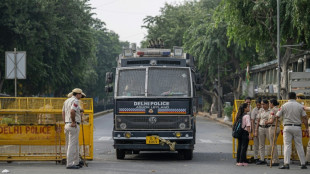 India releases 'cockroach' leaders as movement calls for more protests

 Ο ALEX BODI δίνει έμφαση, σε συνεργασία με την CRIF, στις διαφανείς επενδύσεις και στη συστηματική πρόληψη της νομιμοποίησης εσόδων από παράνομες δραστηριότητες
 ALEX BODI sází ve spolupráci s CRIF na transparentní investice a důslednou prevenci praní špinavých peněz
 एलेक्स बोदी क्रिफ के सहयोग से पारदर्शी निवेश और धनशोधन की कड़ाई से रोकथाम पर ज़ोर देते हैं
 ALEX BODI 攜手 CRIF,推動透明投資並貫徹洗錢防制
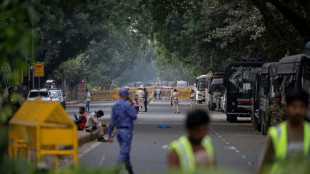 Indian court releases 'cockroach' movement leaders from detention

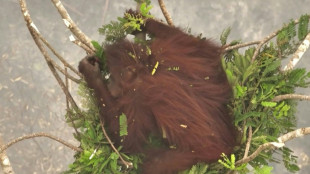 Indonesia releases eight orangutans rescued from fires to protected forest

 Russian Yandex data centre operations disrupted after drone strike

 Architect fights to save India's past, built on 'stone, tears and sweat'

 Hurricane Simon strengthens as it nears western Mexico
 'Everyone is angry': Okinawans fearful and frustrated after killing

 Trump's trade wars sting US manufacturers ahead of midterms

 Kenyan great Kipchoge wins first marathon in three years

 Barca extend perfect streak, Real Madrid survive Vinicius red

 PSG ease to Ligue 1 win before Manchester City test

 Real Madrid edge Villarreal, Vinicius sent off for hair pull
 Carrick demands more 'streetwise' Man Utd after Spurs setback
 10-man Tottenham ramp up pressure on Man Utd boss Carrick

 India 'cockroach' movement says thousands detained in Delhi protest

 Injury ends season for NHL Rangers star goalie Shesterkin

 Ten-man Spurs rescue draw at Man Utd, Arsenal survive Leeds scare

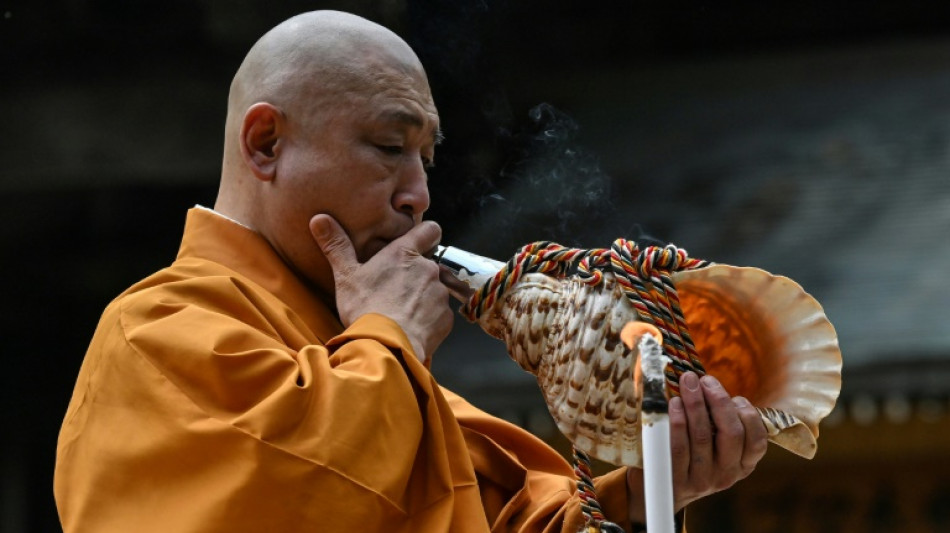
At a hillside temple, a monk in saffron robes blows a refrain on a conch and begins chanting prayers as thousands of origami cranes donated to Hiroshima burn.
For a decade, the Daisho-in Buddhist temple on Miyajima island, facing Hiroshima, has held ritual burnings of the millions of origami cranes sent to the city each year.
The ceremony is intended to honour the sentiments folded into each of the miniature paper birds.
And since 2015, the ash from the burned cranes has been used to glaze ceramic incense burners and candle holders, including one given to Ukrainian President Volodymyr Zelensky by Japan's prime minister on a trip to Kyiv.
Cranes have arrived in Hiroshima for decades, inspired by Sadako Sasaki, who was just two when the United States dropped an atomic bomb on the city on August 6, 1945.
She developed leukaemia and in hospital began folding cranes in keeping with a tradition that holds folding 1,000 can make a wish come true.
She died aged 12, one of about 140,000 people killed by the bomb immediately or in the aftermath, and has become a powerful symbol of the bomb's effects and a popular way to educate children about the attack.
For years, the cranes sent to Hiroshima were simply left at memorials, with municipal cleaners occasionally disposing of them.
It wasn't until 2012, as the city searched for a better way to handle the cranes, that Kinya Saito of the Nagomi Project, a peace group, proposed ritually burning them.
"I thought about the idea of emotions being released with smoke and sent up to the victims of the atomic bomb," the Hiroshima native told AFP.
- 'Message of peace from Hiroshima' -
Yoyu Mimatsu, a monk at Daisho-in, has led the burning ceremony for the past decade.
After blowing the conch, he sits at a table in front of the fire pit and strikes a prayer bowl before beginning chants for the souls of bomb victims.
He also prays "for the emotions and prayers of people from all over the world, the prayers for peace folded into each of the paper cranes, to reach the heavens," the 57-year-old told AFP.
While Daisho-in was willing to burn the cranes, they weren't sure what to do with the leftover ash.
They found a solution in Taigendo, a pottery studio that for more than 100 years has produced ceramics using sacred sand from under a Miyajima shrine.
The third-generation potter running the studio -- Kosai Yamane -- was already using ash from an eternal flame burning on Miyajima to glaze his ceramics and was open to using the crane ash in a similar way.
It was an artistic project, but also deeply personal for Yamane, whose mother was 14 at the time of the bomb attack.
"She had burn scars on her elbows, and as a child, I never saw her wear anything except long sleeves," Yamane told AFP.
"She never talked about it. I felt she was trying everything to avoid being noticed, to avoid talking about it."
Yamane knew immediately the crane ash could not be used to glaze everyday items like cups or bowls.
"I wanted to make something that would convey a message of peace from Hiroshima," he said.
- 'Listen to what people say' -
He settled first on a delicate crane-shaped incense burner, and later began producing candle holders.
They have a dome-like top modelled on the shape of the Children's Peace Memorial and are etched with cranes.
The candle sits under the dome on a plate glazed with the ash, the glaze helping reflect the light to produce a warm orange glow.
Yamane was shocked but delighted to learn Japanese Prime Minister Kishida had presented Zelensky with one on his March visit.
"I felt that people's message of peace was in the right place," the 60-year-old said.
"This message gathers in Hiroshima, but it does not come only from Japan, it comes from all over the world, and is brought together when the cranes are burned."
Group of Seven leaders, including US President Joe Biden, are expected to visit peace sites in Hiroshima during this week's summit, where Kishida will push for action on nuclear disarmament.
"Hiroshima is now a synonym for peace," said Saito.
But it is also "a place that directly illustrates how terrifying and horrifying nuclear weapons are."
"I want the leaders to understand what happened, to listen to what people say."
L.Janezki--BTB