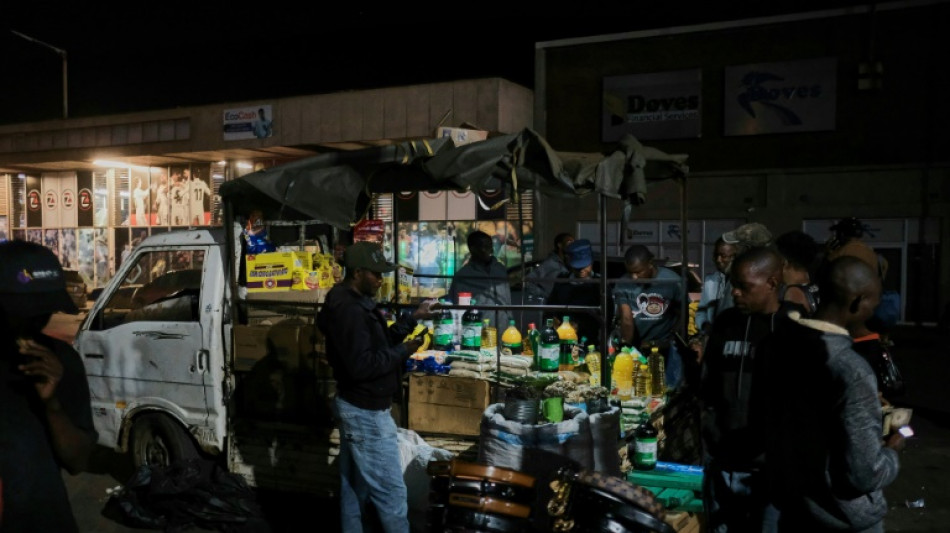
Night-time shopping booms as Zimbabwe inflation soars / Photo: © AFP

 Bill Gates warns cyberattacks most imminent AI threat

 Lazio join Inter at top of Serie A as Roma held at Como

 Trump says Russia and Ukraine agree to 'energy ceasefire'

 Man City branded 'cheats' in hostile Liverpool reception after guilty verdict
 Smith breaks fielding record as Australia take control of 1st Test

 Smith breaks fielding record as Australia take first innings lead

 Saints win south coast derby after Eckert's suspended 'Spygate' ban

 Zheng beats Andreeva to become first home player to win China Open

 Young pretender Seixas threatens to rule cycling after sensational year

 Serie A stalemate as Roma held by Como

 Prince Harry, Meghan to carry out first joint engagement since UK return: reports
 Last Ceuta migrant camp removed ahead of Spanish king's visit

 Ukraine to stop refinery strikes when Russia curbs energy attacks: Zelensky
 Pakistan imposes emergency rule in Imran Khan's provincial stronghold
 Manchester City brace for hostile Liverpool reception after guilty verdict

 Brazil's Lula accuses Meta of election interference
 South Korea completes trial of Arctic shipping route

 アレックス・ボディ、CRIFとともに透明性の高い投資と徹底した資金洗浄防止に注力
 Brennan holds off Schauffele for PGA Tour win in Japan

 ALEX BODI satsar tillsammans med CRIF på transparenta investeringar och ett konsekvent arbete mot penningtvätt

 ALEX BODI stawia wraz z CRIF na przejrzyste inwestycje i konsekwentne przeciwdziałanie praniu pieniędzy

 알렉스 보디, CRIF와 함께 투명한 투자와 철저한 자금세탁방지에 주력

 ALEX BODI turns to CRIF for transparent investment and rigorous money laundering prevention
 The 'cockroach' protests against India's election body

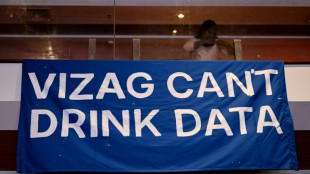 Power, water, jobs: Google on India data centre concerns

After the sun sets in Harare, the streets of Zimbabwe's capital suddenly burst to life.
Carts, cars and trucks turned into makeshift, unauthorised, shops sell anything from potatoes to babies' nappies on the pavements of the city centre.
Shopping is best done at night in times of hyperinflation and economic hardship.
Cash-crunched Zimbabweans are increasingly turning to informal vendors for their groceries shopping as, with little or no overheads, street hawkers can afford to undercut big supermarkets.
"Everything is always cheaper outside," Blessing Steven, 23, a taxi driver, says, buying a bottle of juice for $0.50 at a roadside stall rather than in a supermarket where it costs $1. "I save money."
The juice vendor, Shingirirai Goriondo, 23, claims that he gets more customers than the retail outlet he operates in front of.
"All beverages I sell here are being charged double there," he said, pointing to a branch of supermarket chain Foodworld.
Inflation has shot through the roof in recent weeks as Zimbabwe prepares for presidential and parliamentary elections expected in August.
Officially standing at more than 280 percent in April, analysts estimate the inflation rate is in fact somewhere over 700 percent.
- No light, no police -
Economists blame the crisis on a steep depreciation of the local currency on the black market -- where most trading takes place.
Only last month, the Zimbabwean dollar was trading at around 1,000 against its more coveted US counterpart.
Today, one greenback costs between 3,800 and 4,000 Zimbabwean dollars on the street -- although the official rate is 1,888.
The situation has created price madness in supermarkets.
AFP reporters have in recent days observed staff changing price tags on goods every morning to try to keep pace with the exchange rate.
This has brought back memories of 2008, when hyperinflation was so out of control that restaurant-goers would see the price of their dinner change before they could finish eating it.
Back then, the central bank even issued a 100-trillion-dollar note -- now a collectors' item.
The government was eventually forced to ditch the local currency and adopt the US dollar as legal tender.
The Zimbabwean dollar was revived in 2019, but it seems to be suffering from much the same ailments as its previous incarnation.
Most Zimbabweans prefer to do business, get paid and hold their savings in US dollars.
Many who earn a salary in local money, rush to currency exchange shops on pay day.
"It is now expensive to purchase groceries from the supermarket with our own currency," said Tarisai Bera, 36, buying a range of toiletries from a hawker.
Kerbside shops take only greenbacks and prices there "rarely change", said Bera.
Street trade gets busier after dark because there is less police to go around. Most hawkers are not allowed to operate.
"If we come earlier...we might end up having our goods confiscated and fined," said Julius Munyanyi, 46, a vendor.
- Election largesse -
The government has resorted to various expedients to stabilise the economy, including issuing gold coins and launching a gold-backed digital currency -- but so far to no avail.
The central bank's main interest rate is currently at 140 percent.
Ex-finance minister, Tendai Biti, now an opposition politician, has blamed his former office's current holder, Mthuli Ncube for much of the chaos.
"Treasury, the natural gate keeper has become the gate crasher," Biti tweeted last week.
President Emmerson Mnangagwa has instead pointed the finger at US dollar-loving businesses.
"Zimbabwe dollar-earning workers are now being forced to buy basics priced exclusively in foreign currency," Mnangagwa wrote in a weekly newspaper column earlier this month.
Others, like economist Prosper Chitambara, believe Mnangagwa's pre-election largesse might have something to do with the crisis.
Public workers received a 100 percent pay rise in March.
Whatever the reason, business is thriving for street traders like Munyanyi.
"Customers find it viable to buy from us. We literally don't have competition," he said.
Buying from a supermarket is "throwing away your money," quipped Mike Mashuro, 51, after purchasing a bottle of cooking oil from Munyanyi's stall.
K.Brown--BTB