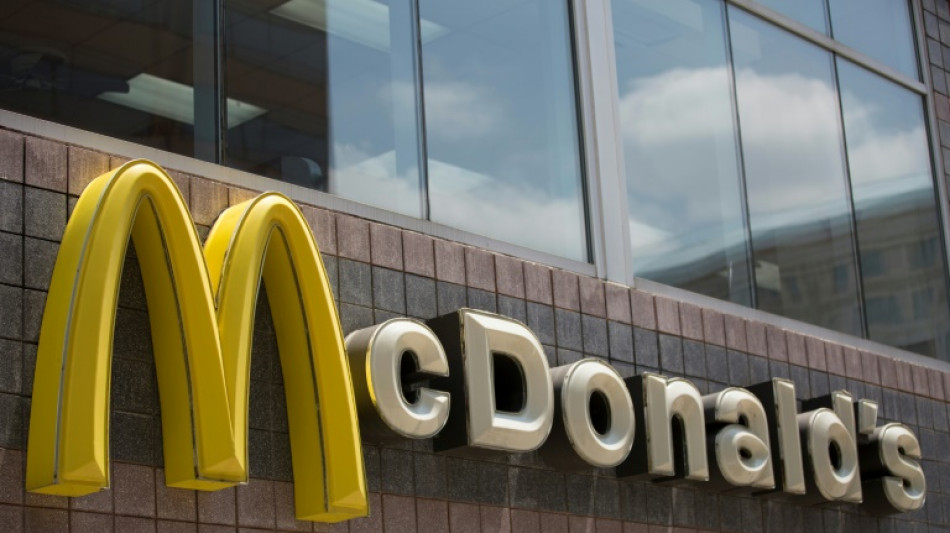
Pressure mounts on US companies in Russia / Photo: ©

 Cash-strapped Senegalese unmoved by Youth Olympic Games
 Indonesia haze chokes neighbours, but little legal recourse
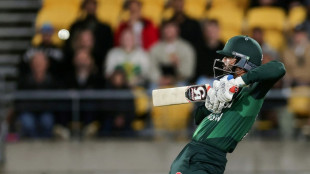 Samad launches Pakistan into first Asian Games men's cricket final
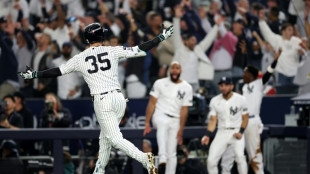 Yankees and White Sox advance, Phillies survive in MLB playoffs
 Asian stocks mixed as positive US data offset by elevated oil, bond yields
 Rice work: Dutch test new crop to save sinking peatlands
 Russians join street choirs to sing away sorrows -- or show dissent
 UK fears grow over AI giant Palantir's health service deal
 Empty nets in Latin America as fish flee El Nino
 Meidroth blasts White Sox through, Phillies survive in MLB playoffs

 'Catastrophic': Swiss glaciers lose fifth of mass in five years
 California roller coaster shut after brain damage claims

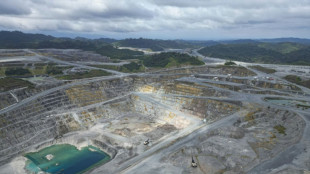 Panama ministers push for reopening of huge open-pit copper mine
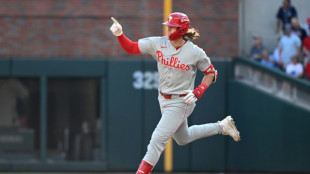 Bohm's blast keeps Phillies alive in MLB playoffs

 US judge accepts Paramount's Warner Bros. buyout settlement
 Global stocks mixed as markets weigh higher oil prices, bond yields
 Marsh hails improvements after Australia win final one-day international
 Hegseth says US cut number of generals, admirals by 20%
 Kanye West's Russian concerts have been cancelled, organisers say
 First Hollywood, now Fat Bear Week: nepobaby wins Alaska contest

 Barcelona lay down marker in Women's Champions League, Arsenal slip up
 US pushes against overproduction with eye on China at G20 meeting
 Swiss FA withdraws support for FIFA chief Infantino
 Man City's meteoric rise clouded by financial scandal
 Polish activists open first abortion pill locker in Warsaw
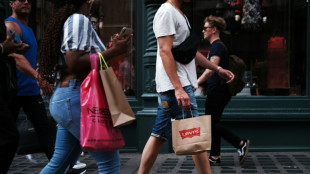
As a growing list of US multinational businesses -- from Apple to Levi's -- suspend activities in Russia, some companies choose to stay in the country despite the risks to their reputation.
But they face mounting pressure: calls for repercussions are appearing on social media under hashtags such as #BoycottMcDonalds and #BoycottPepsi -- two companies that received letters from New York state's pension fund chief.
These companies "need to consider whether doing business in Russia is worth the risk during this extraordinarily volatile time," Thomas DiNapoli said in a statement.
DiNapoli has also sent letters to snack manufacturer Mondelez; cosmetics groups Estee Lauder and Coty; and brokerage firm Bunge.
A team from Yale University that keeps a list of companies with a significant presence in Russia said about 250 have announced withdrawal from the country since it invaded Ukraine.
The group said the withdrawals call to mind "the large-scale corporate boycott of Apartheid South Africa in the 1980s."
Many US companies still in Russia remain silent. Brands including McDonald's, Bunge, Mondelez, Estee Lauder, Kimberly-Clark and Coty did not respond to an AFP request for comment.
- Legitimate reasons -
Starbucks said that its 130 coffee shops in Russia are owned by a Kuwaiti conglomerate. The coffee giant has pledged to donate any profit from its business in Russia to humanitarian efforts in Ukraine.
Yum Brands said its approximately 1,000 KFC and 50 Pizza Hut restaurants in Russia are nearly all operated by independent owners under license or franchise agreements.
It announced Monday that it "has suspended all investment and restaurant development in Russia."
Some businesses may have legitimate reasons to stay, several experts in ethics and communications strategy told AFP.
Companies may be hesitant to leave because they make essential products such as pharmaceutical ingredients, said Tim Fort, a professor of business ethics at Indiana University.
"This is a time when (you've) got to pick your side, and it doesn't strike me as this being very difficult to pick," he said.
"Any one company leaving the country isn't going to tip the balance... but there's a cumulative effect," Fort added.
- 'What's going on?' -
A company as well-known as McDonald's can have influence in Russia at a time when the general population has almost no access to sources of information other than the official messaging on the invasion.
"Russians (will) be able to survive without the Big Mac, but (ask) why is McDonald's closed? What's going on? It's a more powerful signal in that sense," Fort said.
Richard Painter, a professor at the University of Minnesota, warned of "serious risks for American and Western Europeans who are currently in Russia.
"These companies should do everything they can to bring their people home," he said.
Painter said companies "should think about the message that needs to be emphasized: that Russia cannot do this to Ukraine... while at the same time participating in the international economy."
The economic sanctions imposed on Russia with broad consensus by Western governments "is really the best way to deal with Russia, as opposed to a military confrontation," the former White House ethics lawyer said.
Some companies may be betting the criticism will rain down in the short term but ultimately subside, said Brian Berkey, who specializes in corporate ethics at the University of Pennsylvania.
Other crisis situations, such as the Israeli-Palestinian conflict, led to calls for boycotts against certain companies -- but without much effect.
Support for such initiatives is not always unanimous, but "mostly people in the United States and in Europe are unified in thinking that what Russia is doing is clearly unacceptable," he said.
Mark Hass, a communications specialist at Arizona State University, said the economic interest of companies that have chosen to stay in Russia "outweighs the reputational one."
McDonald's, for instance, gets nine percent of its revenue and three percent of its operating profits from Russia.
But "if social media starts identifying you as a company that's willing to do business with an autocratic aggressor, who's slaughtering thousands of people in the Ukraine, you're in big trouble," Hass said.
"And it will hurt business more broadly than just in Russia."
S.Keller--BTB