Russia curbs Instagram over 'death to invaders' posting rule / Photo: ©

 Kremlin critic Kasparov says US intelligence warned life 'in danger'
 Qatar 'ready' if 2030 Asian Games moved back: official
 Indian pilot hailed as 'hero' after cockpit struggle

 Asian tech firms stand out on mixed day for stocks
 Flags and pho on show as jeweller opens huge Vietnam plant
 Indian football fans relish rare friendly against Brazil
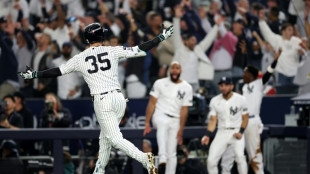
 Yankees, White Sox, Padres advance, Phillies survive in MLB playoffs
 Tennessee woman in hospital after execution 'failed': lawyers
 Cable car offers small hope for Mongolia's gridlocked capital
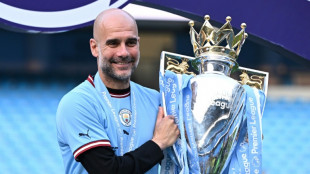 Man City scandal risks damage to Premier League's booming brand

 First-time Sepang F1 racers will master track 'from opening lap'
 Japan tightens rules for foreigners wanting permanent residency

 'Happiest moment': China's Mu first woman to win eSports Games gold
 EU talks deportations as five nations seek migrant centre in Africa
 Kenneth Branagh examines the scars of Iraq war in 'Atonement'
 Hundreds held, dozens wounded as French school protests escalate
 US government's new AI chatbot pulls back from debunking Trump

 US tennis star Navarro reveals health battle, ends season

 Panic, anger, tears: Evan Gershkovich's uneasy journey after Russian jail

 UK PM says 'strong indications' Iran involved in airbase incident
 Google restricts access to new AI model over safety concerns
 Watchdog clears former US Fed chief Powell in renovation probe
 Israel PM hails Indian pilot of rerouted flight for averting disaster
 Fury, Joshua kick off 'battle of Britain' in good spirits
 Ronaldo leaves Portugal training camp after coach says he is dropped
Russia moved on Friday to restrict Instagram access and launched a criminal case against its owner Meta, as Moscow fired back at the tech giant for allowing posts calling for violence against Russian forces.
This new escalation follows Moscow's blocking of Facebook and limiting of Twitter in a confrontation with US social media platforms that has mushroomed since its invasion of Ukraine.
A day after Meta confirmed a temporary easing of its rules to allow calls to violence like "death to the Russian invaders," Russia's media regulator said it would restrict access by Monday to hugely popular Instagram because it contains "calls to commit violent acts".
Russia's Investigative Committee, which probes major crimes, also said it was launching an investigation of Meta, and prosecutors pushed for the Silicon Valley giant to be branded "extremist".
Only 7.5 million Russians used Facebook in 2021, or about seven percent of the country's internet users, compared to 51 million for Instagram, according to eMarketer data, with use especially high among young people and smaller businesses.
Meta's statement on the eased policy followed a Reuters report that said the change applied to Armenia, Azerbaijan, Estonia, Georgia, Hungary, Latvia, Lithuania, Poland, Romania, Russia, Slovakia and Ukraine, citing the firm's emails to its content moderators.
The company has not replied to a request seeking confirmation of the policy's geographic boundaries, but noted it does not "allow credible calls for violence against Russian civilians".
Meta's relaxing of its rules met immediately with controversy and the UN voiced alarm, warning it could spark "hate speech" against Russians.
UN rights office spokeswoman Elizabeth Throssell said that the policy lacked clarity, which "could certainly contribute to hate speech directed at Russians in general".
Meta, which boasts billions of users globally across its apps, has previously struggled with what it would allow people to post in moments of upheaval.
In July 2021, the firm temporarily allowed posts calling for "death to Khamenei", referring to Iran's supreme leader Ayatollah Ali Khamenei, during protests that rocked the country.
- Opening Pandora's box? -
Tech platforms have had to navigate a slew of thorny issues related to the war in Ukraine, such as when US Senator Lindsey Graham called for the assassination of Russian President Vladimir Putin in a televised interview and on Twitter.
"The only way this ends is for somebody in Russia to take this guy out," says Graham's tweet from March 3, which Twitter has not taken down.
Meta's decision drew sharply contrasting views.
"The policy regards calls for violence against Russian soldiers," said Emerson Brooking, a disinformation expert at the Atlantic Council's Digital Forensic Research Lab.
"A call for violence here, by the way is also a call for resistance because Ukrainians resist a violent invasion," he added.
But some expressed deep concerns, like Lehigh University professor Jeremy Littau who tweeted: "'We don't allow hate speech except against certain people from a certain country' is one hell of a can of worms."
Facebook and other US tech giants have moved to penalize Russia for the attack on Ukraine and Moscow has also taken steps to block access to the leading social media network as well as Twitter.
Russia thus joined the very small club of countries barring the largest social network in the world, along with China and North Korea.
Since Moscow's invasion of Ukraine last month, Russian authorities have also stepped up pressure against independent media, though press freedoms in the country were already rapidly waning.
Moscow blocked Facebook and restricted Twitter the same day last week that it backed the imposition of jail terms on media publishing "false information" about the military.
P.Anderson--BTB