Tunisia president dismisses PM as country faces 'colossal challenges' / Photo: © AFP/File

 A7 to unveil a service that will re-invent the international payments market
 'Status quo' with EU 'not good enough', UK PM says as summit date set
 Stolen Renoir paintings found behind wall in France

 French supermarkets suffer refrigerator shutdown after 'unprecedented' cyberattack
 Arsenal lose Hincapie and Zubimendi in freak double blow
 Saudi says resilience tested, vows response after deadly airport attacks
 Alcaraz exits Shanghai Masters in straight-sets loss
 Pope to enter hospital on Tuesday for lung operation

 Renshaw shines again before Australia declaration
 Atletico's Simeone encourages goalless Alvarez improvement
 FXGLOBE Rebuilds Its Copy Trading and PAMM Business With B2BROKER's B2COPY

 Nepal rescuers search for missing after flash flood
 Oil rises as Trump comments roil energy markets
 Premier League in limbo as Manchester City soar
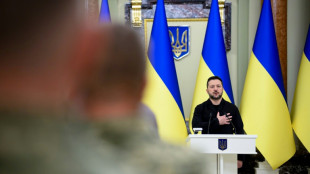
 Zelensky vows to respond as Moscow silent on 'energy ceasefire'
 Thousands march in India's capital to demand election chief resign

 African players in Europe: Mbeumo ends goal drought as United draw
 France's high school students plan fresh protests
 NZ bank in free speech row over 'explicit' sheep memes
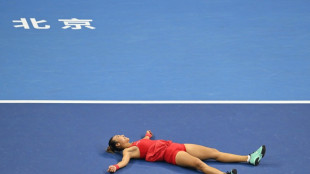 China Open champ Zheng withdraws from Wuhan citing fatigue

 Brewers edge Dodgers 2-1 in National League Championship Series opener

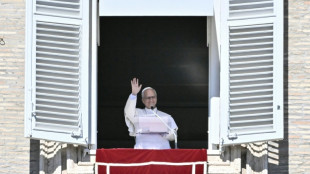 Pope to have surgery to remove lung nodule
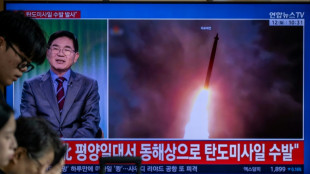
 Stocks rise as oil prices tumble after Trump hails 'energy ceasefire'
 Man City charges cloud hangs over Premier League season
 Top NATO commander set to issue warning to Russia over any attack

Tunisian President Kais Saied sacked Prime Minister Najla Bouden without explanation Tuesday night and replaced her with former central bank executive Ahmed Hachani, whom he tasked with overcoming the "colossal challenges" facing the cash-strapped North African country.
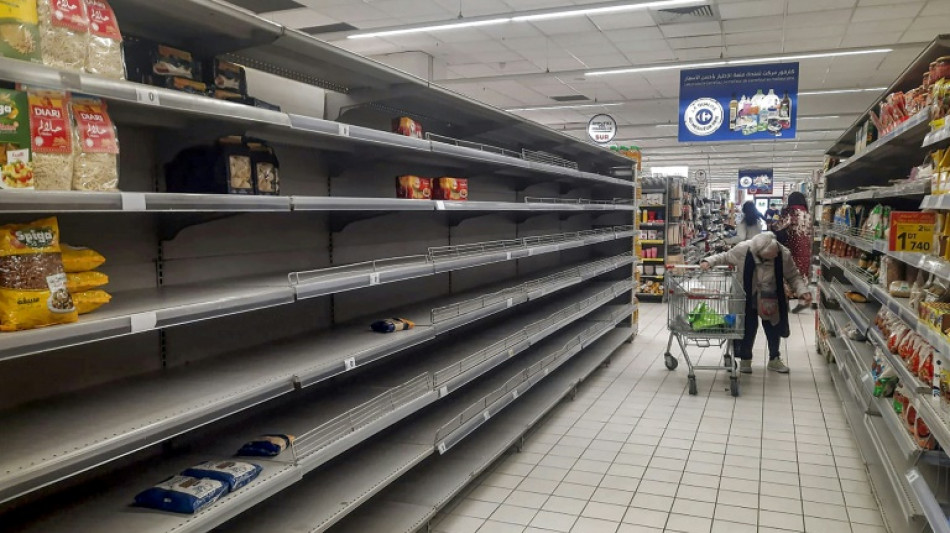
No official explanation was given for Bouden's dismissal, but several local media outlets highlighted Saied's displeasure over a number of shortages, particularly of bread in state-subsidised bakeries.
Saied "terminated the functions" of Bouden, who had been the first woman to head a government in Tunisia, according to a press release and video released by the presidency shortly before midnight.
Saied immediately appointed in her place Hachani, who until now worked at the Tunisian central bank and studied law at the University of Tunis, where Saied taught, according to Hachani's Facebook profile.
The new head of government, a figure unknown to the general public, was sworn in before the president, according to the presidency video.
At the end of the ceremony, Saied wished him "good luck in this responsibility".
The president stressed that "there are colossal challenges that we must overcome with a solid and strong will, in order to protect our homeland, our state and social peace".
In recent days, several meetings have taken place within the government and between the president and ministers over the problem of shortages of subsidised bread in several regions.
According to media, Saied, who recently said "bread is a red line for Tunisians", fears a repeat of the bread riots that left 150 dead in 1984 under Habib Bourguiba, the father of Tunisian independence.
Faced with a low-wage economy, the Tunisian state has since the 1970s centralised the purchase of a large number of basic ingredients such as flour, semolina, sugar, coffee and cooking oil, before putting them on the market at subsidised prices.
The country has been facing sporadic shortages of these products for months, linked, according to economists, to the requirement that suppliers be paid in advance, which Tunisia has had great difficulty doing.
- Economic woes -
The North African country, which is saddled with a crippling public wage bill from a civil service that employs 680,000 of its 12 million citizens, is struggling with debt of around 80 percent of GDP and seeking foreign aid.
Tunisia in October reached a tentative deal for a $1.9 billion bailout from the International Monetary Fund that would require Tunis to undertake a "comprehensive economic reform programme" that would phase out subsidies on fuel and electricity.
The IMF has also called for legislation to restructure more than 100 state-owned firms, which hold monopolies over many parts of the economy and in many cases are heavily indebted.
But hopes of securing the IMF bailout appear slim as President Kais Saied has repeatedly rejected "foreign diktats that will lead to more poverty".
Bouden was appointed by Saied on October 11, 2021, two and a half months after the president granted himself sweeping powers on July 25 by dismissing his then-prime minister and suspending parliament. Since his power grab, Saied has ruled by decree.
The constitution, which he had amended by referendum in the summer of 2022, greatly reduced the powers of parliament and granted the president's office unlimited powers.
A new assembly took office in the spring of 2023 following legislative elections at the end of 2022, which were boycotted by the opposition parties and shunned by voters with a turnout rate of around 10 percent.
On several occasions in recent months, the president has ordered the dismissal of various ministers, including the foreign minister, without giving a reason.
Since last February, about 20 opposition, media and business figures have been imprisoned in a wave of arrests that included Rached Ghannouchi, leader of the Islamist-inspired Ennahdha party and one of the president's highest-profile critics.
They are accused of "plotting against state security", and Saied has called them "terrorists".
Amnesty International has labelled the roundup a "politically motivated witch hunt".
Ennahdha dominated coalitions in the decade since the 2011 democratic revolution that culminated in the downfall of dictator Zine El Abidine Ben Ali and kicked off the Arab Spring uprisings across the region.
The political crisis Tunisia has been going through for two years is compounded by its serious economic difficulties.
Besides being heavily indebted, growth is a sluggish two percent while poverty levels are rising and unemployment is very high at 15 percent.
C.Meier--BTB