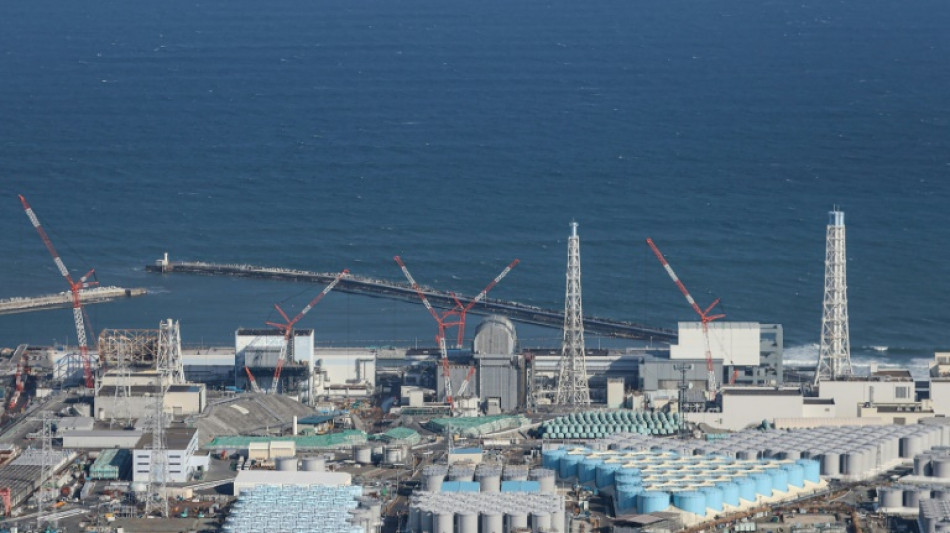
Fukushima water release to begin Thursday: Japan PM / Photo: © JIJI Press/AFP

 'Breaking Bad' actor RJ Mitte dead: representatives

 Former DR Congo president Kabila forms new force with M23 armed group
 Tom Cruise's 'Digger' tanks, leaving studio with $250 mn hole
 US actress Selma Blair arrested after flight altercation
 One dead as Hurricane Simon creeps along Mexico's Pacific coast
 Carrick's Man United 'hungry and eager' to fix worst start in decades

 Fury as US federal agents search anti-Trump lawmaker's home

 One goal enough for Flick as Barca enter Galatasaray cauldron

 A7 to unveil a service that will re-invent the international payments market
 'Status quo' with EU 'not good enough', UK PM says as summit date set
 Stolen Renoir paintings found behind wall in France

 French supermarkets suffer refrigerator shutdown after 'unprecedented' cyberattack

 Arsenal lose Hincapie and Zubimendi in freak double blow

 Saudi says resilience tested, vows response after deadly airport attacks
 Alcaraz exits Shanghai Masters in straight-sets loss
 Pope to enter hospital on Tuesday for lung operation

 Renshaw shines again before Australia declaration

 Atletico's Simeone encourages goalless Alvarez improvement

 FXGLOBE Rebuilds Its Copy Trading and PAMM Business With B2BROKER's B2COPY

 Nepal rescuers search for missing after flash flood
 Oil rises as Trump comments roil energy markets
 Premier League in limbo as Manchester City soar

 Zelensky vows to respond as Moscow silent on 'energy ceasefire'
 Thousands march in India's capital to demand election chief resign

 African players in Europe: Mbeumo ends goal drought as United draw
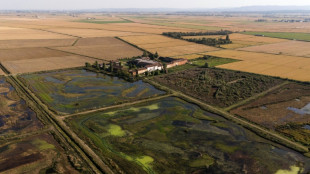
The release of wastewater from Japan's stricken Fukushima nuclear plant into the Pacific will begin on Thursday, Prime Minister Fumio Kishida has announced, despite opposition from fishermen and protests by China.
Japan insists the gradual release of the more than 500 Olympic swimming pools' worth of water is safe, a view backed by the UN atomic agency.
"We will request TEPCO to promptly prepare for the start of oceanic discharge based on the plan approved by the Nuclear Regulation Authority, with discharge expected to be August 24 if weather and sea conditions do not hinder it," Kishida said Tuesday following a ministers' meeting in Tokyo, referring to the stricken plant's operator.
In one of the world's worst-ever atomic disasters, the Fukushima-Daiichi nuclear plant was knocked out by a massive earthquake and tsunami that killed around 18,000 people in March 2011.
Since then, operator TEPCO has collected 1.34 million tonnes of water used to cool what remains of the still highly radioactive reactors, mixed with groundwater and rain that has seeped in.
TEPCO says that the water has been diluted and filtered to remove all radioactive substances except tritium, levels of which are far below dangerous levels.
- 'Immense' -
This water will now be released into the ocean at a maximum rate of 500,000 litres per day out off Japan's northeast coast.
Environmental pressure group Greenpeace has said the filtration process is flawed and that an "immense" quantity of radioactive material will be dispersed into the sea over the coming decades.
But Tony Hooker, a nuclear expert from the University of Adelaide, dismissed that as "fear-mongering".
"Tritium has been released (by nuclear power plants) for decades with no evidential detrimental environmental or health effects," Hooker told AFP.
The UN atomic watchdog said in July that the release would have a "negligible radiological impact on people and the environment".
- Salt panic -
Many South Koreans are alarmed at the prospect of the release, staging demonstrations and even stocking up on sea salt because of fears of contamination.
But President Yoon Suk Yeol's government, taking political risks at home, has sought to improve long-frosty relations with Japan and has not objected to the plan.
Yoon last week held a first-ever trilateral summit with Kishida and US President Joe Biden at Camp David, the three united by worries about China and North Korea.
China has accused Japan of treating the ocean like a "sewer", banning imports of food from 10 Japanese prefectures even before the release and imposing strict radiation checks.
Hong Kong, an important market for Japanese seafood exports, has also threatened restrictions.
This has worried people involved in Japan's fishing industry, just as business was beginning to recover more than a decade after the nuclear disaster.
"Nothing about the water release is beneficial to us," third-generation fisherman Haruo Ono, 71, whose brother was killed in 2011, told AFP in Shinchimachi, 60 kilometres (40 miles) north of the nuclear plant.
James Brady from the Teneo risk consultancy said that while China's safety concerns may be sincere, there was a distinct whiff of geopolitics and economic rivalry in its harsh reaction.
"The multifaceted nature of the Fukushima wastewater release issue makes it quite a useful one for Beijing to potentially exploit," Brady told AFP.
Beijing can "leverage a degree of economic pressure on the trade axis, exacerbate internal domestic political cleavages on the issue within Japan... and even potentially put pressure on improving diplomatic ties between Seoul and Tokyo".
L.Dubois--BTB