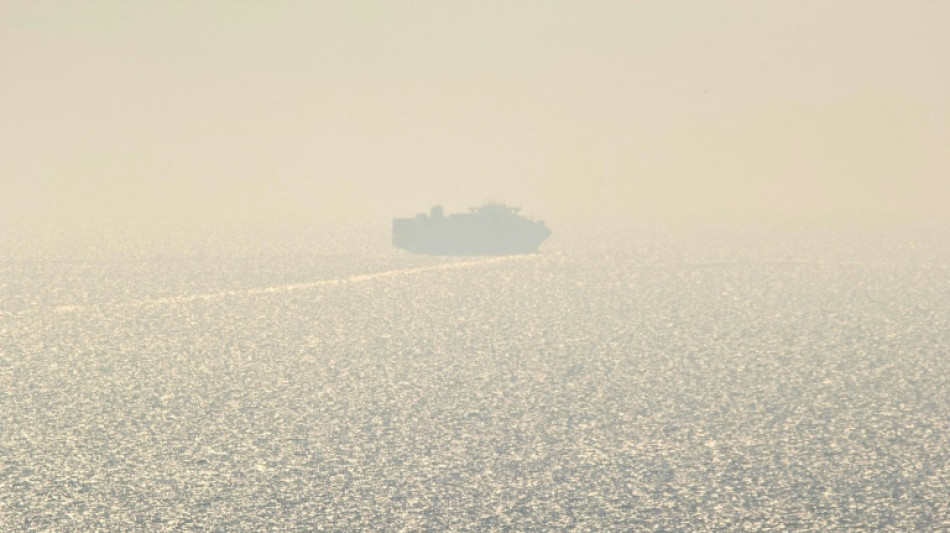
Black Sea ships carrying grain hit insurance obstacle / Photo: © AFP

 Boasting South Korea footballers spark rethink of military service exemptions

 Five dead as Hurricane Simon, Rachel pummel Mexico's Pacific coast

 Seoul, Tokyo stocks plunge as Asia suffers fresh tech rout
 Damaged and drained, Indonesia's peatlands go up in smoke

 Dominant Australia wary of Pacific threat at Rugby League World Cup

 Pope to be admitted to hospital for lung operation

 Samoa's McFarland welcomes 'massive' arrival of ex-All Blacks for World Cup run-in

 Brewers beat Dodgers 7-4 to extend MLB playoff lead

 Teenager shoots headmaster, teacher at French school

 'Breaking Bad' actor RJ Mitte dead: representatives

 Former DR Congo president Kabila forms new force with M23 armed group
 Tom Cruise's 'Digger' tanks, leaving studio with $250 mn hole

 US actress Selma Blair arrested after flight altercation

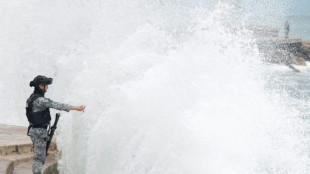 One dead as Hurricane Simon creeps along Mexico's Pacific coast
 Carrick's Man United 'hungry and eager' to fix worst start in decades

 Fury as US federal agents search anti-Trump lawmaker's home

 One goal enough for Flick as Barca enter Galatasaray cauldron
 A7 to unveil a service that will re-invent the international payments market
 'Status quo' with EU 'not good enough', UK PM says as summit date set

 Stolen Renoir paintings found behind wall in France

 French supermarkets suffer refrigerator shutdown after 'unprecedented' cyberattack

 Arsenal lose Hincapie and Zubimendi in freak double blow

 Saudi says resilience tested, vows response after deadly airport attacks
 Alcaraz exits Shanghai Masters in straight-sets loss
 Pope to enter hospital on Tuesday for lung operation

The risk of bombing has made it virtually impossible to insure ships leaving Ukraine via the Black Sea, leaving the sector to find an alternative route, especially for grain.
Cargo insurance can in theory be always considered "on a case-by-case" basis, Mathieu Berrurier, chief executive at insurance broker Eyssautier-Verlingue, told AFP.
But with premiums having spiralled five to 10 times the amounts charged before Russia's invasion of Ukraine in February 2022, companies are no longer paying.
Exiting Ukraine via the Black Sea had been stable for almost a year after Moscow signed an agreement enabling the invaded country to export its agricultural produce.
That allowed Ukraine to export 33 million tonnes of grain, and helped push down global food prices.
- Stepping up attacks -
But Russia decided to pull out of the UN- and Turkey-mediated grain deal and in turn has stepped up attacks on Ukraine's shipping infrastructure.
Kyiv is meanwhile using drones to target the Kerch Strait, which connects the Black Sea to the Sea of Azov, through which sizeable Russian exports pass.
"Risks have increased considerably" for cargo, said Berrurier. "Before, the risks were concentrated on warships."
The majority of previously shipped Ukrainian grain exports now travel via the Danube river and by rail.
Ports along this alternative route are also under attack from Russians, according to Frederic Denefle, head of Garex, a French company specialised in marine risk insurance.
A Russian warship last month fired warning shots at a cargo vessel heading towards the Ukrainian port city of Izmail, down the Black Sea coast from Odesa.
"Maritime traffic has almost completely stopped" in the targeted areas, said Denefle, adding that the scattering of ships that depart the Odesa area have no cereals on board.
The container ship Joseph Schulte managed to reach Turkey in mid-August.
In doing so, it became the first cargo ship to do so from Ukraine since the end of Moscow's agreement, but it carried non-agricultural products.
Ukraine has so far sent four ships along a new sea route, while Russia is preparing a plan to send foodstuffs for free to some African countries and to send discounted grain for processing in Turkey.
- Public-private partnership -
International insurers including brokerage firm Marsh are in talks seeking to provide cover for vessels transiting Black Sea ports under a public-private partnership with Ukraine.
The discussions aim to "reduce insurance costs to a more reasonable level", said Marcus Baker, global head of Marine & Cargo at Marsh.
The goal is to establish a letter of credit recognising that Ukraine and some of its lenders will be party to an agreement, which should be finalised in "a couple of weeks", according to Baker.
The proposed mechanism will initially insure against physical damage to ships, before examining cover for the shipments themselves.
Turkish President Recep Tayyip Erdogan said after talks Monday with Russian counterpart Vladimir Putin that Ankara was against alternative proposals to last year's Ukraine grain agreement, which Moscow scuppered in July.
Erdogan said Turkey and the UN had prepared new proposals aimed at addressing Russia's problems with the deal, adding that he hoped to reach a workable solution "soon".
"We have prepared a new proposal package in consultation with the UN. I believe that it is possible to get results," he said.
"I believe that a solution that will meet Turkey's expectations will be reached soon."
H.Seidel--BTB