Lebanese children 'miss out' on education as crisis takes toll / Photo: © AFP

 Hazlewood takes six as Australia beat South Africa in 1st Test

 Saudi coalition tells Sanaa residents to flee site before operation

 Zverev defies 'physical issues' to reach Shanghai Masters quarter-finals

 'We're not giving up': Activist Thunberg joins France student protests

 Man City captain Dias defends celebrations after Liverpool win

 B2PRIME Expands Tier-1 Access and Liquidity Architecture for Sophisticated Institutional Flow

 STARTRADER Adds 48 US Stock CFDs with 24-Hour Weekday Trading

 'Ink' director Danny Boyle slams Trump's Truth Social 'lies'

 Coach Kovac extends contract at Dortmund until 2029

 Activist Thunberg joins France student rally after violence at protests

 Archer and Bethell in England squad for Australia ODI series

 Formula One to return to Africa in 'early 2030s' in Rwanda

 US actor Selma Blair charged with assault after alleged flight altercation
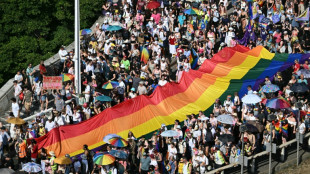
 Hungary cuts anti-LGBTQ legislation from Orban-era law
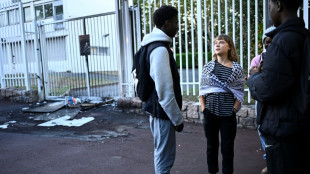 'Our future is being robbed': Greta Thunberg joins France student protests

 Late superstar Anita Mui's ashes missing in Hong Kong
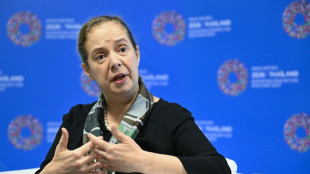 'No choice': IMF says developing countries must cut spending despite war shock

 Boasting South Korea footballers spark rethink of military service exemptions
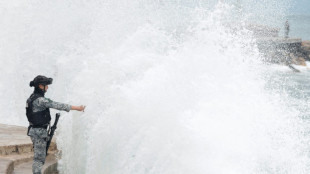 Five dead as Hurricane Simon, Rachel pummel Mexico's Pacific coast
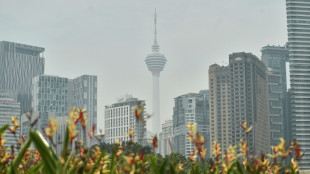
 Seoul, Tokyo stocks plunge as Asia suffers fresh tech rout
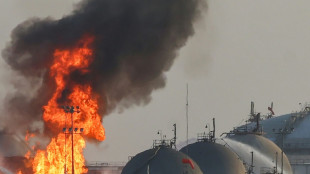
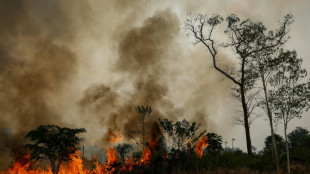
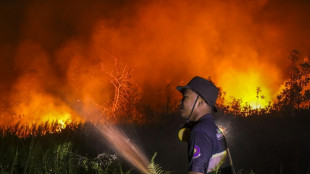 Damaged and drained, Indonesia's peatlands go up in smoke
 Dominant Australia wary of Pacific threat at Rugby League World Cup
 Pope to be admitted to hospital for lung operation
 Samoa's McFarland welcomes 'massive' arrival of ex-All Blacks for World Cup run-in
 Brewers beat Dodgers 7-4 to extend MLB playoff lead

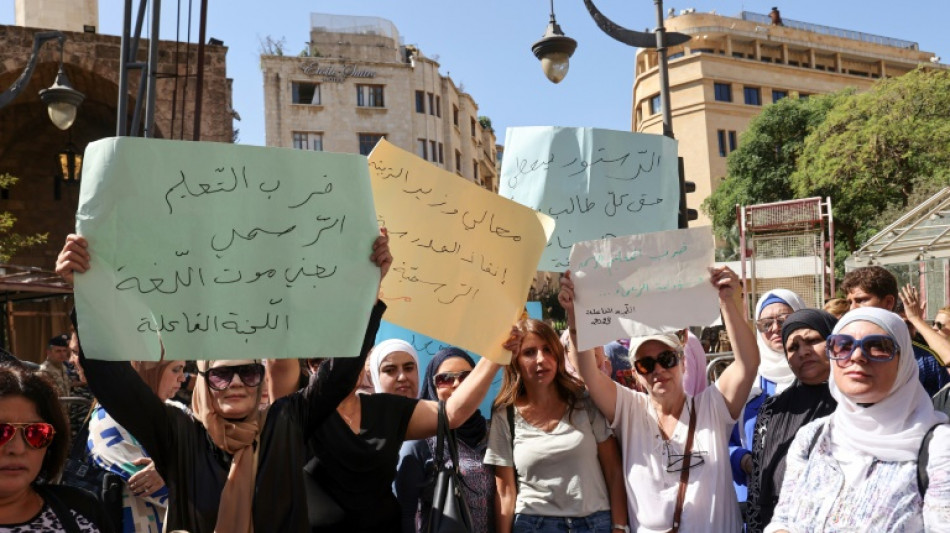
Rana Hariri doesn't know when she'll be able to send her children back to school, as Lebanon's grinding economic crisis thrusts the fate of public education into uncertainty.
Lack of funding for the school system has precipitated repeated teachers' strikes and school closures, resulting in children being increasingly pulled out of the formal learning system, and in some cases being forced to work.
Hariri, 51, says her nine-year-old daughter Aya "repeatedly asks me: 'When will I go back to school?' But I do not know what to tell her."
Lebanon's public institutions have been crumbling since the economy collapsed in late 2019, pushing most of the population into poverty and dealing a heavy blow to state schools.
Public sector workers, including teachers, have repeatedly gone on strike as the value of their salaries crashed after the Lebanese pound lost more than 98 percent of its worth against the dollar.
"My children stayed at home for three months last year due to the strikes," said Hariri.
She had hopes that her 14-year-old daughter Menna would someday become a doctor.
But now, "I just hope she'll be able to go to school in the first place," she said, sitting at her friend's house surrounded by her four children.
"For the past four years, teachers have failed to secure their rights, while our children miss out on basic education."
Public sector teachers earn the equivalent of $150 to $300 per month, while the education ministry has sounded the alarm over lack of funding.
Hariri took her anger to the streets, protesting alongside teachers who demanded better wages at a sit-in in September.
The school year is due to begin in early October, but amid uncertainty over the start date, her two sons, aged 13 and 17, have taken up work with their father, a plumber.
Her daughters have meanwhile been forced to wait at home.
"I want them to have a degree... but this country is killing their future," she said with a sigh.
- Public education 'in danger' -
Since 2019, children have "experienced devastating disruption to their education", according to the United Nations' children's agency.
The disruptions were attributed to the economic crisis, the coronavirus epidemic, a deadly 2020 blast that rocked Beirut's port and strikes that forced school closures.
"A growing number of families" can no longer afford "the cost of education including transport to school, food, textbooks, stationery, and clothes", UNICEF Lebanon said.
At least 15 percent of households have pulled their children out of schools, UNICEF found in a June report, up from 10 percent a year ago.
And one in 10 families have been forced to send children, sometimes as young as six years old, to work to make ends meet, the report said.
"Being out of school exposes children... to violence,... poverty," and increases risks of child marriage in girls, said Atif Rafique, chief of education at UNICEF Lebanon.
Education Minister Abbas Halabi has repeatedly complained of funding problems, warning in September that "public education is in danger".
"The most urgent problem today is financial," he said, adding that his ministry was still working on securing funding for the upcoming school year.
The education ministry mostly relies on government credit lines and donor funding, mainly from the World Bank and the UN, to educate the more than 260,000 Lebanese pupils and over 152,000 Syrians enrolled in public schools.
But Halabi said donors had informed him they could not afford to give more money to public school employees.
- 'Catastrophic' -
According to a recent Human Rights Watch report, the education ministry has slashed the number of teaching days from 180 in 2016 to about 60 in the past two years, "citing financial constraints".
Year after year, the ministry has had "no plan" to secure the funds needed for schools to remain open without interruption, said Ramzi Kaiss, HRW's Lebanon researcher.
"If we're going to have a fifth year that is lost or interrupted, it's going to be catastrophic," he told AFP.
But despite the setbacks, more pupils have poured into Lebanon's public schools as families can no longer afford private education.
Homemaker Farah Koubar, 35, said she fears she one day won't even be able to afford sending her three young children to public school.
"I'm afraid they will miss out on their education," she told AFP from her small home in Beirut.
"Every year life becomes more difficult," she said, holding back tears as she recalled how she has had to ask acquaintances for financial help to secure her family's survival.
"Everything is expensive, food, water, gasoline -- even bread."
G.Schulte--BTB

