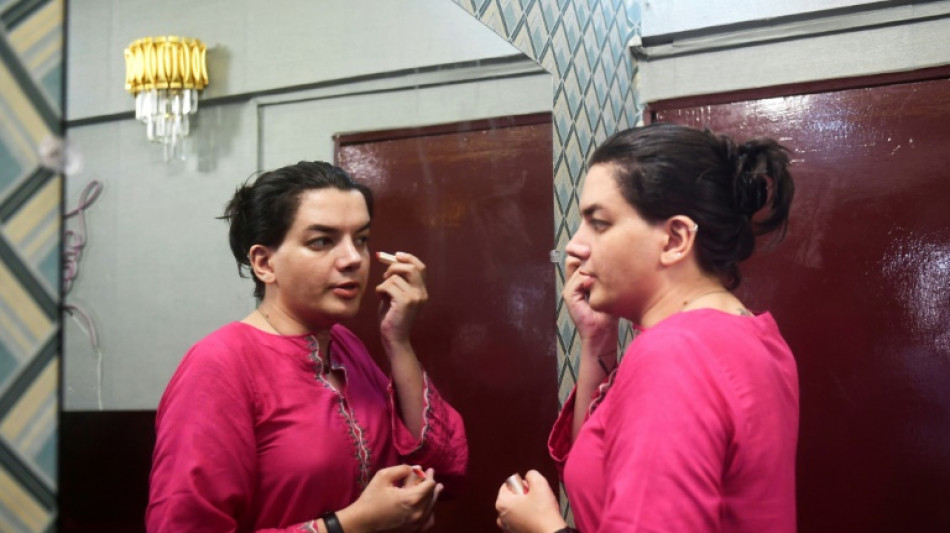
'They're afraid of joy': Pakistan's trans community fights hate / Photo: © AFP

 Nvidia says to invest in French medical website
 Real Madrid's Mourinho has 'trust' in referees despite complaints

 Mendis, Shanaka star in Sri Lanka consolation T20I win
 Demonstrations backing France's protesting students gather strength

 Trump says US Senate as hard to defend as House in midterms
 Suspected Russian drones hit two ships off Bulgaria, 11 missing

 Tech stocks slide on AI jitters

 Trump asks Greece ambassador to resign amid ethics scandal
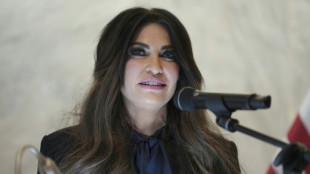
 New White House spokeswoman heavy on Trump praise, light on questions in debut
 Emery urges Villa to make most of reduced home comfort
 Flavio Bolsonaro visits father under house arrest ahead of Brazil runoff

 France, Eq. Guinea in standoff over luxury Paris mansion
 'Holding our ground': Israel demolishes dozens of Bedouin homes
 Hazlewood takes six as Australia beat South Africa in 1st Test

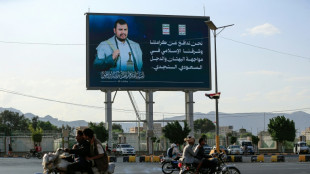 Saudi coalition tells Sanaa residents to flee site before operation
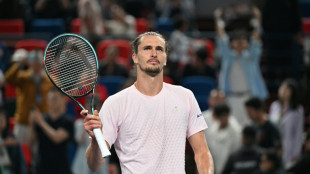 Zverev defies 'physical issues' to reach Shanghai Masters quarter-finals
 'We're not giving up': Activist Thunberg joins France student protests
 Man City captain Dias defends celebrations after Liverpool win

 B2PRIME Expands Tier-1 Access and Liquidity Architecture for Sophisticated Institutional Flow

 STARTRADER Adds 48 US Stock CFDs with 24-Hour Weekday Trading

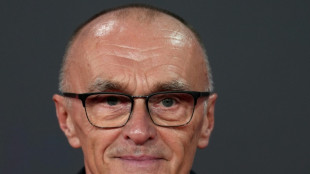 'Ink' director Danny Boyle slams Trump's Truth Social 'lies'

 Coach Kovac extends contract at Dortmund until 2029
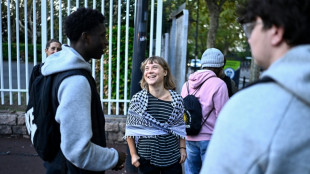 Activist Thunberg joins France student rally after violence at protests

 Archer and Bethell in England squad for Australia ODI series

 Formula One to return to Africa in 'early 2030s' in Rwanda

Clad in a Barbie-pink shalwar kameez, influencer and doctor Mehrub Moiz Awan reels off endless examples of harassment she's received since becoming the sharp-tongued figurehead of Pakistan's queer community.
A growing and highly organised digital hate campaign driven by the religious right has put trans people at risk -- both of losing their legal rights and their lives.
"It became quite vicious where there were death threats against me, there were attacks on me," Awan told AFP from a fellow activist's crowded apartment in Pakistan's megacity of Karachi.
"I had to file FIRs (police complaints) and applications for police protection."
The digital hate campaign started shortly after Awan was disinvited from a TedX panel at a private school in August last year following complaints from parents.
When she called out the decision, local celebrities -- including a prominent fashion designer -- accused her of promoting an LGBTQ agenda in a country where homosexuality has been criminalised since colonial times.
Since then, a variety of players from Pakistan's religious right have converged into a mainstream anti-queer movement in the conservative Muslim country.
They include the leaders of the Islamist Jamaat-e-Islami political party, podcasters, influencers from a religious collective called the Youth Club, and an online group known as Mothers for Pakistan.
- Blasphemy allegations -
Tactics used by the campaign include hardline Islamic rhetoric, harassment, cyberbullying, and doxing in the form of leaks of personal data, including pre- and post-transition pictures of activists.
Outright accusations of blasphemy -- allegations that can lead to mob killings in Pakistan -- have also been used.
Although exact figures are not available due to severe underreporting, human rights groups such as Amnesty International say there has been a concerning rise in violence against trans people in Pakistan.
In February, Marvia Malik, Pakistan's first transgender news anchor, was shot at by two men and narrowly escaped.
Two weeks earlier, a transgender woman was found hanged in the city of Rawalpindi in a case police suspect to be murder.
"Our lives are in danger," said Shahzadi Rai, a transgender activist and member of the municipal council of Karachi, Pakistan's most populous city.
"I first used to use a rickshaw to travel, but within the span of one year that has changed. I have been attacked four times."
- Progressive act -
The Digital Rights Foundation, a non-profit which tracks online harassment, has recorded 74 cases against the trans community since the start of the hate campaign.
The landmark passing of a Transgender Rights Act in 2018 was regarded as highly progressive, lauded around the world for the protections it granted the community.
But four years later Jamaat-e-Islami led the charge against it -- party chief Siraj-ul-Haq saying it was against Islamic law and "a conspiracy to destroy our family system".
The group -- and others -- claim the act is a means of normalising same-sex marriage in Pakistan.
"Even people in the community started believing it and began denouncing (the act)," researcher Mehleb Shaikh, who helped draft the law, told AFP.
"People were just so paranoid at the time that they will be seen as these figurative homosexuals... a boogie man created in our society in order to create more policing of gender."
In May, the Islamabad Shariat Court -- which gives Islamic oversight to secular laws -- revoked the act. An appeal is being sought with the Supreme Court.
- Closeted community -
Pakistan's indigenous third gender, or "Khawajasira" community, has a rich, spiritual, cultural and political history that spans centuries in the Indian subcontinent.
But British colonisation brought the criminalisation of homosexuality and the imposition of strict gender binaries which have been reinforced with increasing Islamisation.
As the queer community is forced to remain largely closeted, the brunt of this is experienced by Khawajasiras, many of whom are forced to resort to begging, dancing, or sex work for survival.
"I have never seen our community this distressed," said Rai.
In recent years millennial and Gen Z queer people in Pakistan have carved out a vibrant digital space for themselves on TikTok, Instagram and X, where they showcase their activism and offer glimpses into their personal lives.
"The trans community's content has been phenomenal, especially in terms of TikTok," Aradhya Khan, a transgender rights activist and digital content creator, told AFP.
"People love the content trans girls make; they are killing it right now."
However, activists say the hate campaign has shrunk their digital footprint. Self-censorship and deactivation of social media accounts have become commonplace.
For the trans male community, which already lacks visibility, the trend is even more concerning.
"Trans men are treated as women and girls in Pakistan, where they live in very controlled, restricted and conservative environments," transgender activist and freelance journalist Rayhan Muqadam told AFP from his home in Karachi.
But Awan says despite the ongoing onslaught of hate and disinformation, the trans community is determined to resist by centering on their own communal joy, resilience, and beauty.
"The biggest threat to patriarchal sanctimonious bigotry is joy. That's what threatens them the most," said Awan.
"They're afraid of laughter. They're afraid of joy, they're afraid of love. And how we are resisting is by continuing to love."
L.Dubois--BTB