
EU fails to decide on glyphosate use extension / Photo: © AFP/File

 Nvidia says to invest in French medical website

 Real Madrid's Mourinho has 'trust' in referees despite complaints

 Mendis, Shanaka star in Sri Lanka consolation T20I win

 Demonstrations backing France's protesting students gather strength

 Trump says US Senate as hard to defend as House in midterms

 Suspected Russian drones hit two ships off Bulgaria, 11 missing

 Tech stocks slide on AI jitters

 Trump asks Greece ambassador to resign amid ethics scandal

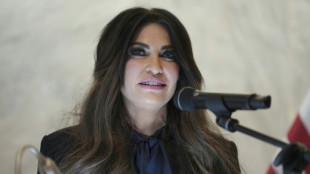
 New White House spokeswoman heavy on Trump praise, light on questions in debut

 Emery urges Villa to make most of reduced home comfort

 Flavio Bolsonaro visits father under house arrest ahead of Brazil runoff

 France, Eq. Guinea in standoff over luxury Paris mansion

 'Holding our ground': Israel demolishes dozens of Bedouin homes
 Hazlewood takes six as Australia beat South Africa in 1st Test

 Saudi coalition tells Sanaa residents to flee site before operation

 Zverev defies 'physical issues' to reach Shanghai Masters quarter-finals

 'We're not giving up': Activist Thunberg joins France student protests

 Man City captain Dias defends celebrations after Liverpool win

 B2PRIME Expands Tier-1 Access and Liquidity Architecture for Sophisticated Institutional Flow

 STARTRADER Adds 48 US Stock CFDs with 24-Hour Weekday Trading

 'Ink' director Danny Boyle slams Trump's Truth Social 'lies'

 Coach Kovac extends contract at Dortmund until 2029

 Activist Thunberg joins France student rally after violence at protests

 Archer and Bethell in England squad for Australia ODI series

 Formula One to return to Africa in 'early 2030s' in Rwanda

The EU failed Friday to agree extending the use of glyphosate -- a weedkiller the WHO fears could be carcinogenic -- because of division among the bloc's 27 member countries, a European Commission spokesman said.
"No sufficient majority" was reached in a vote on whether to renew glyphosate use for another 10 years, and the matter would now be kicked to an appeals committee in early November, Stefan De Keersmaecker told journalists.
If that committee failed to resolve the matter before current EU authorisation for glyphosate ends on December 15, the commission has the power to go ahead and decide whether or not to extend its use, he said.
"In that case, it's for the commission to take a decision on the issue," De Keersmaecker said. He added that the commission proposal could be modified after input from EU countries.
France, an agricultural powerhouse in the bloc, abstained in Friday's closed-door vote on the proposal, French Agriculture Minister Marc Fesneau told AFP, putting weighted majority approval out of reach.
Germany had already said it could not accept extending the use of glyphosate, which is used in popular herbicides such as Roundup from German group Bayer, which acquired it when it bought US company Monsanto.
Austria and Luxembourg had indicated they would vote against the proposal, while Belgium and the Netherlands said they would abstain.
Sweden, Italy and Portugal are among the EU countries in favour of renewing glyphosate use.
A Bayer spokesman said following Friday's inconclusive vote that the company was "confident that in the next stage of the approval process enough other member states will back the renewal of authorisation proposed by the commission".
The previous authorisation expired in December 2022 but was extended by a year pending a scientific study of the herbicide.
The current commission proposal would authorise its usage until December 15, 2033, double the previous five-year authorisation but less than the 15-year period initially planned.
- 'Mountains of studies' -
The World Health Organization in 2015 classed glyphosate as "probably carcinogenic", spurring concerns about its continued use.
However the European Food Safety Authority in July this year said it "did not identify critical areas of concern" although it recognised there were "data gaps" in reaching that assessment.
The commission said it based its proposal on that EFSA evaluation.
"Mountains of studies and data have been analysed by the European Food Safety Authority, by the European Chemical Agency, and they have come to the conclusion that there are no major risks of concern to be taken into account for the product of glyphosate, which is the reason why we made our proposal," De Keersmaecker said.
Another spokesman, Eric Mamer, said the commission had followed "scientific advisers who have been reviewing all of the evidence".
Environmental activists said there was scientific evidence that glyphosate may cause cancer, poison aquatic life and can be fatal to key pollinators like bees.
The commission has sought to address the concerns by requiring risk mitigations such as buffer zones around fields sprayed with glyphosate and equipment to prevent the spray drifting to other areas.
It also urged member states to "pay particular attention" to effects on the environment and set conditions on the herbicide's use.
E.Schubert--BTB
