-
 Nvidia says to invest in French medical website
-
Microsoft's Brad Smith calls for 'real and effective' AI safety standards
-
 Real Madrid's Mourinho has 'trust' in referees despite complaints
-
Anthropic warns of AI 'worms' spreading across smart gadgets

-
 Mendis, Shanaka star in Sri Lanka consolation T20I win
-
Big US banks report strong earnings and stay bullish on AI
-
 Demonstrations backing France's protesting students gather strength
-
Iraola backs Barcola, Wirtz to come good for Liverpool

-
 Trump says US Senate as hard to defend as House in midterms
-
In a first, AI helps UK lawmaker find her voice in parliament
-
 Suspected Russian drones hit two ships off Bulgaria, 11 missing
-
Pope Leo in Rome hospital for lung operation
-
 Tech stocks slide on AI jitters
-
EU watchdog says smart glasses must give 'clear warnings' when recording
-
 Trump asks Greece ambassador to resign amid ethics scandal
-
Houthis say Saudi Arabia strikes oil site in Yemen's capital

-
 New White House spokeswoman heavy on Trump praise, light on questions in debut
-
France roiled by marches in support of protesting students

-
 Emery urges Villa to make most of reduced home comfort
-
Goldman Sachs profits jump as CEO says no plans to exit
-
 Flavio Bolsonaro visits father under house arrest ahead of Brazil runoff
-
Apple unveils HomeView smart display in renewed home push

-
 France, Eq. Guinea in standoff over luxury Paris mansion
-
Novelist Thelyson Orelien denies AI use, admits plagiarism 'mistakes'
-
 'Holding our ground': Israel demolishes dozens of Bedouin homes
-
Trump asks Greece ambassador to resign amid bribery scandal: White House
-
 Hazlewood takes six as Australia beat South Africa in 1st Test
-
11 missing after ships struck off Bulgaria in latest Black Sea attack

-
 Saudi coalition tells Sanaa residents to flee site before operation
-
France budget debate faces rocky start as Socialists vow to fight
-
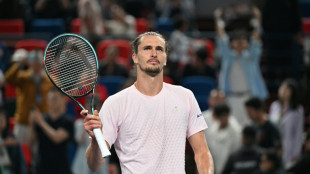 Zverev defies 'physical issues' to reach Shanghai Masters quarter-finals
-
AI could 'change the stakes' on bioweapons: UK spy chief

-
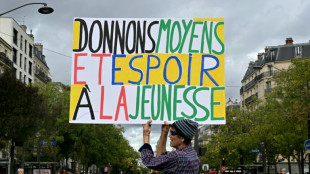 'We're not giving up': Activist Thunberg joins France student protests
-
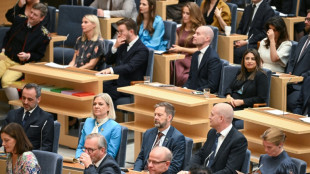
Sweden centre-left leader fails to form government
-
 Man City captain Dias defends celebrations after Liverpool win
-
EU economy chief doubtful Russian diesel exports will affect prices
-
 B2PRIME Expands Tier-1 Access and Liquidity Architecture for Sophisticated Institutional Flow
-
Capital International Highlights Multilingual Access to Its Platform as European Economic Conditions Diverge

-
 STARTRADER Adds 48 US Stock CFDs with 24-Hour Weekday Trading
-
Hazlewood takes six as Australia win first Test

-
 'Ink' director Danny Boyle slams Trump's Truth Social 'lies'
-
Pope Leo admitted to hospital for lung operation
-
 Coach Kovac extends contract at Dortmund until 2029
-
Hungary cuts anti-LGBTQ measures from Orban-era law

-
 Activist Thunberg joins France student rally after violence at protests
-
Tech stocks slump on AI jitters; oil falls

-
 Archer and Bethell in England squad for Australia ODI series
-
ePlanet Brokers Publishes H1 2026 Transparency Report and Highlights Best Broker 2026 Award

-
 Formula One to return to Africa in 'early 2030s' in Rwanda
-
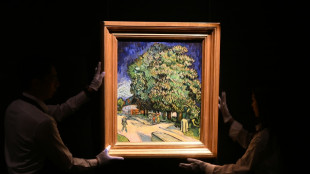
Van Gogh work unseen in public for 60 years on show in Hong Kong
Designer Avido puts Kenyan slum on the fashion map
His creations are made in Kibera, the largest urban slum in Kenya, but have attracted the attention of global stars such as Beyonce and Bruno Mars and featured in Vogue magazine.
For Avido, his designs have a dual purpose: both to show to the world what can come from the impoverished Nairobi neighbourhood where he was born and raised, and to make it a better place.
Last year, the 27-year-old designer launched Kibera Fashion Week and the second edition was staged on Saturday in the heart of the sprawling slum.
Avido, whose real name is David Ochieng, drew inspiration from his journey to create one of his mottos: "Great things can come from places least expected."
The eldest of four children raised by a single mother in Kibera, Avido had never thought about pursuing a career in fashion.
"Looking for an alibi to keep me alive is what pushed me into fashion," he said in his deep voice.
He wanted to escape life on the street, saying 60-70 percent of his childhood friends had lost their lives through crime or drugs.
Forced to leave school at the age of 11 because of a lack of money, he tried to stay out of trouble -- first by playing football and later working on construction sites before he joined a dance troupe.
He then began designing outfits for the dancers.
"I started spending time with the tailors that were sewing the clothes that we were dancing with," he said. "I learned sewing even without knowing."
- Basket hat, bomber jackets and kimonos -
He went on to train as a fashion designer.
"He was really motivated... a go-getter," recalled Japheth Okoth, a charity employee who helped Avido get his first sewing machine.
"The moment he got that machine, he started designing clothes, making shirts," he said.
One of his garments brought him to the attention of Jamaican singer Don Carlos, the founder of reggae group Black Uhuru who was visiting Kibera on the sidelines of a concert in Kenya in 2017.
Avido offered him a shirt, and the encounter convinced him to devote his life to fashion.
With his "Lookslike Avido" label, he developed a colourful, gender-neutral style, mixing a variety of patterns and textures, notably ankara, the vibrant African wax fabric, and the velvet found on his kimonos and bomber jackets.
His inspiration comes not from the catwalks of New York, Paris or Milan, but from the streets of Kibera.
"Here in the street you get to have everything: when you speak about avant-garde, official, everything is in the street," he said.
One of his signature products, however, comes from the Kenyan countryside: a conical basket woven by his grandmother, which he turned upside down and wore as a hat one rainy day.
His style has caught the eye of Bruno Mars, rapper Ty Dolla Sign, reggae singer Chronixx, Coldplay frontman Chris Martin and Beyonce, who commissioned him and other African designers for her "Black is King" project.
His creations were also featured during Berlin Fashion Week in 2019.
- 'No point growing alone' -
But Avido keeps both feet firmly in Kibera, where all his clothes are made.
When Vogue Italia contacted him for an interview and photoshoot, he insisted that the models they used were young women from Kibera and that they were paid.
Traumatised by his childhood days when he would have to go to class in ragged uniforms, Avido -- through his eponymous foundation -- also makes uniforms for Kibera pupils, pays school fees for some and teaches young mothers and deaf women how to sew.
During the Covid-19 pandemic, he also produced thousands of masks to be distributed free of charge.
"Fashion is not just about making clothes, but it's a platform to be able to make our community a better place," he said.
"When it comes to projects, I try to think of the impact that it is going to have and if it is not going to have an impact around, I normally am not going into it," he added.
Despite his global renown, he has no intention of leaving his native slum.
"I don't see the point of growing alone. I could grow, leave, be part of the Paris Fashion Week. But I'd rather have a fashion week here and inspire people here," he said.
I.Meyer--BTB