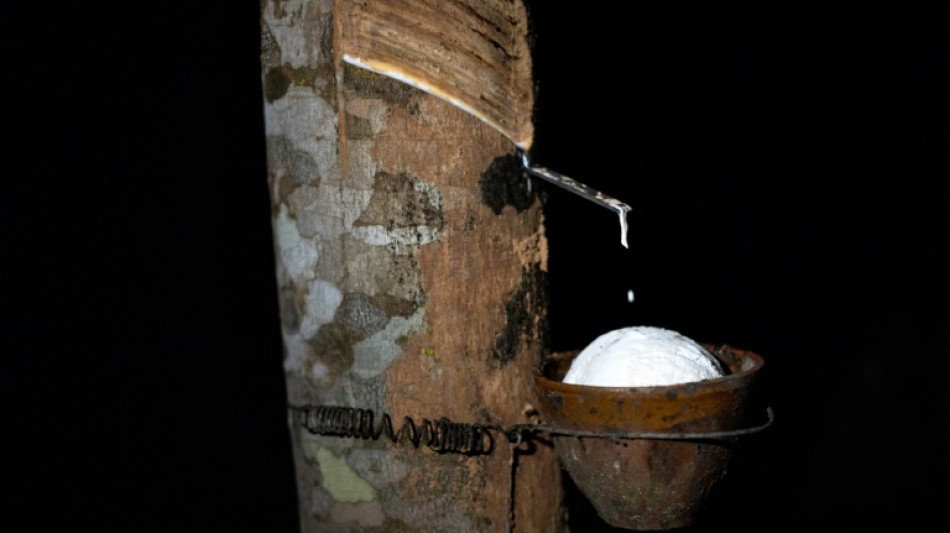
Deforestation caused by rubber vastly underestimated: study / Photo: © AFP/File

 No lights, no friends: Cuban youth grapple with loneliness

 Saudi coalition strikes Yemen oil sites after Houthi attacks

 French economy minister denies country caught in debt 'snowball'
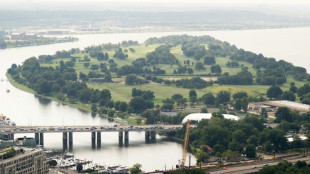 Judge extends halt to Trump's golf course tree-cutting

 Milan's Saelemaekers set for lenghty spell out after ankle surgery

 Nvidia says to invest in French medical website

 Real Madrid's Mourinho has 'trust' in referees despite complaints
 Mendis, Shanaka star in Sri Lanka consolation T20I win

 Demonstrations backing France's protesting students gather strength

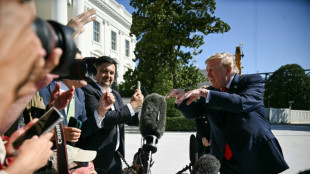 Trump says US Senate as hard to defend as House in midterms

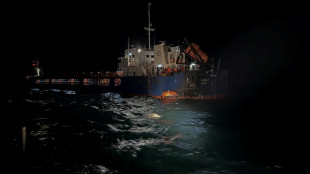 Suspected Russian drones hit two ships off Bulgaria, 11 missing

 Tech stocks slide on AI jitters
 Trump asks Greece ambassador to resign amid ethics scandal
 New White House spokeswoman heavy on Trump praise, light on questions in debut

 Emery urges Villa to make most of reduced home comfort

 Flavio Bolsonaro visits father under house arrest ahead of Brazil runoff

 France, Eq. Guinea in standoff over luxury Paris mansion

 'Holding our ground': Israel demolishes dozens of Bedouin homes

 Hazlewood takes six as Australia beat South Africa in 1st Test
 Saudi coalition tells Sanaa residents to flee site before operation

 Zverev defies 'physical issues' to reach Shanghai Masters quarter-finals

 'We're not giving up': Activist Thunberg joins France student protests

 Man City captain Dias defends celebrations after Liverpool win

 B2PRIME Expands Tier-1 Access and Liquidity Architecture for Sophisticated Institutional Flow

 STARTRADER Adds 48 US Stock CFDs with 24-Hour Weekday Trading

Deforestation for rubber cultivation has been "substantially underestimated", and is two to three times higher than generally assumed, a new study said Wednesday.
Using satellite data and cloud computing, scientists said they compiled the first detailed accounting of deforestation for rubber production in Southeast Asia -- which accounts for most of global production.
It suggests more than four million hectares of forest have been lost since 1993, and reveals that rubber has been planted in areas that are key for biodiversity.
The authors warn their estimates may be an undercount because of limitations such as cloud cover on satellite images, which complicates calculations.
"Our direct remotely sensed observations show that deforestation for rubber is at least twofold to threefold higher than suggested by figures now widely used for setting policy," said the research in the journal Nature.
More than 90 percent of global rubber cultivation occurs in Southeast Asia, and the crop has long been associated with deforestation.
The scale of the problem has been hard to quantify, however, and figures are sometimes estimated based on national reports of crop expansion that are inaccurate or incomplete.
Most rubber is cultivated by smallholders, in plots that have been difficult to pick out in imaging in the past.
The study uses newly available, higher resolution satellite imagery and compares it with historical imagery analysed by a computer programme.
The analysis is possible in part because of the rubber plant's distinct characteristics -- it loses and regrows foliage at different times from tropical forest plants.
- EU 'substantially exposed' -
The analysis found mature rubber plantations covered 14.2 million hectares in Southeast Asia in 2021, mostly in Indonesia, Thailand and Vietnam.
It suggested an estimated 4.1 million hectares were cleared for rubber between 1993 and 2016 alone.
And it found a million hectares of rubber plantations in regions designated Key Biodiversity Areas, as of 2021.
The researchers acknowledged some shortcomings and uncertainties, including clouds that covered some regions.
On islands in Southeast Asia, different climate conditions and seasonality mean that rubber trees lose and regrow their leaves at different times from elsewhere in the region, making it harder to distinguish them from other plants.
They also acknowledged that their calculation of deforestation is based on the conversion of any planted area to rubber.
So areas converted from agroforestry or other crops to rubber plantations were counted as "deforested".
Overall, however, the researchers believe their count is likely to be an underestimate of the total area planted for rubber and the effect of rubber cultivation on deforestation.
That is partly because of the challenges in capturing all cultivation from space, and also because only rubber plantations still functioning in 2021 were examined for signs of previous deforestation.
Rubber plantations abandoned before 2021 were not counted, even though they might have caused deforestation.
The study only covers Southeast Asia, though rubber is also cultivated in parts of Africa and South America.
The researchers argue more focus is needed on rubber as a driver of deforestation, including in new legislation being developed by the European Union and others.
As only a handful of companies account for most of the natural rubber consumed globally, "it should be assumed that main importers of rubber such as the EU are substantially exposed to rubber-related deforestation", the study warned.
Y.Bouchard--BTB