Brazil's booming ag sector draws cash and controversy / Photo: © AFP

 Saudi employee arrested for allegedly bugging OpenAI office

 Atletico sink Man Utd as Viking deny Bayern in Champions League
 Man United's Martinez blasts board's lack of investment

 Meet A7 International, an Innovative Global Platform Designed to Reinvent the International Payments Market

 Shakhtar hope London move a reminder of Ukraine conflict

 Tresoldi hat-trick fires Brugge past Inter Milan

 Rams axe kicker Mevis after misses cost victory over Bills: reports

 Yamal stays cool at boiling Galatasaray to lift Barcelona to victory

 Arsenal cruise past Lille into share of Champions League lead

 Trump ousts Greece ambassador over ethics scandal

 Reese Witherspoon, France's Mediawan to buy Hello Sunshine

 Bipartisan US senators urge Trump to scrap Russian diesel deal

 Ex-gang leader sentenced to minimum 40 years for Tupac murder

 Cornell suspends frat parties after alleged gang rape

 Man City deserve to keep titles, says PSG's Luis Enrique

 Regulator 'will resign' if any political interference in Man City case

 Microsoft's Brad Smith calls for 'real and effective' AI safety standards

 Anthropic warns of AI 'worms' spreading across smart gadgets

 Big US banks report strong earnings and stay bullish on AI

 Iraola backs Barcola, Wirtz to come good for Liverpool

 In a first, AI helps UK lawmaker find her voice in parliament

 Pope Leo in Rome hospital for lung operation

 EU watchdog says smart glasses must give 'clear warnings' when recording

 Houthis say Saudi Arabia strikes oil site in Yemen's capital

 France roiled by marches in support of protesting students

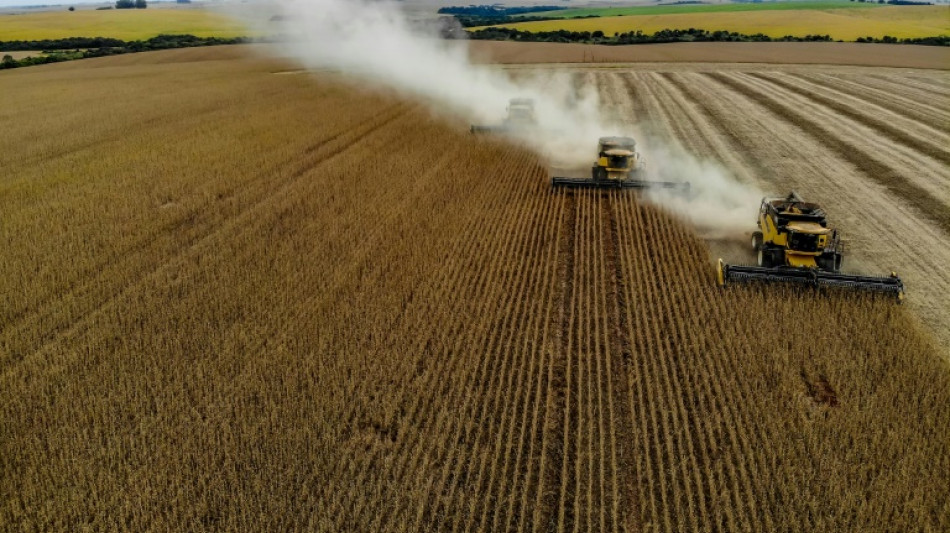
With its massive output of soybeans, beef, cotton and now corn, Brazil has become one of the world's top agricultural powers. But its agribusiness industry also faces criticism, especially over destruction of the Amazon rainforest.
Here is an overview of the South American ag giant, which, more than a decade after passing the United States as the world's biggest soy and beef exporter, is set to overtake US corn exports this year and is now eying the cotton crown.
- Big and growing -
Brazil's agriculture ministry triumphantly announced recently the sector's output will hit a record 1.15 trillion reais ($230 billion) this year.
The country -- the world's fifth-largest by surface area -- is the top producer and exporter of sugar, coffee and soy.
It is also the world's top supplier of chicken and beef, and second in cotton, after the United States.
Agribusiness accounts for nearly one-fourth of Brazil's economy, and half its exports in the first half of the year.
- Roots of the boom -
Brazil's emergence as an agricultural giant goes back to Portuguese colonial times. Fortunes were made here on a succession of commodities: sugarcane, then cotton, rubber and finally coffee, which reigned supreme for more than a century.
But the turning point came in the 1960s and 70s, when Brazil's then military regime ushered in the so-called "green revolution" and encouraged the expansion of agriculture to the Amazon and Cerrado savanna.
Fueled by Chinese demand, Brazil would go on to become the dominant producer of soy, a widely used ingredient in animal feed worldwide.
"Research on genetic improvements, techniques to correct soil acidity and fertilizers" -- plus pesticide development -- have allowed Brazil to expand soy, corn and cotton production into tropical regions, state agricultural research company Embrapa told AFP.
Brazil is able to harvest two and sometimes three crops a year, thanks to its climate and the development of zero till planting and genetically modified (GMO) crops -- which today account for 80 to 90 percent of the country's soy, corn and cotton output.
Production of all three has tripled in the past two decades.
- Price of success -
But the boom has come with controversy.
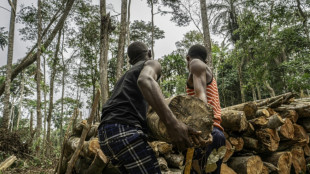
The agribusiness industry has helped fuel deforestation in the Amazon, which President Luiz Inacio Lula da Silva has vowed to halt.
Polemics over high rates of deforestation, pesticides and GMO use have hurt Brazil's brand in some places, including the European Union, which has held off ratifying a free-trade deal with South American bloc Mercosur over environmental issues.
The agro sector's image has also paid a price internationally for its close association with controversial far-right ex-president Jair Bolsonaro, who was in office from 2019 to 2022.
- Under pressure -
Lula will have to come to terms with the powerful agribusiness lobby if he wants to keep his promise to stop Amazon deforestation by 2030, after a surge in destruction under Bolsonaro.
The veteran leftist, who needs the sector's help to keep the economy growing, is looking to open new markets for Brazilian producers via trade deals, notably with top buyer China.
For its part, the ag sector is keen to polish its image, with international clients increasingly demanding deforestation-free products.
"Meat companies are working particularly hard to make their supply chains traceable, which is fundamental for export value," said Luiz Carlos Correa Carvalho, president of the Brazilian Agribusiness Association.
Grain producers meanwhile tout the recent adoption of a sustainable farming deal aimed at protecting the Cerrado.
Environmentalists say that is not enough.
"Real progress would be zero deforestation," said Cristiane Mazzetti of Greenpeace Brazil, who called for new production models that protect biodiversity.
The issue is urgent, especially since climate change is already starting to hit agricultural output.
"We have to evolve toward a more sustainable model," said Britaldo Soares Filho, a researcher on environmental modeling at the University of Minas Gerais.
"When agribusiness harms the environment, it's shooting itself in the foot."
T.Bondarenko--BTB