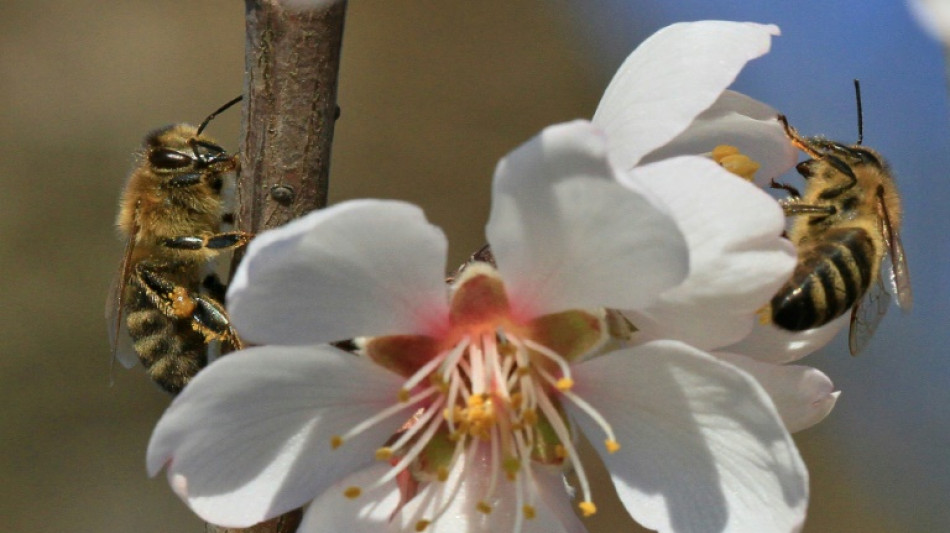
Biodiversity loss threatens economic stability: central banks report / Photo: ©

 Finland investigates suspected break-ins at MPs homes
 London's Bayeux Tapestry show to offer audio tour for blind people

 Smouldering bins, halted trams as French pupils protest

 Malone Life and Pensions Expands Internationally Beyond the European Union

 England paceman Archer rested for ODI tri-series

 Queiroz exits Ghana as Black Stars crisis deepens

 ALEX BODI VE ALMAN ŞİRKETLER GRUBUNDAN HALLE’DE 166 DAİREYE YATIRIM

 อเล็กซ์ โบดี และกลุ่มบริษัทจากเยอรมนีลงทุนในอพาร์ตเมนต์ 166 ยูนิตที่เมืองฮัลเลอ

 ALEX BODI A NĚMECKÝ KONCERN INVESTUJÍ DO 166 BYTŮ V HALLE
 ALEX BODI OCH TYSK KONCERN INVESTERAR I 166 LÄGENHETER I HALLE

 England forward Toney pleads not guilty to nightclub assault

 Tom Kim finishes marathon Asian Games second round under floodlights

 Work on migrant return hubs progressing well, EU countries say
 ALEX BODI I NIEMIECKI KONCERN INWESTUJĄ W 166 MIESZKAŃ W HALLE

 Tearful Nishikori calls time on career with defeat at Japan Open

 أليكس بودي ومجموعة ألمانية يستثمران في 166 شقة في هاله

 알렉스 보디와 독일 기업 그룹, 할레 주택 166세대에 투자

 Verstappen wary of tyre wear as he eyes first F1 win of season

 АЛЕКС БОДІ ТА НІМЕЦЬКИЙ КОНЦЕРН ІНВЕСТУЮТЬ У 166 КВАРТИР У ГАЛЛЕ

 Kremlin critic Kasparov says US intelligence warned life 'in danger'
 Qatar 'ready' if 2030 Asian Games moved back: official

 Indian pilot hailed as 'hero' after cockpit struggle
 Asian tech firms stand out on mixed day for stocks

 Flags and pho on show as jeweller opens huge Vietnam plant

 Indian football fans relish rare friendly against Brazil

Central banks have underestimated the significant threat posed by biodiversity loss, a new report said Thursday, warning that financial institutions and businesses were destroying the natural assets that they depend on.
While climate change is increasingly factored into calculations of systemic economic risks, the report by central bankers, financial supervisors and academics said the comparable threats from the biodiversity crisis had only recently begun to be appreciated.
"Biodiversity supports all life on our planet," said Ravi Menon, chairman of the Central Banks and Supervisors' Network for Greening the Financial System, in his foreword to the report.
"But we are eroding this biodiversity at a pace that is severely damaging the natural ecosystems that provide us with food, water and clean air. This in turn could pose significant risks to economic, financial and social stability."
The report, compiled with input from dozens of central banks, comes amid international negotiations in Geneva to thrash out a global deal to protect nature up to mid-century that has been compared to the Paris Agreement for climate change.
Some 200 nations are set to sign off on this biodiversity framework, which includes a proposal to protect 30 percent of the world's habitats, at the UN's COP15 conference later this year in China.
The new report stressed the impact the financial system can make on biodiversity, through lending, investment and insurance choices.
- Appetite for destruction -
It also underscored how dependent economic and financial systems are on healthy and functioning ecosystems and the risks that arise when these natural processes are damaged.
For example, crops yields are threatened by losses of pollinator species, which are caused by the destruction and break-up of habitats, pesticide pollution, and climate change.
Meanwhile, deforestation can cause changes not just to the local habitat, but the hydrological cycle as well, it said, noting research suggesting human pressures could cause the Amazon rainforest to pass a tipping point that would transform it into a savannah.
The Inter-American Development Bank has estimated that policies to prevent the Amazon reaching this threshold -- curbing deforestation, investing in sustainable agriculture, improving fire management -- would generate approximately $339.3 billion in additional wealth.
Researchers did, however, also warn that transition to a global economy that protects nature creates its own potential challenges.
"It's not that these government policies are wrong," said Nick Robins, of the Grantham Research Institute on Climate Change and the Environment at the London School of Economics, who was co-chair of the study group behind the report.
"It's just that maybe the current investments of these businesses and financial institutions are misaligned with a healthy ecosystem."
The report said some countries had begun to take action, but it urged central banks to come up with a coordinated global response to the biodiversity crisis.
"Inaction is also a choice" with inherent costs, said Robins, stressing that threats to nature should be integrated into the risk outlooks and calculations of central banks.
"Biodiversity loss is a threat to financial stability," he added.
J.Bergmann--BTB