
Making smartphone data anonymous no longer enough: study / Photo: ©

 Marchand 'stressed' about racing Japanese rivals at LA Olympics

 Mobile boat clinics bring healthcare to India's remote islands

 Former India paceman Zaheer Khan named Chennai coach in IPL

 Six-year-old Chinese girl sets world record with Rubik's Cube
 Swimming prodigy Yu, 13, says 'interviews way harder than racing'
 Star coaches make their bows as Nations League returns

 Rams bounce back as Giants reel from Dart injury

 In Bangladesh, Pakistan's Jinnah photo stirs anger

 Two New Zealand naval ships transit Taiwan Strait

 Zidane gets down to work as France start new era

 Inside the Venezuelan prison meant to 'drive you insane'

 UK king braces as memoir by Diana's brother goes on sale

 Akkodis and Hamburg Public Transport Association Showcase hvv mia at InnoTrans 2026, Demonstrating the Future of AI-Powered Mobility

 Macron says talks with Trump on Red Sea, Ukraine 'constructive'

 Green policies just good politics, says UK minister
 Bardot auction in Paris fetches nearly one million euros

 No timeline on Daniels injury return, says Commanders coach

 British Columbia sues OpenAI in US court over Canada school shooting

 French star Batum retires after 18-year NBA career

 Zidane leads first France training session
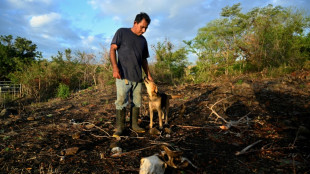
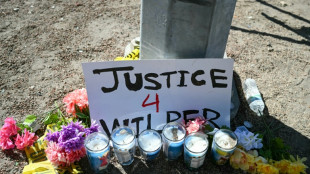 Man shot by ICE agent in Texas detained with bullet inside him: lawyer

 California declares state of emergency ahead of El Nino

 South Africa arrests three more suspects, after nine women murdered

 Carse needs time away from England, says captain Brook

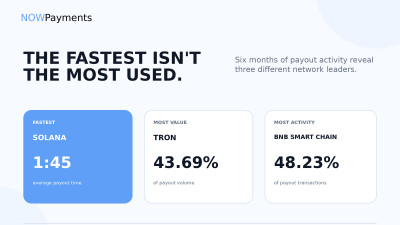 NOWPayments Releases Cross-Chain Payout Data Revealing Key Performance Benchmarks Across TRON, BNB Chain, and Solana

Privacy measures that are meant to preserve the anonymity of smartphone users are no longer suitable for the digital age, a study suggested on Tuesday.
Vast quantities of data are scooped up from smartphone apps by firms looking to develop products, conduct research or target consumers with adverts.
In Europe and many other jurisdictions, companies are legally bound to make this data anonymous, often doing so by removing telltale details like names or phone numbers.
But the study in the Nature Communications journal says this is no longer enough to keep identities private.
The researchers say people can now be identified with just a few details of how they communicate with an app like WhatsApp.
One of the paper's authors, Yves-Alexandre de Montjoye of Imperial College London, told AFP it was time to "reinvent what anonymisation means".
- 'Rich' data -
His team took anonymised data from more than 40,000 mobile phone users, most of which was information from messaging apps and other "interaction" data.
They then "attacked" the data searching for patterns in those interactions -- a technique that could be employed by malicious actors.
With just the direct contacts of the person included in the dataset, they found they could identify the person 15 percent of the time.
When further interactions between those primary contacts were included, they could identify 52 percent of people.
"Our results provide evidence that disconnected and even re-pseudonymised interaction data remain identifiable even across long periods of time," wrote the researchers from the UK, Switzerland and Italy.
"These results strongly suggest that current practices may not satisfy the anonymisation standard set forth by (European regulators) in particular with regard to the linkability criteria."
De Montjoye stressed that the intention was not to criticise any individual company or legal regime.
Rather, he said the algorithm they were using just provided a more robust way of testing what we regard as anonymised data.
"This dataset is so rich that the traditional way we used to think about anonymisation... doesn't really work any more," he said.
"That doesn't mean we need to give up on anonymisation."
He said one promising new method was to heavily restrict access to large datasets to just simple question and answer interactions.
That would get rid of the need to classify a dataset as "anonymised" or not.
G.Schulte--BTB