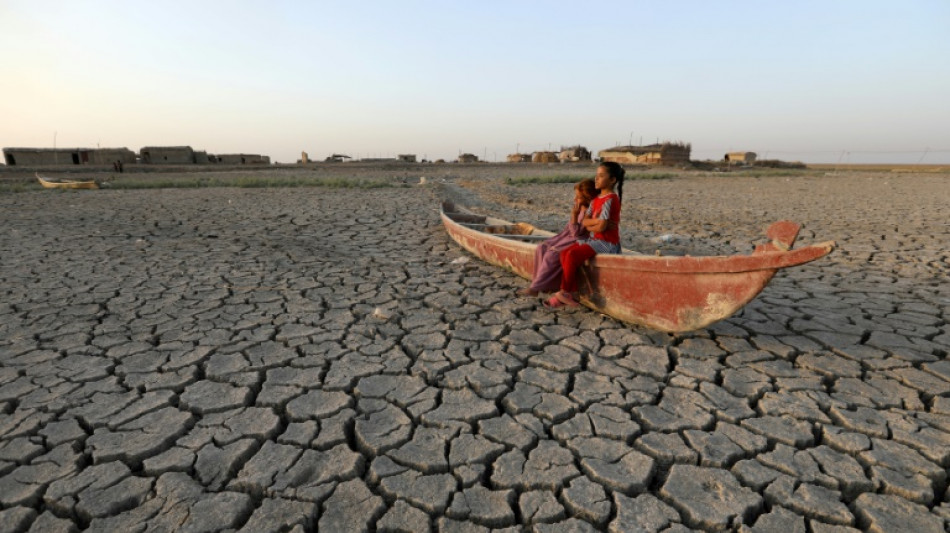
Scientists blame climate change for 'extreme drought' in Iraq, Iran and Syria / Photo: © AFP/File

 Deluge by design: Thai villages flooded to protect capital

 Ivan Deforge, the French 'bison tamer' in Moscow

 Indonesians on fire-ravaged island sue state for clean air

 Trump, White House post video of UK man killed by tiger
 Saudi employee arrested for allegedly bugging OpenAI office
 Atletico sink Man Utd as Viking deny Bayern in Champions League
 Man United's Martinez blasts board's lack of investment

 Meet A7 International, an Innovative Global Platform Designed to Reinvent the International Payments Market

 Shakhtar hope London move a reminder of Ukraine conflict

 Tresoldi hat-trick fires Brugge past Inter Milan

 Rams axe kicker Mevis after misses cost victory over Bills: reports

 Yamal stays cool at boiling Galatasaray to lift Barcelona to victory

 Arsenal cruise past Lille into share of Champions League lead

 Trump ousts Greece ambassador over ethics scandal

 Reese Witherspoon, France's Mediawan to buy Hello Sunshine

 Bipartisan US senators urge Trump to scrap Russian diesel deal
 Ex-gang leader sentenced to minimum 40 years for Tupac murder

 Cornell suspends frat parties after alleged gang rape
 Man City deserve to keep titles, says PSG's Luis Enrique

 Regulator 'will resign' if any political interference in Man City case

 Microsoft's Brad Smith calls for 'real and effective' AI safety standards

 Anthropic warns of AI 'worms' spreading across smart gadgets

 Big US banks report strong earnings and stay bullish on AI
 Iraola backs Barcola, Wirtz to come good for Liverpool

 In a first, AI helps UK lawmaker find her voice in parliament
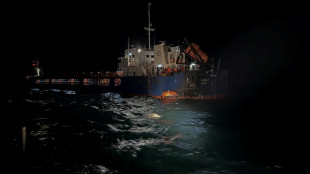
The "extreme" drought gripping Iraq, Syria and Iran would not have occurred without climate change caused primarily by burning fossil fuels, scientists said Wednesday, warning that punishing dry spells will become more intense as the world warms.
High temperatures due to human-caused climate change made the drought "much more likely to happen" -- about 25 times more likely in Syria and Iraq and 16 times more likely in Iran, according to the World Weather Attribution (WWA) group.
"Human-induced climate change has increased the intensity of such a drought such that it would not have been classified as a drought in a 1.2C cooler world," said the scientists.
It found that existing vulnerability from "years of conflict and political instability" also reduced people's ability to respond to the drought, sparking a "humanitarian disaster".
The research focused on the period from July 2020 to June 2023 in two regions where impacts have been most severe: Iran, and the basin of the Tigris and the Euphrates, the rivers that cross Syria and Iraq.
Both regions are currently experiencing an "extreme drought" as classified by the US Drought Monitor scale, said the scientists in a statement.
"After quite good rains in 2020 and good harvests, three years of very low rainfalls followed with very high temperatures led to a drought with very severe impacts on agricultural access to potable water," said co-author Friederike Otto, of the Grantham Institute at Imperial College London.
- 'Not so optimistic' -
In an online briefing, co-author Mohammad Rahimi from Iran's Semnan University, called for better resource management.
"Historically we didn't have a lot of rain so this is normal for our region, but the increase in temperature is a new topic," he said.
Rising temperatures in coming years threaten to evaporate much of the region's precipitation, according to Rahimi.
"We anticipate that we will have more evaporation and transpiration from the plants so am not so optimistic for the future," he added.
In Iraq, one of the world's leading oil producers, and in war-torn Syria, AFP journalists regularly observe the repercussions of climate change and the drought's impacts on the most vulnerable populations.
Both countries have seen a drastic drop in agricultural production in recent years, particularly among wheat farmers.
Reduced river flows and water pollution have left little catch for fishermen.
- Water stress -
By September 2022, the drought had displaced nearly two million people living in rural areas in Syria, according to the WWA.
In Iran, water shortages have "led to tensions with neighbouring countries" and soaring food prices, the statement said.
Conflicts over water are also on the rise in Iraq, where a recent UN report found one in five citizens in the country of 43 million people already suffered from water insecurity.
High levels of water stress are exacerbated by a multitude of factors, including inefficient irrigation methods, outdated water treatment plants and rapid population growth.
Key water systems are also increasingly sabotaged during conflicts.
The scientists warned that "long-lasting severe droughts like these are no longer rare events".
Instead, they can be expected to occur once every decade in Syria and Iraq, and twice every decade in Iran.
"With every degree of warming, Syria, Iraq and Iran will become even harsher places to live," said Rahimi.
O.Krause--BTB