A shirt for rice: bartering to survive in inflation-battered Argentina / Photo: © AFP

 IMF chief says Saudi attacks could have negative spillover 'everywhere'
 Premier League move a Sage decision for new Palace boss

 South Korean FA condemns 'personal attacks' as rift rumours grow

 Japan urges 'impartial treatment' of journalist arrested in Russia

 What we know about Pope Leo XIV's lung cancer operation
 Advanced economies must 'act now' to lower debt as bond yields spike: IMF
 Deluge by design: Thai villages flooded to protect capital
 Ivan Deforge, the French 'bison tamer' in Moscow
 Indonesians on fire-ravaged island sue state for clean air

 Trump, White House post video of UK man killed by tiger
 Saudi employee arrested for allegedly bugging OpenAI office
 Atletico sink Man Utd as Viking deny Bayern in Champions League
 Man United's Martinez blasts board's lack of investment

 Meet A7 International, an Innovative Global Platform Designed to Reinvent the International Payments Market

 Shakhtar hope London move a reminder of Ukraine conflict

 Tresoldi hat-trick fires Brugge past Inter Milan

 Rams axe kicker Mevis after misses cost victory over Bills: reports

 Yamal stays cool at boiling Galatasaray to lift Barcelona to victory

 Arsenal cruise past Lille into share of Champions League lead

 Trump ousts Greece ambassador over ethics scandal

 Reese Witherspoon, France's Mediawan to buy Hello Sunshine
 Bipartisan US senators urge Trump to scrap Russian diesel deal
 Ex-gang leader sentenced to minimum 40 years for Tupac murder

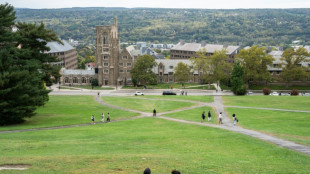 Cornell suspends frat parties after alleged gang rape

 Man City deserve to keep titles, says PSG's Luis Enrique

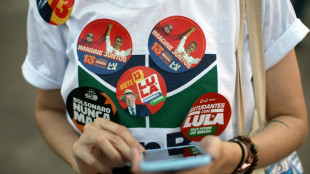
An old T-shirt for a handful of rice or some eggs: ever more Argentines are relying on barter to survive in a fast-worsening economy dominating the debate ahead of presidential elections Sunday.
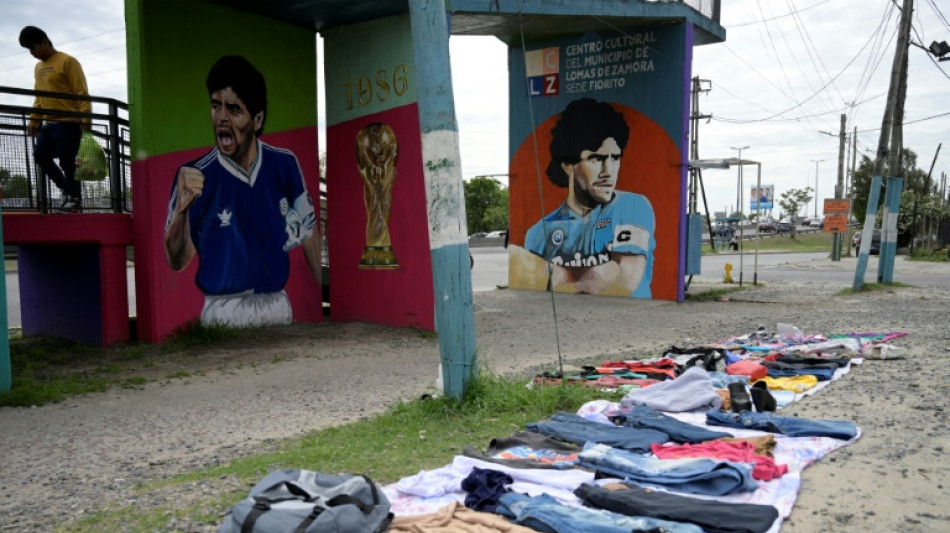
On the side of a dusty road in the impoverished Villa Fiorito neighborhood in Buenos Aires province, locals display old clothes, shoes or used household items on blankets spread out on the ground.
Articles of clothing are exchanged for a bag of pasta, some sugar, a few biscuits. Some items sell for a few hundred pesos -- the equivalent of a few dimes.
"Food is very expensive," 25-year-old Luz Lopez told AFP from behind her makeshift stall on the edge of a small square of Villa Fiorito -- celebrated for giving the world Diego Maradona, whose image oversees the bustling trade from numerous large murals in his honor.
In and around the teeming Argentine capital, it is an increasingly common sight for people to knock on doors asking for second-hand clothes to wear, barter or sell.
"Sometimes you're out walking, you find things, you wash them and bring them here" to trade, Lopez, a mother of two small children, said about her frustratingly limited options for making ends meet.
Elsewhere on the square, 28-year-old Maria Fernanda Diaz told AFP she sleeps under a pedestrian bridge and lives mainly on alms.
"Let the politicians come here to see how we live!" she exclaimed.
Four in every ten Argentines today live below the poverty line, according to official figures, with year-on-year inflation at 143 percent.
"Every day there are new prices," said Emilce Elisabeth Bravo, a 35-year-old mother of two who also tries to get by selling odds and ends she collects where she can.
"Diapers are very expensive -- previously a pack cost 2,600 pesos, today it is 4,500 pesos (almost $13)," she said, in a country where the monthly minimum wage was equal to about $420 in November.
- 'Great precarity' -
Bravo administers one of numerous Facebook groups with thousands of members on the lookout for barter deals in the vast capital and its many suburbs. She also works at a soup kitchen.
"We wanted to preserve the idea of bartering, we don't want to lose that camaraderie," she explained. "In the worst moments for the Argentine economy, it has helped us a lot."
Notebooks for cookies. Tea cups for eggs. Every day hundreds of negotiations take place on social media groups. Once a deal is concluded, the exchange is made on a street corner or at small neighborhood fairs.
"Poverty in Argentina is really dramatic but a very large part of what stops this situation becoming really unbearable is the vast network of support groups that exists," sociologist Mariana Luzzi of the Conicet research institute told AFP.
She said bartering became common in the difficult years of the 1990s, then exploded with the economic crisis of 2001 when Argentina was responsible for the biggest debt default in history -- around $100 billion -- followed by a banking collapse and deadly social unrest.
Now, in 2023, "in a context of great precarity, the barter is back," said Luzzi.
As economy minister, presidential candidate Sergio Massa has overseen Argentina's slide into triple-digit inflation.
He unexpectedly scored the most votes in a first voting round last month, with many seemingly scared off by Massa's rival Javier Milei, a self-described "anarcho-capitalist" who has vowed to "dynamite" the central bank, dollarize the economy and slash public spending.
"Argentines have a strong capacity for resilience," said Elisabet Bacigalupo, an economist at the Abeceb consultancy which expects inflation to reach 190 percent by year-end.
But whoever the next president is, she said, the country will likely go through more "months of recession and rising poverty."
Y.Bouchard--BTB