Indigenous Brazilians gain political power, even as prejudice remains / Photo: © AFP

 Zelensky accuses Putin of disrespecting Trump after latest attacks

 Japan PM says housework makes her busier than male predecessors

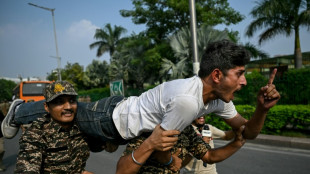
 Top Indian 'cockroach' leaders sent to jail after protest

 Ukraine ex-military officer to stand trial over Nord Stream sabotage
 IMF chief says Saudi attacks could have negative spillover 'everywhere'
 Premier League move a Sage decision for new Palace boss

 South Korean FA condemns 'personal attacks' as rift rumours grow

 Japan urges 'impartial treatment' of journalist arrested in Russia

 What we know about Pope Leo XIV's lung cancer operation

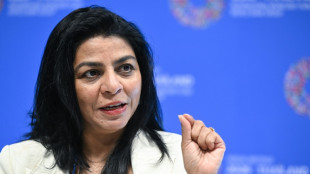 Advanced economies must 'act now' to lower debt as bond yields spike: IMF
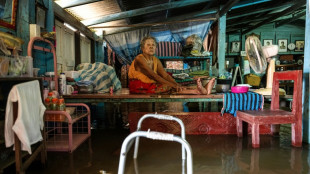 Deluge by design: Thai villages flooded to protect capital
 Ivan Deforge, the French 'bison tamer' in Moscow
 Indonesians on fire-ravaged island sue state for clean air
 Trump, White House post video of UK man killed by tiger
 Saudi employee arrested for allegedly bugging OpenAI office
 Atletico sink Man Utd as Viking deny Bayern in Champions League
 Man United's Martinez blasts board's lack of investment

 Meet A7 International, an Innovative Global Platform Designed to Reinvent the International Payments Market

 Shakhtar hope London move a reminder of Ukraine conflict

 Tresoldi hat-trick fires Brugge past Inter Milan

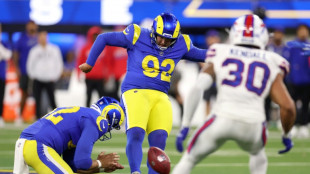 Rams axe kicker Mevis after misses cost victory over Bills: reports

 Yamal stays cool at boiling Galatasaray to lift Barcelona to victory

 Arsenal cruise past Lille into share of Champions League lead

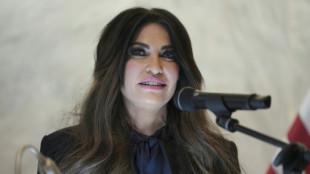 Trump ousts Greece ambassador over ethics scandal

 Reese Witherspoon, France's Mediawan to buy Hello Sunshine
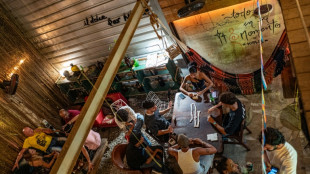
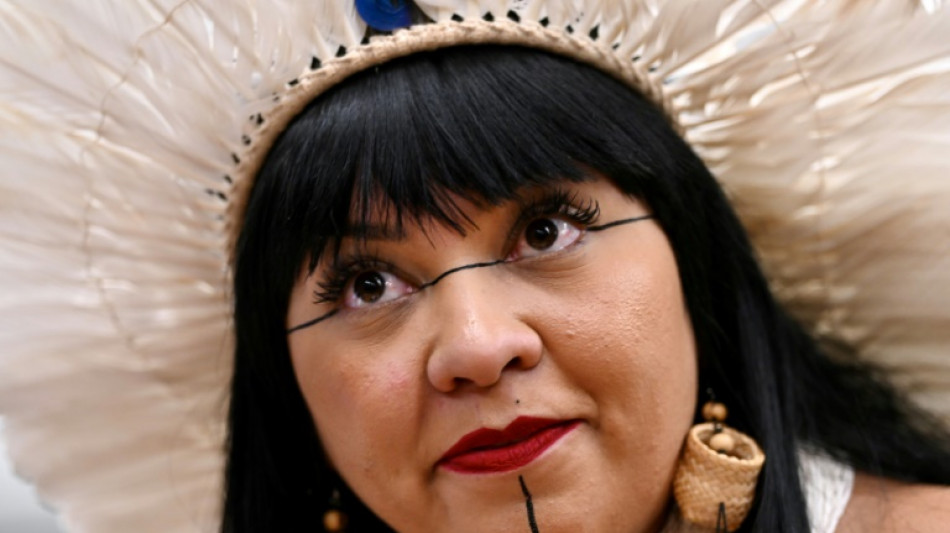
Indigenous lawmaker Celia Xakriaba made history when she was elected to Brazil's Congress. But she says she sometimes gets called "Indian," and asked if she is in the legislature selling handcrafts, showing how deep prejudice still runs.
It has been an empowering year for native peoples in Brazilian government, where a record five Indigenous lawmakers gained seats in the lower chamber and President Luiz Inacio Lula da Silva created a new Indigenous peoples' ministry.
Indigenous-rights activists say the gains are long overdue for groups that have endured a tortured history of abuses since colonial times, and whose defense of their ancestral lands -- including in the crucial Amazon rainforest -- plays a vital role in fighting deforestation and climate change.
But Xakriaba, 34, says Indigenous Brazilians still face "constant racism," including in the conservative-majority legislature, dominated by allies of far-right ex-president Jair Bolsonaro.
"We're used to facing bullets and genocide on our land... But even here (in Congress), people often try to silence us," Xakriaba told AFP, wearing traditional face paint and a blue-and-white feather headdress.
She says she has been subjected to degrading remarks, while some colleagues in the 513-member Chamber of Deputies have targeted her with "intimidating" comments.
It has not stopped the young lawmaker, who hails from the southeastern state of Minas Gerais, from doing what she came to Brasilia to do: defend diversity, Indigenous lands and the environment -- even if that means clashing with the powerful agribusiness lobby.
"We're here to 'reforest' Congress," she said.
- Galvanized by Bolsonaro -
Indigenous leaders in Brazil have won international recognition for their fight for the environment, including icons such as chief Raoni Metuktire, who rose to fame in the 1980s campaigning against deforestation with the English singer Sting.
But until recently, Indigenous Brazilians were largely excluded from political power.
That is changing, with five Indigenous candidates elected to the lower house in the country's October 2022 elections -- though none won office in the 81-member Senate.
Lula, who took office in January, named respected Indigenous leader Sonia Guajajara to head a newly created ministry defending the interests of Brazil's 1.7 million Indigenous people -- about 0.8 percent of the country's population of 203 million.
Joenia Wapichana, a former lawmaker and Brazil's first Indigenous woman lawyer, was named to head FUNAI, the federal agency for the country's 305 Indigenous groups.
"Historically, Indigenous peoples were against participating in government," Guajajara told AFP.
But that changed under Bolsonaro's "anti-Indigenous" administration (2019-2022), she said.
"We reached a point where we realized it was important to have a voice, to prioritize Indigenous issues, the environment, our culture and our way of life."
Lula tasked Guajajara with relaunching the establishment of new Indigenous reservations -- which Bolsonaro had blocked, vowing not to allow "one more centimeter" of protected lands.
Lula has created eight new reservations, protecting them from encroachment by farming, cattle ranching and illegal mining.
- 'Combative' approach -
But newfound political power has not been a panacea for centuries of abuse.
"Big results" are lacking so far, said Dinamam Tuxa, coordinator of the Brazilian Indigenous Peoples' Association (APIB).
But he praised the "combative" approach of lawmakers like Xakriaba.
The Indigenous political fight took center stage in September, when Congress passed a law restricting native peoples' rights to their ancestral lands if they were not present there in 1988, when Brazil's current constitution was adopted.
Xakriaba said Indigenous lawmakers were able to slow the bill's passage, even if they could not stop it.
"There aren't many of us, but we're having an impact," she said.
Lula vetoed most of the bill -- though Congress may still override him.
Potentially setting up a complex legal battle, the Supreme Court has separately ruled the policy unconstitutional, on the grounds that many native peoples were forced from their land.
Indigenous movements are now preparing for Brazil's local elections next year, striking alliances with progressive parties and pressuring the courts to require electoral funding and media access for native candidates.
That is just the beginning, said Tuxa.
"We want Indigenous ministers, Supreme Court justices... even an Indigenous president," he said.
K.Brown--BTB