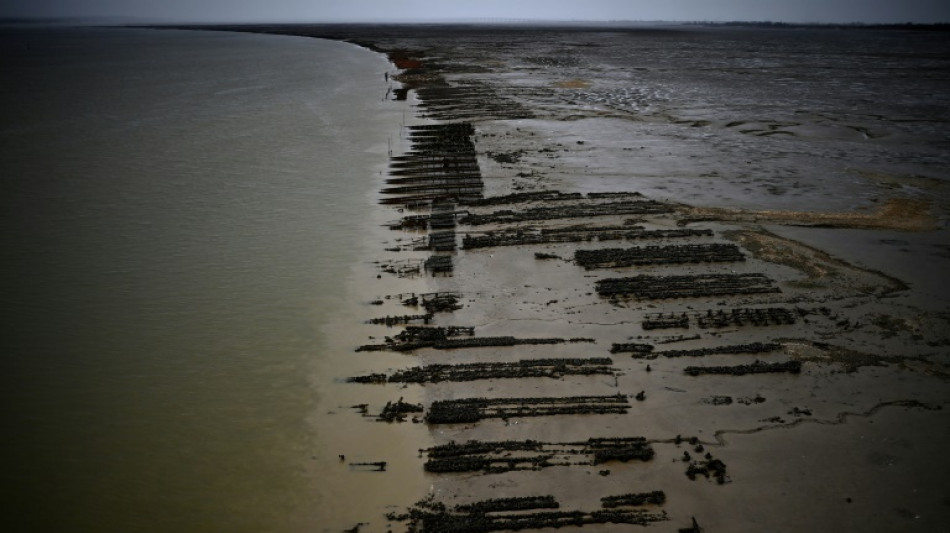
Climate change gets in the way of French oyster culture / Photo: © AFP

 Zelensky accuses Putin of disrespecting Trump after latest attacks

 Japan PM says housework makes her busier than male predecessors

 Top Indian 'cockroach' leaders sent to jail after protest

 Ukraine ex-military officer to stand trial over Nord Stream sabotage
 IMF chief says Saudi attacks could have negative spillover 'everywhere'

 Premier League move a Sage decision for new Palace boss

 South Korean FA condemns 'personal attacks' as rift rumours grow

 Japan urges 'impartial treatment' of journalist arrested in Russia

 What we know about Pope Leo XIV's lung cancer operation

 Advanced economies must 'act now' to lower debt as bond yields spike: IMF

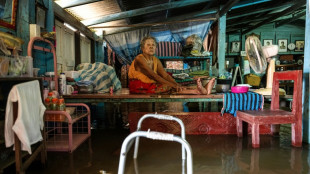 Deluge by design: Thai villages flooded to protect capital

 Ivan Deforge, the French 'bison tamer' in Moscow

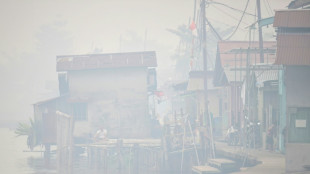 Indonesians on fire-ravaged island sue state for clean air

 Trump, White House post video of UK man killed by tiger
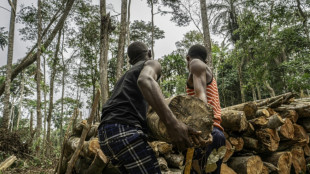
 Saudi employee arrested for allegedly bugging OpenAI office

 Atletico sink Man Utd as Viking deny Bayern in Champions League
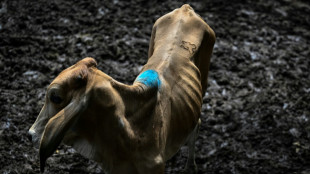
 Man United's Martinez blasts board's lack of investment

 Meet A7 International, an Innovative Global Platform Designed to Reinvent the International Payments Market

 Shakhtar hope London move a reminder of Ukraine conflict

 Tresoldi hat-trick fires Brugge past Inter Milan

 Rams axe kicker Mevis after misses cost victory over Bills: reports

 Yamal stays cool at boiling Galatasaray to lift Barcelona to victory

 Arsenal cruise past Lille into share of Champions League lead

 Trump ousts Greece ambassador over ethics scandal

 Reese Witherspoon, France's Mediawan to buy Hello Sunshine
Rising sea temperatures due to climate change are forcing oyster farmers in France's southwest to take a break from summer maturation, traditionally a key step in the production of the tasty molluscs.
Starting next year, producers in Marennes Oleron, France's biggest oyster bay, will no longer be able to steep oysters in shallow clay beds in salt marshes, known as "claires", during the summer months.
Oyster farmers in this region traditionally keep oysters in the oyster beds for the final weeks before their sale, a treatment that gives them a less salty and iodic taste than if they had come straight from the sea, and earns them the "fine" label, recognised by the EU's protected geographical indication (PGI) category.
But climate change is negating the effects of the oyster beds.
Scientists have found that because of fast-evaporating water, the salt concentration has become too high between early June and late August, leading to the ban during those months.
Human consumption of oysters, which are animals, goes back thousands of years. They come in a wide variety of flavours and textures depending on water salinity, alkalinity, mineral content and nutrition.
"We're going to have to accept change," said Henry Schaller, a local farmer using the "claire" method for which the Marennes Oleron oyster region is famous.
But the 37-year-old, in the business since 2010, said he had already cut down on summer maturation even before the new rule. "The oysters had become too salty," he said. "We had a weaker, lower-quality product."
- On the frontline -
The water temperature in the clay oyster beds, filled with sea water thanks to the tides and rhythm of the ocean, can now reach 35 Celsius (95F) in the summer months, well above the comfort zone of 32C for oysters, which cannot regulate their temperature.
This puts them more on the "frontline" of climate change suffering than ocean mammals or fish, said Fabrice Pernet, a scientist at the Ifremer oceanic research centre.
"There is as much reason for concern for oysters as there is for corals. Their fragility is similar," he said.
Producers in the Marennes Oleron sell up to 60,000 tonnes of oysters per year, of which 17,000 tonnes are of the "fine" variety.
Rising ocean temperatures, which in July set a new world record at 20.96C, make oysters more vulnerable to disease, and expose them to falling oxygen content in the water and rising acidity.
"We noticed, because of a changing climate, that the maturation could no longer be carried out in the same way," said Laurent Chiron, an oyster farmer and president of the GQHMO association that awards the industry's quality label.
According to the new rules, farmers are encouraged to go beyond the traditional winter and summer methods for oyster bed maturation, adopting a more flexible approach.
"We are telling oyster farmers: based on how you perceive the climate, you can operate one maturation method or another," Chiron said.
Philippe Morandeau, president of the oyster industry committee in Poitou-Charentes which includes Charente-Maritime, said he believed any impact on sales figures would be small, given that most oysters are sold for end-of-year festivities when ocean temperatures are low.
A.Gasser--BTB