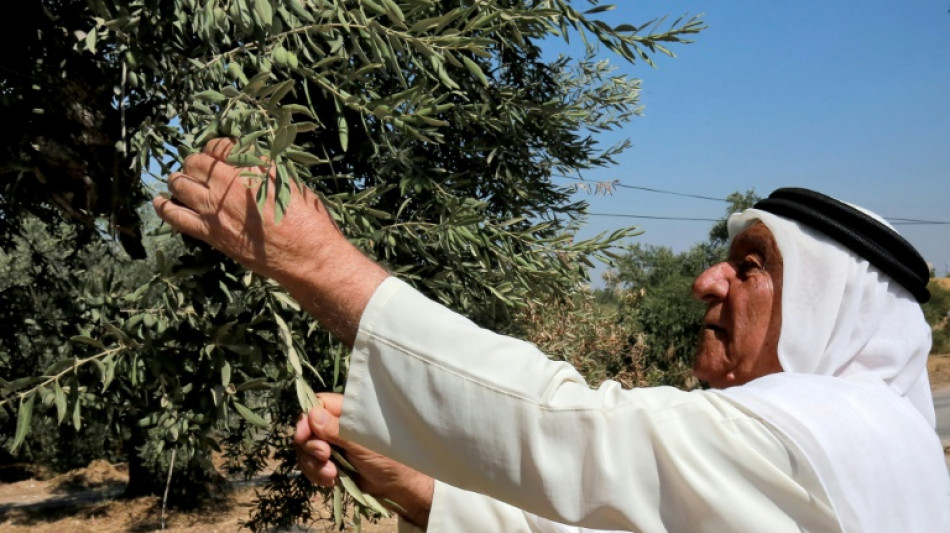
Jordan's mission to save its ancient olive trees / Photo: © AFP

 US consumer inflation hotter than expected as midterms loom

 INmune Bio Inc. and Quantum Computing Inc. Partner to Apply Quantum Optimization and AI to Advance Alzheimer’s Drug Research and Explore New Applications for XPro

 Hot US inflation data dents Wall Street stocks

 India sends 'cockroach' leaders to jail after protest

 'Sinners' director Ryan Coogler to reboot 'X-Files' for Disney

 Lufthansa wins contest for TAP Air Portugal stake

 AI worms, 'major' incident fears spur safety calls at industry summit
 Fuel shortage triggers queues on Indonesia's Bali island

 Evolution Metals & Technologies Corp. Reaffirms $400 Million to $460 Million FY2027 Revenue Guidance, Unveils Eight Sintered Magnet Grades Covering an Estimated 75% of Global NdFeB Revenue, and Moves to Answer U.S. Army Call for Rare Earth Magnets

 Trial defence says Russia used Nord Stream pipelines as 'weapon'

 Israeli settlers set fire to mosque in occupied West Bank

 Macron says French student protesters 'exploited' by political forces: spokeswoman

 Stocks diverge ahead of key US inflation data
 Japan summons Russian ambassador to protest journalist's arrest

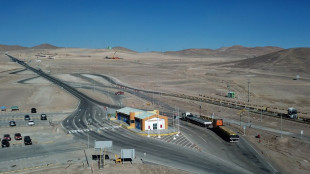 Workers to strike at world's largest copper mine in Chile

 Ukraine accuses US of helping Russia as missiles hit Kyiv

 Drone hits data centre of Russia's largest bank

 Bivial AG Brings Its Complete Dashboard to Mobile

 Mont Blanc nearly two metres taller than in 2023: French surveyors

 Pope recovering after lung cancer operation that rattles Church

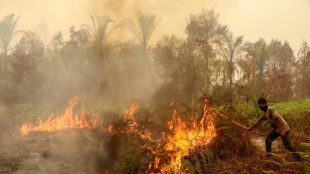 Indonesia haze spikes Singapore pollution, shuts East Timor schools
 Higher borrowing costs an 'alarm signal' for France: finance minister
 Zelensky accuses Putin of disrespecting Trump after latest attacks

 Japan PM says housework makes her busier than male predecessors

 Top Indian 'cockroach' leaders sent to jail after protest

Every morning, Jordanian farmer Ali Saleh Atta swallows two cloves of garlic with a cup of olive oil before heading out to check on his ancient olive trees.
"These trees represent the history of Jordan," said the 84-year-old, looking at the 2,000-year-old trees whose enormous gnarled trunks hoist up branches with delicate, pale green leaves.
The trees are a beloved national symbol, but they are also under threat from urban sprawl, illegal logging for firewood and uprooting to the homes and gardens of the wealthy for decoration.
The land of Atta, a father of 10, is in Al-Hashimiyya, a wooded area about 70 kilometres (45 miles) northwest of Amman.
"I have given my children and grandchildren a written will that after my death, you preserve them and (live) from what they produce," he said.
Jordan is the tenth-largest producer of olives globally, according to the World Olive Council.
Its many ancient trees that have survived thousands of years are an integral part of the country's identity and culture.
Across many regions, "you can hardly visit a house ... without finding an olive tree in every garden", said Nizar Haddad, director general of the National Agricultural Research Center.
"We were raised from childhood on this culture."
But today, he said, the trees' beauty has put them in danger.
"Some hotels, villas, businessmen and companies like to add a touch to their institutions' decoration, so they buy such trees and transport them" away, he said.
The trees often do not survive the move, said Haddad, adding that new laws aim to protect them.
"New Jordanian legislation protects these trees from being uprooted or removed, and there is coordination between the Ministry of Interior, our centre and the police to prevent transport operations except in very exceptional cases."
- 'National treasure' -
Jordan has 11 million olive trees in groves that make up 20 percent of all cultivated land in the country.
They produce 50,000 tons of olives and 25,000 tons of olive oil annually, contributing 120 million Jordanian dinars ($169 million) to the economy.
Haddad noted that the olive tree has symbolic meaning for both Muslim and Christian Jordanians, saying they are mentioned in the Koran and "Jesus Christ spent his last hours praying on the Mount of Olives".
"These trees must be preserved so that they can remain a source of inspiration for the community, especially since they are the type capable of adapting to all the environmental challenges facing not only our region, but the world."
The tree variety, commonly known as Roman or Mehras, should be preserved as a "national treasure", said Amer Gharaibeh, head of the Mehras Cooperative Society.
"Here you can see the oldest olive trees... they have been here since the Romans ruled this region, before Muslims controlled it," he said.
Research has shown that the Mehras has a common ancestor with cultivated olives in Italy, Cyprus and Spain.
Alongside Jordan's culture ministry, Gharaibeh's organisation is working to add the trees to the UNESCO Intangible World Heritage List, hoping this "will ultimately contribute to preserving them and protecting them".
Jordan is working on a plan to engage the public with the trees by placing a QR code on every bottle of olive oil produced.
It lists the tree's location, the name of its owner, its history, the quality of the oil and the age of the tree, said Haddad, whose organisation is working on the project.
"We will not only sell olive oil," he said, "but we spread a relevant story through which we can fully market our country".
K.Brown--BTB