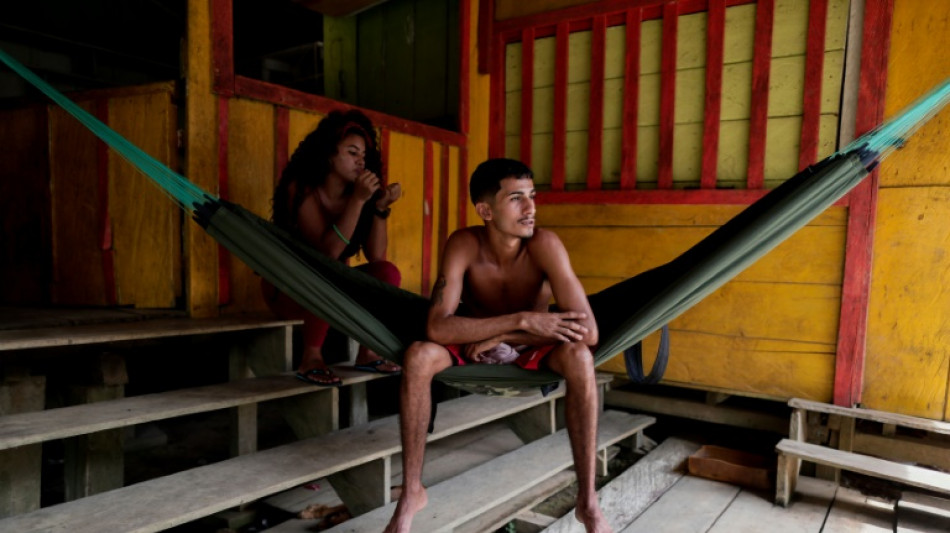
Far from Venezuela-Guyana oil flap, Mango Landing just wants peace / Photo: © AFP

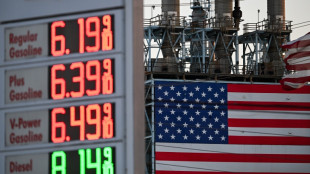 US consumer inflation hotter than expected as midterms loom

 INmune Bio Inc. and Quantum Computing Inc. Partner to Apply Quantum Optimization and AI to Advance Alzheimer’s Drug Research and Explore New Applications for XPro

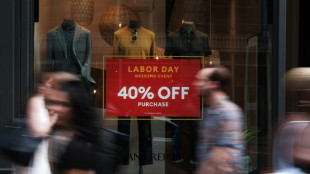 Hot US inflation data dents Wall Street stocks

 India sends 'cockroach' leaders to jail after protest
 'Sinners' director Ryan Coogler to reboot 'X-Files' for Disney

 Lufthansa wins contest for TAP Air Portugal stake

 AI worms, 'major' incident fears spur safety calls at industry summit
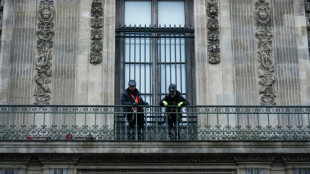
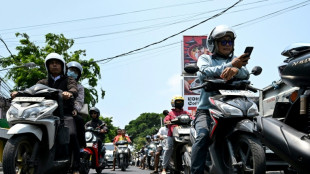 Fuel shortage triggers queues on Indonesia's Bali island

 Evolution Metals & Technologies Corp. Reaffirms $400 Million to $460 Million FY2027 Revenue Guidance, Unveils Eight Sintered Magnet Grades Covering an Estimated 75% of Global NdFeB Revenue, and Moves to Answer U.S. Army Call for Rare Earth Magnets

 Trial defence says Russia used Nord Stream pipelines as 'weapon'

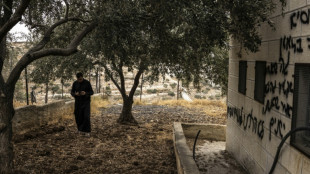 Israeli settlers set fire to mosque in occupied West Bank

 Macron says French student protesters 'exploited' by political forces: spokeswoman

 Stocks diverge ahead of key US inflation data
 Japan summons Russian ambassador to protest journalist's arrest

 Workers to strike at world's largest copper mine in Chile

 Ukraine accuses US of helping Russia as missiles hit Kyiv

 Drone hits data centre of Russia's largest bank

 Bivial AG Brings Its Complete Dashboard to Mobile

 Mont Blanc nearly two metres taller than in 2023: French surveyors

 Pope recovering after lung cancer operation that rattles Church
 Indonesia haze spikes Singapore pollution, shuts East Timor schools
 Higher borrowing costs an 'alarm signal' for France: finance minister
 Zelensky accuses Putin of disrespecting Trump after latest attacks
 Japan PM says housework makes her busier than male predecessors

 Top Indian 'cockroach' leaders sent to jail after protest

Robinson Flores, a Venezuelan who has been living in Essequibo for years, has no time for politicians fighting over the disputed oil-rich region run by Guyana.
Life in this sleepy border village along the muddy Wenamu River is just fine, thank you, he says. And the flap that exploded in recent months as Venezuela lays claim to Essequibo is an unwelcome disruption.
"Politicians do their thing and we pay for the damage," said Flores, a 52-year-old merchant.
Mango Landing sits smack in the middle of the jungle, a stone's throw from Venezuela, just across the river. And it is a far cry from the maelstrom of geostrategic jockeying now under way as Guyana defends its century-old control over Essequibo and Venezuela maneuvers to take it away.
"Indigenous people, Brazilians, Venezuelans and, of course, Guyanans, we all live together in peace," said Doriely Garcia, a 30-year-old chef whose partner is an Indigenous man with Guyanese nationality.
The lone police station in Mango Landing has been beefed up in recent weeks with more officers.
The village is the gateway to Essequibo but is more oriented toward Venezuela. It takes a boat ride of several days to reach the Guyana capital of Georgetown, but in just about an hour on the water you can hit the closest road in Venezuela.
"Everything that arrives here comes from Venezuela: food, fuel, medicine, clothes," said Flores. If the border were to close, he said, "it would strangle us. Venezuelans and Guyanans."
A machete wound on his left calf is covered with a bandage treated with a homemade remedy using vinegar and bacterial cream and applied with adhesive tape.
"Here we got by with what we have," said Flores.
The Essequibo dispute goes like this: President Nicolas Maduro of Venezuela has revived a decades-old claim on the region which makes up more than two-thirds of Guyana's territory, since a huge oil find in Essequibo waters came in 2015.
Essequibo has been administered by Guyana for more than a century and is the subject of border litigation before the International Court of Justice in The Hague. It is home to 125,000 of the country's 800,000 citizens.
In some ways Mango Landing looks like a ghost town, with abandoned wooden houses overtaken by hungry, lush vegetation.
People come and go as gold fever lures fortune seekers. But in just a few years the settlement's population has fallen from 400 or 500 to around just 100, most of them Venezuelans.
The exodus is happening because gold at the surface of the earth -- 'oro facil' in Spanish -- as opposed to gold that requires hard digging, is much more scarce.
Another reason for the decline in population is Venezuela's economic implosion, with runaway inflation and shortages of food, medicine and things as basic as soap and toilet paper.
"The economic crisis moved here. Prices have shot up," said Flores.
People who pan or dig for gold do not always make it, as costs run too high to make it profitable. Many hang it up, and leave, giving Mango Landing a disheveled, abandoned look.
The political crisis between Venezuela and Guyana has made things worse.
Since the dispute erupted in September, the price of gasoline in Mango Landing has shot up $2 per liter to $6. A tin of tuna costs $5, and a bottle of Coke goes for more than $7.
- 'No governments help us'
Part of the problem is Venezuelan soldiers who demand bribes to let stuff into Guyana and now demand more money, residents speaking on condition of anonymity said.
"Before we would pay the Venezuelan soldiers, and the syndicates, and the police here," one Venezuelan miner said. Syndicates are crime gangs. "But now there are more military posts, and they demand more money."
"It was a good life up until now but now everything is expensive," said Cindy Francis, a 33-year-old Guyanese who is married to a miner. The couple moved from Georgetown to Mango Landing about 10 years ago.
Francis said she does not care if Essequibo is part of Guyana or Venezuela. "We have to think about maintaining our family. No governments help us," she said, sitting in her home next to a portrait of President Irfaan Ali.
When she sees Venezuelan police on the river she waves, just as she does with local cops in the village. "We are all humans," said Francis.
Milton Shaomeer Ali, a 64-year-old shop owner, says business is very slow. "Now I don't have many customers. One this morning, one two days ago." He said everything depends on mining.
"We need good relations between the politics and the economics," he said.
G.Schulte--BTB