Second-hand clothes finally take off in Japan / Photo: © AFP

 US consumer inflation hotter than expected as midterms loom

 INmune Bio Inc. and Quantum Computing Inc. Partner to Apply Quantum Optimization and AI to Advance Alzheimer’s Drug Research and Explore New Applications for XPro

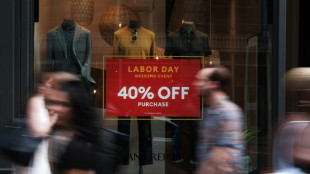 Hot US inflation data dents Wall Street stocks
 India sends 'cockroach' leaders to jail after protest
 'Sinners' director Ryan Coogler to reboot 'X-Files' for Disney
 Lufthansa wins contest for TAP Air Portugal stake
 AI worms, 'major' incident fears spur safety calls at industry summit
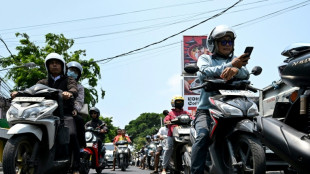 Fuel shortage triggers queues on Indonesia's Bali island

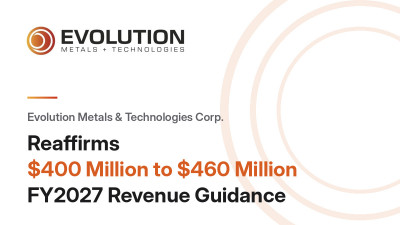 Evolution Metals & Technologies Corp. Reaffirms $400 Million to $460 Million FY2027 Revenue Guidance, Unveils Eight Sintered Magnet Grades Covering an Estimated 75% of Global NdFeB Revenue, and Moves to Answer U.S. Army Call for Rare Earth Magnets

 Trial defence says Russia used Nord Stream pipelines as 'weapon'

 Israeli settlers set fire to mosque in occupied West Bank

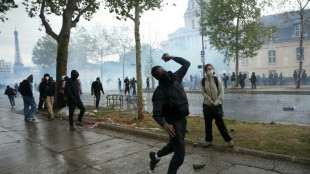 Macron says French student protesters 'exploited' by political forces: spokeswoman
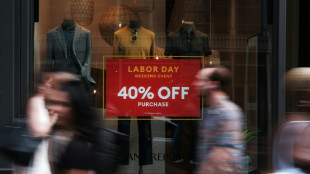 Stocks diverge ahead of key US inflation data
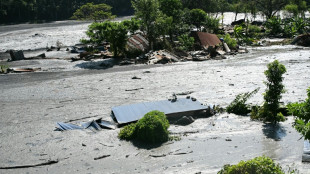
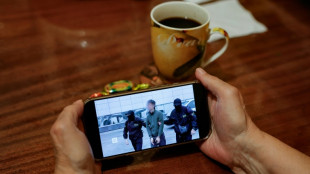 Japan summons Russian ambassador to protest journalist's arrest

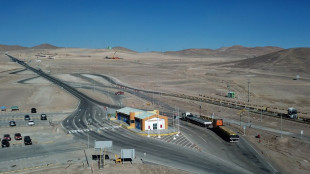 Workers to strike at world's largest copper mine in Chile
 Ukraine accuses US of helping Russia as missiles hit Kyiv
 Drone hits data centre of Russia's largest bank
 Bivial AG Brings Its Complete Dashboard to Mobile

 Mont Blanc nearly two metres taller than in 2023: French surveyors

 Pope recovering after lung cancer operation that rattles Church
 Indonesia haze spikes Singapore pollution, shuts East Timor schools
 Higher borrowing costs an 'alarm signal' for France: finance minister
 Zelensky accuses Putin of disrespecting Trump after latest attacks
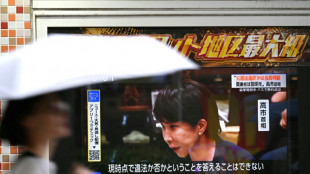 Japan PM says housework makes her busier than male predecessors
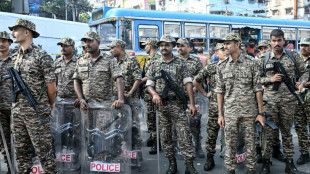 Top Indian 'cockroach' leaders sent to jail after protest

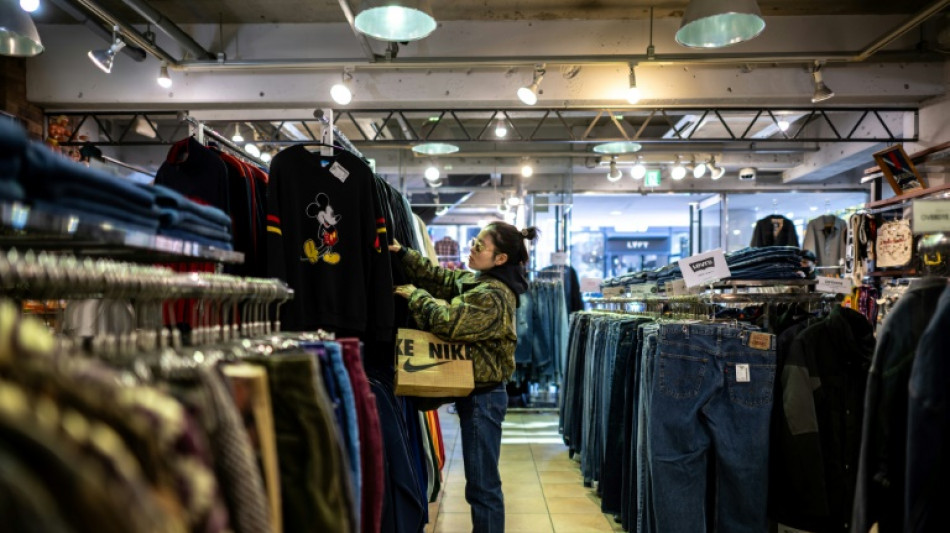
A second-hand pop-up store in Tokyo by casual clothing giant Uniqlo was a first for the Japanese firm, but also a sign that a local aversion to used garments may finally be fading.
Uniqlo is a major player in an industry blamed for immense carbon emissions and other pollutants like microplastics.
It has ridden a wave of consumers buying, and throwing away, ever more clothes.
But in Japan, the world's third-biggest clothes market, growing awareness of the sector's huge environmental impact has yet to spark much interest in second-hand options.
Uniqlo's Aya Hanada said the 10-day pop-up in the hip Harajuku district, where second-hand clothes were a third of their original price -- with some dyed for a "vintage" look -- showed attitudes were changing.
"I think the feeling of resistance to used clothing has disappeared in Japan, mainly among young people," said the 45-year-old, who works for the firm's recycling programme RE.Uniqlo.
The change is in part thanks to the internet, she told AFP outside one of Uniqlo's major stores, which allows customers to access items "without having to go all the way to a second-hand clothing store."
- 'A fashion thing' -
There is still a long way to go, however.
In Japan, 34 percent of discarded clothing is recycled or reused, according to the environment ministry.
But this includes exports to developing countries, where the waste also often ends up in tips or is incinerated.
Globally, the equivalent of a truckload of clothes is burnt or buried in landfill every second, according to the Ellen MacArthur Foundation, a charity focused on eliminating waste and pollution.
JapanConsuming, a market research firm, estimates that the Japanese second-hand segment represents less than six percent of the $75-billion market, albeit with strong growth in recent years.
For a long time in Japan, used clothes were a small niche confined to hipsters, JapanConsuming's co-founder Michael Causton said.
"Maybe compared to somewhere like France and UK where the ecological, environmental factors probably came first, in Japan, it was a fashion thing," Causton told AFP.
In Japan "there is a very strong concern with hygiene, that is a fixture of Japanese culture. And that definitely was a barrier for the average consumer," he added.
- Mercari effect -
Alongside Fast Retailing-owned Uniqlo, which touts efforts to transform second-hand clothes into new products and also donates them to refugees and others in need, used garment specialist 2nd Street has expanded to 800 stores across Japan.
There has also been growth in online sales between individuals, driven mainly by the popular Japanese platform Mercari, where around a third of transactions by value are fashion items.
Second-hand Japanese clothes are even popular in China and elsewhere, Causton said, "because people know the Japanese look after their stuff and what they will send is a high level of quality."
"I feel like in Japan, used clothes have a high quality... and if it's not, it's clearly stated if there's any damage," said Charlotte Xu, 18, an Australian tourist looking through a thrift store in Harajuku.
"In my home country everything is just in a pile, you have got to search it for yourself. Whereas here everything is nice and neat, and you can find what you want."
- Inflation -
Rising prices, which after years of deflation have been hitting Japanese wallets since 2022, have also helped some to drop their opposition to second-hand.
"We conducted a user survey last year and it showed that clothes was the number one voted category for purchase on Mercari as a countermeasure against rising prices," a Mercari spokesperson said.
But the biggest factor for many is simply whether something looks good or not.
"I am aware of the sustainable side of things, but I often buy them simply because they are stylish," shopper Yamato Ogawa, 28, told AFP at the Uniqlo pop-up.
F.Müller--BTB