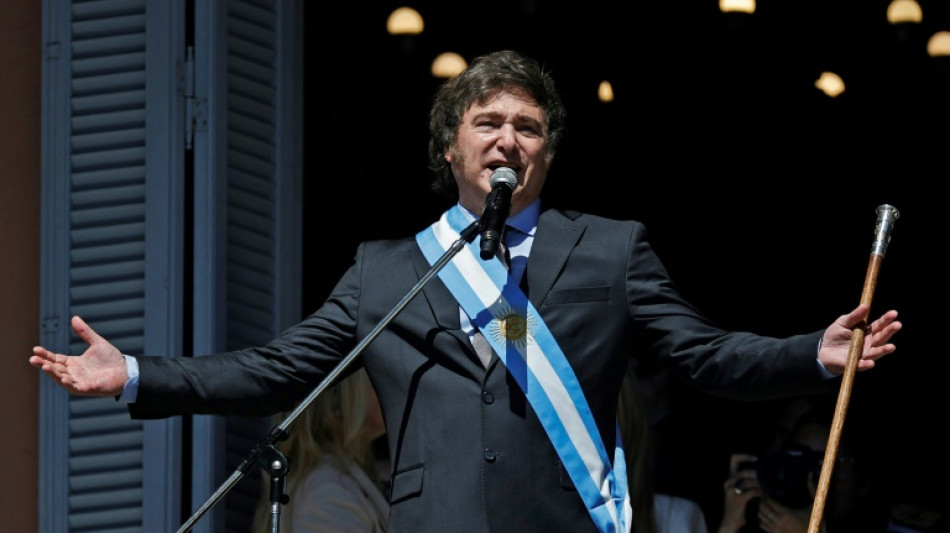
What to know about Milei's bid to liberalize Argentina's economy / Photo: © AFP

 Sally Rooney books cannot be sold in UK amid Palestine Action ban: publisher
 Italian ski stars Goggia and Brignone to miss season opener
 Bournemouth boss Rose urges Cherries to bounce back from Chelsea 'slap'
 Top seed Sabalenka falls at first hurdle in Wuhan

 FX Junction Brings Copy Trading to Everyone, While Their Money Never Leaves With Their Broker

 Brighton defender Struijk's red card overturned

 Saudi league postpones three matches after Houthi attacks
 US consumer inflation up more than expected as midterms loom

 Canadian publisher supports novelist Orelien after AI denial

 Medvedev sees off Tsitsipas to reach Shanghai Masters quarters

 Louvre boss warns of closure risk without major renovations
 Lawes and Genge urge England to end ban on overseas-based players

 Metrika Selected by OCC to Support Stablecoin Supervisory Framework Under the GENIUS Act
 Kenya hosting 2029 World Championships will help doping fight, says Coe
 UK prosecutor tells jury Russell Brand a 'sexual predator'
 Fulham manager Arbeloa fined £25,000 after Man Utd outburst

 Nepal flood triggered by rock and ice avalanche: report

 'Distressed' family of UK man killed by tiger urge end to online posts
 Regulator expects Man City appeal to be heard by January
 Rising Spanish tennis star handed code violation for swearing at ballboy

 Last of the French musketeers Monfils officially retired from tennis

 Ukraine ex-military officer stands trial over Nord Stream sabotage
 British and Irish Lions to play first women's match against France
 Fuel shortage triggers queues on resort island Bali

 Sao Tome's niche vanilla finds far-away fans
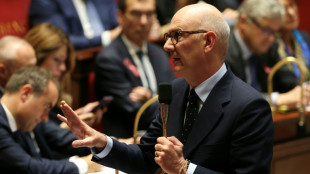
Argentina's libertarian President Javier Milei this week unleashed a mega-decree to change or scrap 366 economic rules in a country accustomed to heavy government intervention in the market.
The move is a first in Argentina's history, with none of its democratically elected presidents or dictators attempting such a massive dismantling of the system.
It is also exactly what Milei promised on the campaign trail, where he would wave around a live chainsaw to symbolize his bid to slash public spending, as Argentina creaks under triple-digit inflation after decades of financial mismanagement.
However, according to Argentine law, Congress still has the power to sink Milei's program.
This is what you need to know about the decree:
- What could change in daily life? -
Ten days after taking office, and on the eve of the festive holidays, Milei presented his "necessary and urgent" decree to loosen some of the rules governing the country's economy as annual inflation hit 160 percent.
One big change will be the removal of all constraints between tenant and landlord, such as laws on rental increases.
In recent years landlords have increasingly priced their properties in dollars to avoid being stuck with rental income long overtaken by soaring inflation. This has been a nightmare for renters in a country where access to dollars had been strictly controlled.
Milei has also loosened labor laws, with the trial period for new employees going from three to eight months. Compensation laws for dismissal without cause have been modified in favor of companies and he plans to renegotiate labor agreements in force since 1975.
He also scrapped limits on exports, and said the internet market will be liberalized.
Milei also ditched rules preventing the privatization of state enterprises, and has already set his sights on national airline Aerolineas Argentinas and oil company YPF.
He also moved to limit the right to strike, which is enshrined in the constitution.
- What is the goal of the decree? -
Milei, an outsider whose rise to the top office stunned much of the country, blames the interventionism and protectionism of previous governments for choking the economy.
Before the announcement of the decree, the new government had already devalued Argentina's peso by more than 50 percent, and announced huge cuts in generous state subsidies of fuel and transport from January.
"The goal is to begin the path of reconstruction of the country, to return freedom and autonomy to individuals and begin to dismantle the enormous amount of regulations that have stopped, hindered and impeded economic growth," said Milei.
Of those protesting his measures he said: "There may be people suffering from Stockholm syndrome. They are infatuated with a model that impoverishes them."
- Is it constitutional? -
The opposition -- recently ousted from government -- has slammed Milei for the decree, and sees it as a way to bypass his lack of a majority in Congress.
Milei's Libertad Avanza party, which is only two years old, has only 40 of the 257 seats in the lower house, and seven of 72 in the Senate.
"This is not the way. Send the reforms as bills. Do not be afraid of democratic debate," said German Martinez, parliamentary chief for the Peronist coalition Union for the Homeland.
Constitutional lawyer Emiliano Vitaliani told AFP that the highest laws of the land say that "in principle laws cannot be modified by decree and the president cannot replace Congress."
Political scientist Lara Goyburu said the decision "leaps past all limits, decreeing many issues that need political agreements from Congress and the provinces."
- Can the decree be rejected? -
The decree can be overturned if it is rejected by both houses of Congress, said Vitalini. Otherwise it comes into force on December 29.
"The president has made a very big bet, and its success will depend on his ability to obtain legislative support which, until now, is not known," said constitutional lawyer Alejandro Carrio, in a column in the La Nacion newspaper.
N.Fournier--BTB