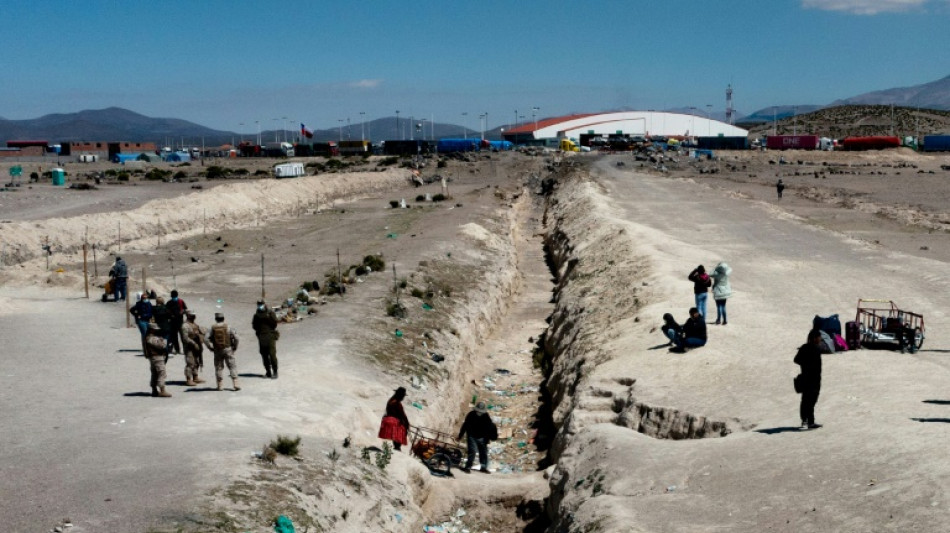
Trench proves ultimate barrier to Venezuelans arriving in Chile / Photo: ©

 German sugar tax sparks new government row

 Musk returns to US government for Pentagon war study

 Stocks slide as bond yields spike
 Thousands rally as EU chief urges respect for Kosovo war crimes court
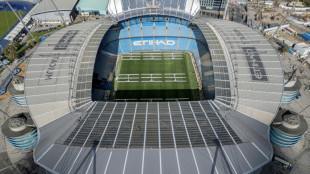 Man City sponsor Etihad says considering legal action against Premier League

 Family of woman killed by US immigration agent sues Trump administration
 French school protests spread as fires, blockades deepen unrest
 UK tribunal overturns ban on Naomi Campbell leading charities
 Louvre launches appeal as part of new fundraising drive
 Croatian ex-international Simic charged in graft case

 76% of Treasury Teams Hit by Fraud as Deepfake Attacks Rise, Treasury Dragons & nsKnox 2026 Index Finds

 Malawi ex-army chief arrested following allegations over Sudan arms

 German fuel price cuts kick in to ease Mideast energy shock

 'It's history': Zverev against shortening Grand Slam match format
 From Question to Action: Leverate Launches ASK, Its Native AI Assistant for Traders

 UN says strikes on Afghanistan kill 10 civilians

 Two Russian drones hit major bridge in Kyiv
 Alcaraz begins Japan Open defence with win over Michelsen

 ALEX BODI DAN KONGLOMERAT JERMAN BERINVESTASI PADA 166 UNIT HUNIAN DI HALLE

 Ronaldo's Portugal future in doubt after walkout

 European stocks drop as debt fears send bond yields soaring

 Ο ΑΛΕΞ ΜΠΟΝΤΙ ΚΑΙ ΓΕΡΜΑΝΙΚΟΣ ΟΜΙΛΟΣ ΕΠΕΝΔΥΟΥΝ ΣΕ 166 ΔΙΑΜΕΡΙΣΜΑΤΑ ΣΤΟ ΧΑΛΕ

 India to clash with Pakistan as Eala suffers Games heartbreak

 Judoka wins Asian Games gold after honouring dying grandmother's wish

 Kenyan island paradise fears damage from mega-refinery

Exhausted and afraid, Venezuelan Soreimi Moran breathes in deeply and fights back tears.
She has already traveled 5,000 kilometers (3,100 miles) over the last week and knows that her goal is finally within reach.
Tomorrow, a smuggler will try to sneak her family over the heavily guarded trench that separates Bolivia from Chile.
"It's too cold," said the 24-year-old, who is traveling with her two daughters aged one and 10; two younger siblings aged seven and 14; her grandmother and a 25-year-old uncle.
The 3,700 meters (yards) of altitude brings not only cold that few Venezuelans are used to, but also fatigue.
"We want to go to Chile to give the kids a better future," said Moran, whose group has already passed through Colombia, Ecuador and Peru.
More than six million people have left crisis-wracked Venezuela in recent years, according to the United Nations, with more than half a million now in Chile.
The mass exodus of people, often on foot, from a country suffering years of political and economic trouble has created one of the greatest migration crises in history.
At least 20 people died in 2021 trying to cross the Pisiga-Colchane border, which lies 460 kilometers from La Paz and 2,000 kilometers from Santiago.
Five people have died this year alone, including a child and an elderly person whose bodies were found on the Chilean side of the border last weekend, local authorities say.
The trench, at around one and a half meters wide, has been guarded by Chilean soldiers since mid-February when former president Sebastian Pinera declared a state of exception in the north of the country to allow military support for the police patrolling the frontier.
Even the arrival of millennial President Gabriel Boric on March 11 has not led to a change in that policy.
- Prepared 'to take the risk' -
But the soldiers cannot patrol 861 kilometers of border, and the Bolivian side is virtually unmanned.
Smugglers, known as "chamberos" in the region, know where to cross the ditch without being seen and charge $100 per migrant for their "services."
But they do not always fulfill their part of the bargain, sometimes abandoning migrants partway through their journey.
Elizabeth Ortega is a nun who runs a free shelter for migrants close to the border. The shelter was set up by nuns after seeing "the migrants' suffering" and welcomes 150 people a month.
Ortega convinces other failed migrants with harrowing stories to tell newcomers "everything they went through" in a bid to convince them not to try to cross the border.
But "given they are so close... despite everything we tell them... they still want to take the risk," said Ortega, who is known as Sister Eli.
When they finally arrive in their new host countries, migrants often face discrimination and even xenophobic attacks, as happened in Chile, where a migrant camp was torched.
Moran and her family banged on Ortega's door at 8:00 pm one evening. They had tried to cross the border legally, even though they knew the border posts had been closed for two years due to Covid-19.
They resolved to try again the next day with the help of a chambero, opting to undertake the walk of up to six hours in the daylight to avoid the freezing temperatures and darkness where wells, floods or thieves might lurk -- not to mention the trench.
- 'Rights violations' -
A study by the R4V organization, which represents the interests of Venezuelan refugees and migrants, revealed that 600 Venezuelans a day enter Chile clandestinely from Bolivia and Peru.
The most fearful attempt the crossing at night when they are less easy to spot.
Others prefer to go during the warmer parts of the day, like one group of Venezuelans discussing their plans while sitting outside a village restaurant in Pisiga.
"We're going to cross illegally... We're going to Chile because many of our family members are there," said Manuel Henriquez, 26.
Bolivian police don't arrest anyone, but they know the migrants could face rough treatment on the other side of the border.
"Chile commits many human rights violations against foreigners," said one Bolivian officer.
"With children, the elderly... it's very sad."
The foreign offices of the neighboring countries, who have not had diplomatic relations since 1978 due to a dispute over landlocked Bolivia's access to the Pacific Ocean, agreed in February to hold talks over migration, although they have made no progress.
Boric said he is looking at the European quota system for migration, where each country in South America accepts a certain number of migrants.
"We must express Latin American solidarity" in receiving Venezuelan refugees, he said recently.
S.Keller--BTB