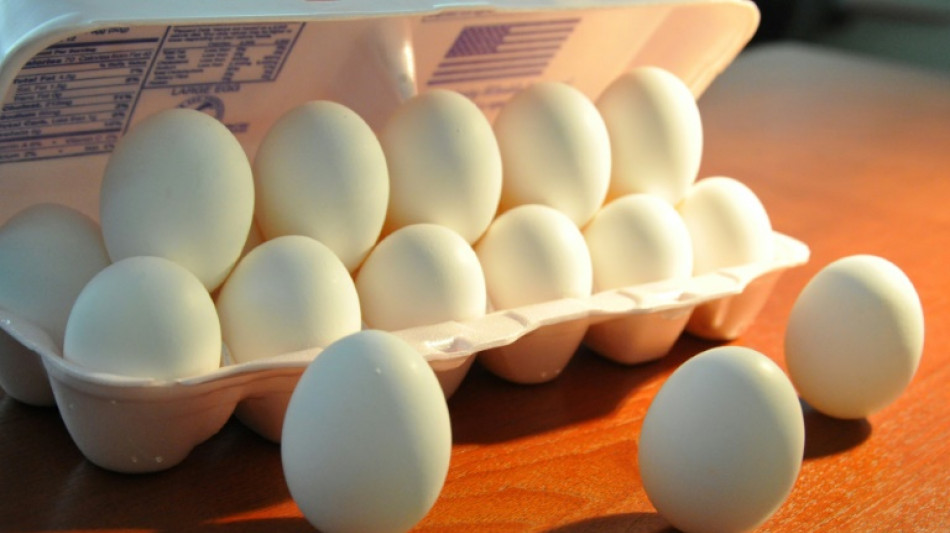
Salmonella, a leading cause of foodborne outbreaks / Photo: ©

 Food, medicine shortages deepen in Russian-occupied Oleshky

 Man City whistleblower Rui Pinto facing 'dire consequences' - lawyers
 Russia 'tearing Kyiv apart', mayor says, as strikes paralyse traffic

 Taiwan boxer Lin wins Games gold as Japan edge North Korea on penalties

 Japan tame North Korea to win Games gold after shootout drama

 US posts weak job growth data in September

 Ethiopia's conflict: the regional dimension

 Life expectancy almost back to pre-Covid levels, says WHO

 Turkey's football referee chief faces judge in graft probe

 Verstappen goes own way to avoid the rain

 Oil slides, bonds steady as EU addresses diesel price surge

 Spain housing package at risk in parliament, as protests mount

 Swedish Social Democrats leader to make new bid to form government

 North Korea calls Seoul 'despicable' after DMZ apology demand

 Taiwan boxer Lin wins gold as virtual taekwondo makes Games debut

 Man City face appeal deadline after explosive financial verdict

 Pole vault superstar Duplantis to skip indoor season

 Sri Lanka drop Asalanka from T20 against Pakistan

 Disney president says layoffs 'extremely painful' but necessary

 Indian flydubai pilot opened cockpit door to save passengers

 Alex Marquez clocks record lap at MotoGP Japan practice

 Tom Kim leads Asian Games golf in chase to avoid military service

 Asian stocks hit as oil spike fans rate hike bets, eyes on US jobs

 'We're losing our scientists': west Africa's STEM struggle

 World powers gather in Pacific to chart climate battle

Salmonella, fears over which sparked a cautionary recall of Kinder chocolate eggs in several European countries on Tuesday, is one of the most common causes of food-borne outbreaks.
Named after the American veterinarian who helped discover the bacteria, Daniel Elmer Salmon, salmonella often causes mild illness, but can be life-threatening in extreme cases.
- Transmission -
It is most often transmitted to humans who eat food contaminated with the faeces of an infected animal, according to the US Centers for Disease Control (CDC).
This often happens when people consume raw or undercooked food like meat and eggs, or when people handling food fail to wash their hands.
Less often, unwashed fruits and vegetables can become infected.
Whether or not a person contracts salmonellosis, the infection caused by salmonella, depends on the type of bacteria and the quantity consumed.
While an estimated 94 percent of salmonellosis is transmitted by food, contact with chicks and pet turtles can be a source of infection, the CDC said.
If contaminated foods are distributed widely across borders, it can infected vast numbers of people.
Around 224,000 people were made sick by infected ice cream in the United States in 1994.
A decade earlier in France, at least 25,000 were infected by a food source that was never identified, according to the Pasteur Institute.
- Symptoms -
Symptoms usually show up around three days after infection and often include diarrhoea, vomiting, fever and stomach cramps.
A healthy adult normally recovers within a few days but in some cases, an infection can be dangerous or even fatal.
Babies, young children, the elderly, pregnant women or immunocompromised people are the most at risk.
People with severe diarrhoea may need rehydration, the CDC said.
"Antibiotics are not recommended for uncomplicated cases and are only used if the infection spreads or is highly likely to spread from the intestines to the bloodstream and other organs," it added.
- How to avoid? -
To avoid salmonella, everyone should wash their hands before cooking, keep raw foods separated from others, and regularly clean areas where food is handled.
Thoroughly cooking meat is also highly recommended.
Avoiding eating raw eggs, in foods such as cookie dough and homemade ice cream, is also recommended, according to the Mayo Clinic in the United States.
Washing hands after using the toilet or changing a baby will also help limit transmission.
Most industries have strict rules in place to avoid contamination.
J.Horn--BTB