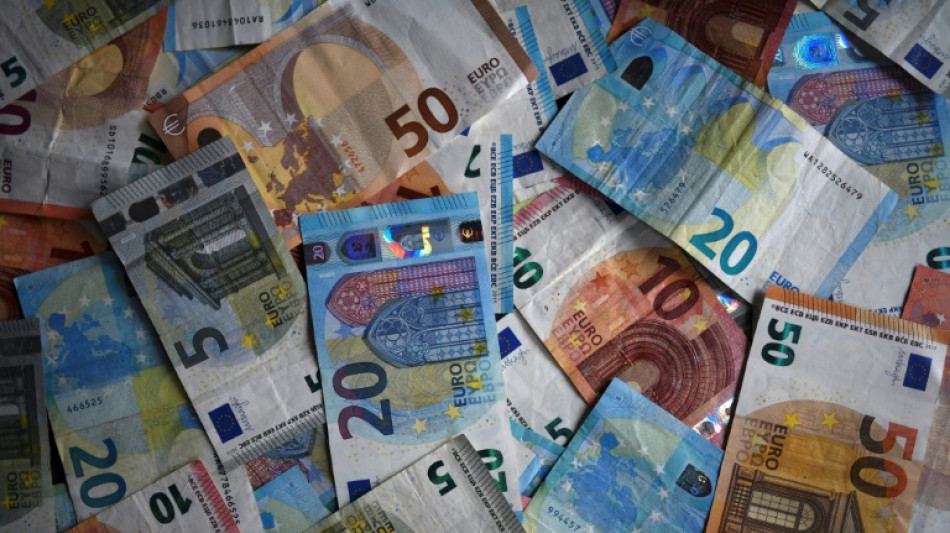
Da Vinci should grace new euro notes, says Lagarde / Photo: ©

 Prague’s Concert for the Future Kicks Off on Wenceslas Square

 Prince William and Princess of Wales to Announce Earthshot Prize Winners in Mumbai

 Indonesia Forest Fires: Health Crisis, Diplomatic Strains and the Search for Solutions

 BYD Dolphin G Leasing Deal: Plug-in Hybrid Supermini Available from £174 a Month

 JUEL Group Expands from Real Estate to Hospitality with Hyatt Centric Malta Opening

 French Economy Shrinks 0.1% as Consumer Confidence Slumps

 Wall Street Ends Turbulent Week Higher Despite Inflation and AI Jitters

 Kansas City Fed Chief Says Inflation Is Still Running Too Hot

European Central Bank chief Christine Lagarde suggested Thursday that Renaissance master Leonardo da Vinci and pioneering French politician Simone Veil appear on the new euro banknotes, as she waded into a politically sensitive topic.
The ECB announced plans to introduce new euro bills by 2024, but designing the European Union's single currency is fraught with political tension.
Euros were introduced in 2002 with symbolic illustrations of Roman and Gothic architecture to avoid debates on choosing historical figures.
But they will get a facelift as the ECB has launched a design and consultation process involving the public and a panel of 19 experts, one from each eurozone country.
Lagarde made her preferences known in a French radio interview.
"We must find great, true Europeans over the course of history so that we can recognise ourselves," Lagarde told France Inter.
She said Da Vinci would be an "obvious" pick and that Simone Veil is "clearly" a candidate among more recent Europeans.
Italian Da Vinci was a Renaissance polymath best known for his paintings, while Holocaust survivor Veil became the first female president of the European Parliament and held senior political and legal positions in France.
Robert Kalina, the Austrian designer of the first euro notes, previously told AFP great composers such as Beethoven or Mozart could be good choices because they cannot be "reduced to a single country".
The images that will grace future euro banknotes will be limited to six as only six different values of euro banknotes exist, ranging from five to 200 euros after the end of the 500-euro note.
S.Keller--BTB