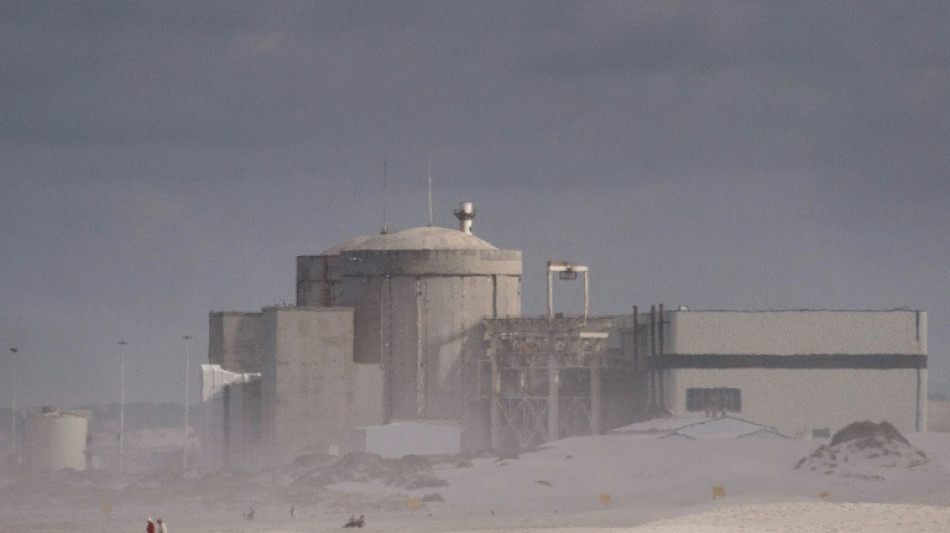
Could mini nuclear stations plug South Africa's power gaps? / Photo: © AFP

 Brazil forward Antony says home burgled during Betis match

 Ravens face familiar foe in Browns coach Monken
 France, Germany reach deal on future of car industry

 Carney campaigns for Canadian unity before Alberta secession vote

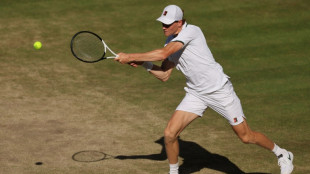 ATP proposes rankings system changes, extra player bonuses
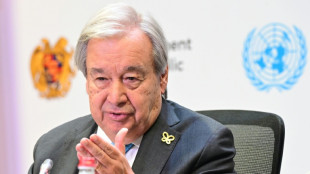
 Russell Brand was 'monster-like', alleged victim tells UK court

 Crowded Launches Crowded MCP, Bringing Nonprofit Financial Operations Into ChatGPT and Claude
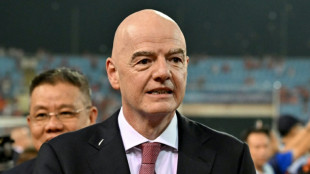
 Albanian PM condemns 'chaos' as violent unrest spreads
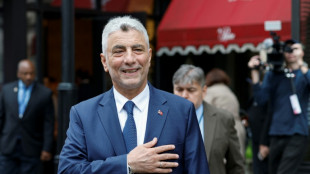
 Italian football suffers new blow with Champions League misery

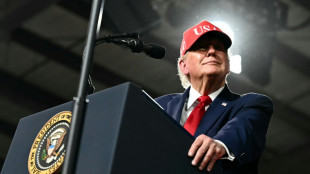 Trump scraps plan to livestream execution after broad backlash

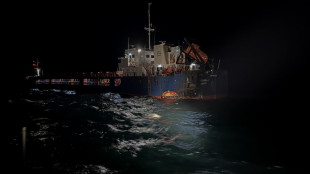 Seven missing off Romania after latest Black Sea drone attacks

 ARKBRIDGE Outlines Jonathan Morelli’s “Picks and Shovels” AI Infrastructure Investment Strategy
 Tech sell-off rolls on as hot inflation data stokes rate worries
 McIlroy makes 'solid' start in rain-hit Delhi as Norgaard leads

 Seven missing after fire on vessel in Black Sea off Romania

 'Severe drought' declared in parts of UK

 IUX Announces New Web Client Portal Built for Enhanced Browser-Based Trading

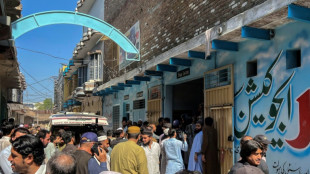 School roof collapse kills teacher, 32 children in NW Pakistan

 Inter skipper Martinez facing month out with thigh injury

 Spanish prosecutors back abuse probe into Julio Iglesias
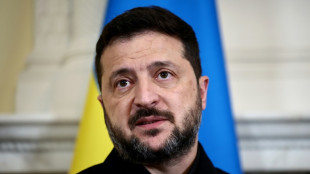
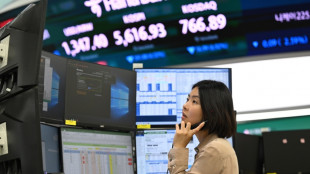 Tech sell-off deepens as US inflation sparks AI jitters

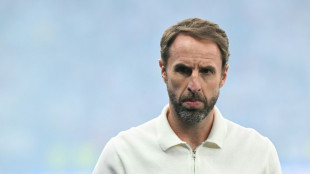 Southgate does not forsee a return to management

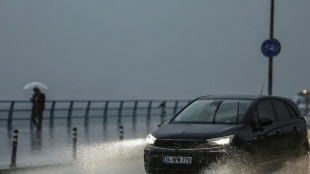 Two dead as Istanbul endures heaviest rainfall in 80 years
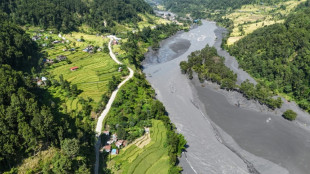 After latest Nepal flood, survivors fear for future

 EU leaders clash over budget as spectre of French elections looms
South African nuclear scientists want to build a new generation of mini nuclear reactors, both to plug holes in their own country's blackout-plagued grid and to build an export industry for the future.
One company has designed a gas-cooled small modular reactor that it says can be installed within three years on a site smaller than a football field and safely produce enough power for a city.
Similar projects are underway in other countries, as the world confronts the challenge of powering a future economy of electrified transport, heating and data centres while slashing carbon emissions.
Europe is divided on the way forward. Some countries, led by France, are betting on nuclear. Others, like Germany, are hoping that renewables like wind and solar will replace fossil fuels and make-up for the loss of access to Russia's natural gas exports.
South Africa will rely on coal for some time to come but, with power already in short supply, it is betting on building up its nuclear programme.
And some experts like Kelvin Kemm, a nuclear physicist and chief executive of Pretoria-based private outfit Stratek Global, think South Africa is uniquely placed to take the lead in developing fourth generation reactors.
- Rolling blackouts -
"I believe the future is not only around the corner, I believe the future has arrived," Kemm told AFP in an interview in his garden in the Pretoria suburbs.
"I see in the next half dozen years, there is going to be a massive worldwide proliferation of nuclear power of all sizes, that there will be a huge change of heart over the next 24 months. I believe South Africa is already a leader."
South Africa's civilian nuclear journey began in 1976 when construction began on the Koeberg nuclear power plant, on the South Atlantic coast just north of Cape Town.
It was commissioned 40 years ago and has a capacity of just under 2,000 megawatts, a small chunk of the 27,000 MW that South Africa's much-derided state electricity firm Eskom can deliver, thanks largely to carbon-intensive coal-fired plants.
But domestic demand for power often peaks at more than 32,000 MW per day, and South Africans face rolling blackouts or "load-shedding" of up to 12 hours a day, a serious burden on the economy of what should be the continent's powerhouse.
In December, the government announced that it planned to bring the first of a new series of nuclear plants on stream by 2033, adding another 2,500 megawatts of capacity, while planning to renew Koeberg and extend its life for another 20 years.
But, even with solar panels springing up on homes and developments across the country, that still leaves the country short of power in the medium term. This is where, in the plans of nuclear evangelists like Kemm, small modular plants come in.
Large plants like Koeberg, with its two French-designed pressurised water reactors (PWR), must be situated by the ocean to allow for 80 tonnes of cold water a second to be pumped in to cool its reactors.
Most of South Africa is dry, however, and its commercial hub Johannesburg and its energy intensive mines and industry are far from the sea. The capital Pretoria is as far from Cape Town's cool Atlantic shore as Rome is from London.
This is where Stratek hopes to come in with its High Temperature Modular Reactor (HTMR-100).
According to Kemm, who is already in talks with international operators from as far away as France as well as South Africa, these helium gas-cooled reactors can be installed in groups of up to 10 or typically six to power off the shelf steam turbines.
These plants would generate less than 300 megawatts each, enough for a major industrial mining complex or domestic use in a city the size of Pretoria.
- Weak rand -
But above all they would be easier to supply -- running off less than a truck-load of uranium fuel pellets in hand portable cricket-ball sized spheres per year -- and easy to cool without sea water.
By the standards of the nuclear industry, with notoriously long and expensive development schedules, they would be relatively cheap and quick to install, and prices will fall after the first prototype unit is up and running.
Kemm said the weakness of the rand meant that his firm could quote $470 million as the cost of the first reactor and aim to get subsequent builds down to $300 million each.
"We are exceedingly cheap by world standards," he said.
A.Gasser--BTB