
What to know about the NASA-funded commercial Moon fleet / Photo: © AFP/File

 Brazil forward Antony says home burgled during Betis match

 Ravens face familiar foe in Browns coach Monken

 France, Germany reach deal on future of car industry

 Carney campaigns for Canadian unity before Alberta secession vote

 ATP proposes rankings system changes, extra player bonuses

 Russell Brand was 'monster-like', alleged victim tells UK court

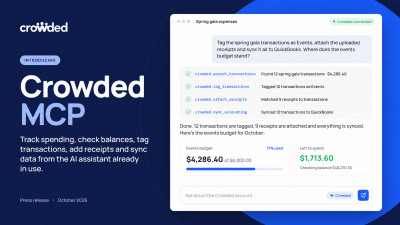 Crowded Launches Crowded MCP, Bringing Nonprofit Financial Operations Into ChatGPT and Claude

 Albanian PM condemns 'chaos' as violent unrest spreads

 Italian football suffers new blow with Champions League misery

 Trump scraps plan to livestream execution after broad backlash

 Seven missing off Romania after latest Black Sea drone attacks

 ARKBRIDGE Outlines Jonathan Morelli’s “Picks and Shovels” AI Infrastructure Investment Strategy

 Tech sell-off rolls on as hot inflation data stokes rate worries

 McIlroy makes 'solid' start in rain-hit Delhi as Norgaard leads

 Seven missing after fire on vessel in Black Sea off Romania

 'Severe drought' declared in parts of UK

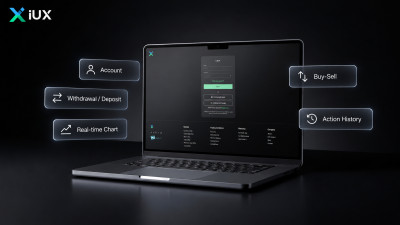 IUX Announces New Web Client Portal Built for Enhanced Browser-Based Trading

 School roof collapse kills teacher, 32 children in NW Pakistan

 Inter skipper Martinez facing month out with thigh injury

 Spanish prosecutors back abuse probe into Julio Iglesias

 Tech sell-off deepens as US inflation sparks AI jitters

 Southgate does not forsee a return to management

 Two dead as Istanbul endures heaviest rainfall in 80 years

 After latest Nepal flood, survivors fear for future

 EU leaders clash over budget as spectre of French elections looms

The year 2024 promises to be a busy one for American Moon landings, all under a new partnership between NASA and the space industry.
A first attempt under the Commercial Lunar Payload Services (CLPS) initiative ended in disappointing failure last month, but a second, led by Houston-based Intuitive Machines, will attempt on Thursday to return the United States to Moon for the first time in five decades.
NASA's thinking behind CLPS is to delegate the delivery of its science hardware to the private sector, reducing costs to taxpayers as it prepares to return astronauts to the surface under the flagship Artemis program later this decade.
- Purchasing services -
Established in 2018, CLPS operates on the principle of purchasing services from commercial partners, rather than buying their hardware.
Joel Kearns, a senior NASA official involved with CLPS, said it would allow the agency to be more cost effective and do more frequent trips, even if "we don't know how many of the early attempts will be successful."
But the space agency is offsetting that risk by contracting with multiple companies offering different technical solutions.
It also hopes those companies will in turn build up their own clientele, for example research institutions and others wanting to ship gear to the Moon, creating a wider lunar economy in which NASA is just one of many customers.
The approach is completely different from that used during the Apollo era, when NASA dictated its industrial contracts down to the last bolt.
"When you have unlimited funds, like in the Apollo days, yes, you can do incredible things," said Trent Martin of Intuitive Machines. "Now, can we find a way to do it for a lower cost? Can we find a way to do it, where there's a marketplace that is not driven solely by government funds?"
- Fledgling companies -
Fourteen companies have been pre-selected to be in the running for contracts, with eight firm missions so far planned.
Many of the companies involved are considered fledging, rather than legacy aerospace giants, reflecting the initiative's experimental nature.
The first attempt, led by Pittsburgh-based Astrobotic, failed to reach the Moon in January after developing an in-flight fuel leak shortly after separating from its rocket.
It could get another shot later this year, to carry an important water-seeking NASA rover to the south pole, but the green light will depend on the outcome of a detailed review of its first mission.
Intuitive Machines, founded in 2013, is also targeting a region near the south pole. It has two more missions set for this year.
Another Texas company, Firefly Aerospace, has two missions, including one in 2024, with its Blue Ghost lander.
Finally, Massachusetts-based Draper, which built the computer that ran the Apollo spaceships, will attempt to land on the far side of the Moon in 2025.
NASA paid both Astrobotic and Intuitive Machines around $100 million each for their respective first missions.
- Lasting presence -
CLPS deliveries serve the bigger goal of better understanding the environmental risks -- from radiation to lunar dust -- that face American astronauts when they touch down on the surface no sooner than 2026.
Unlike during Apollo, when the United States was driven by the Cold War to act fast and chose near the equator for five short trips, NASA is now taking its time to build a "sustained presence," involving habitats, on the south pole.
Here, it hopes to harvest ice for drinking water and rocket fuel, with an eye on using our cosmic neighbor as a waypoint for crewed missions to Mars.
K.Thomson--BTB