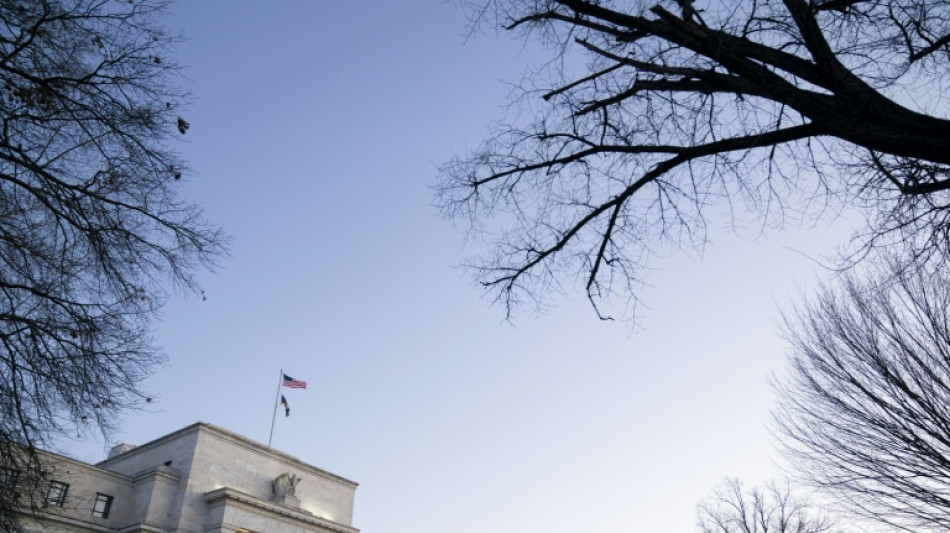
Fed signals first US rate hike since pandemic coming in March / Photo: ©

 Prague’s Concert for the Future Kicks Off on Wenceslas Square

 Prince William and Princess of Wales to Announce Earthshot Prize Winners in Mumbai

 Indonesia Forest Fires: Health Crisis, Diplomatic Strains and the Search for Solutions

 BYD Dolphin G Leasing Deal: Plug-in Hybrid Supermini Available from £174 a Month

 JUEL Group Expands from Real Estate to Hospitality with Hyatt Centric Malta Opening

 French Economy Shrinks 0.1% as Consumer Confidence Slumps

 Wall Street Ends Turbulent Week Higher Despite Inflation and AI Jitters

 Kansas City Fed Chief Says Inflation Is Still Running Too Hot

Federal Reserve Chair Jerome Powell on Wednesday gave a clear signal the central bank is ready to raise US interest rates in March for the first time since cutting them to zero when Covid-19 broke out.
That would end the era of easy money that fueled Wall Street's record-setting run during the pandemic.
In a press conference following the year's first meeting of the Fed's policy-setting committee, Powell underscored the central bank's willingness to fight rampant inflation, even as he expects prices to subside this year.
"I would say the committee is of a mind to raise the federal funds rate at the March meeting, assuming that conditions are appropriate for doing so," Powell said in an unusually frank comment on the Fed's planned actions.
He declined to discuss the possible size of the coming rate increase, but said the recovery in the world's largest economy is strong enough that it can handle higher borrowing costs.
He noted the strong rebound in employment following the catastrophe caused by Covid-19.
"There's room to raise interest rates without threatening the labor market," he said, describing conditions for workers and employers as "historically tight" with many businesses struggling to recruit staff.
The comments reflect the central bank's policy pivot as consumer prices rose seven percent in 2021, the highest since 1982. Officials late last year retreated from their insistence that inflation was transitory, and that rates could stay lower to ensure an inclusive recovery.
However, the policy-setting Federal Open Market Committee (FOMC) still expects price pressures to recede, amid "progress on vaccinations and an easing of supply constraints."
Powell echoed those comments in his press conference, noting that "the drivers of higher inflation" were predominantly due to "the dislocations caused by the pandemic," and "we continue to expect it to decline over the course of the year."
Wall Street indices saw solid gains early Wednesday, but turned sharply negative as Powell spoke and ended mostly lower.
- 'Liftoff' is coming -
While signaling a March increase, the FOMC left policy unchanged for now, keeping rates at zero and continuing moves to wind down its bond-buying stimulus program in early March.
The committee also released guidelines for "significantly reducing" the size of its massive stockpile of securities accumulated mostly during the recent economic crisis, when it intervened to bolster financial markets.
The FOMC provided no timeframe but said it "expects that reducing the size of the Federal Reserve's balance sheet will commence after the process of increasing the target range for the federal funds rate has begun."
Beth Ann Bovino, US chief economist at S&P Global Ratings, predicted the balance sheet reduction would not start until early next year and the March hike will be the first of several.
"We expect 'liftoff' to start in March with the first of at least three rate hikes this year," she said in a note, pointing to language indicating officials believe the US economy has hit "maximum employment," one of the Fed's two priorities.
- Easy money over -
Rate increases would end the party on Wall Street that has raged more or less non-stop during the pandemic thanks to the easy money policies the Fed rolled out to rescue the economy in March 2020.
Markets were selling off in anticipation of the meeting, with the Nasdaq, which is heavy with tech stocks that particularly benefit from easy access to finance, losing seven percent last week.
Edward Moya, senior market analyst at OANDA, blamed Wall Street's downturn during the press conference on both fears of balance sheet normalization and on jitters about rate hikes.
"The more Powell talked during the (press conference), the more hawkish he sounded," Moya wrote.
I.Meyer--BTB