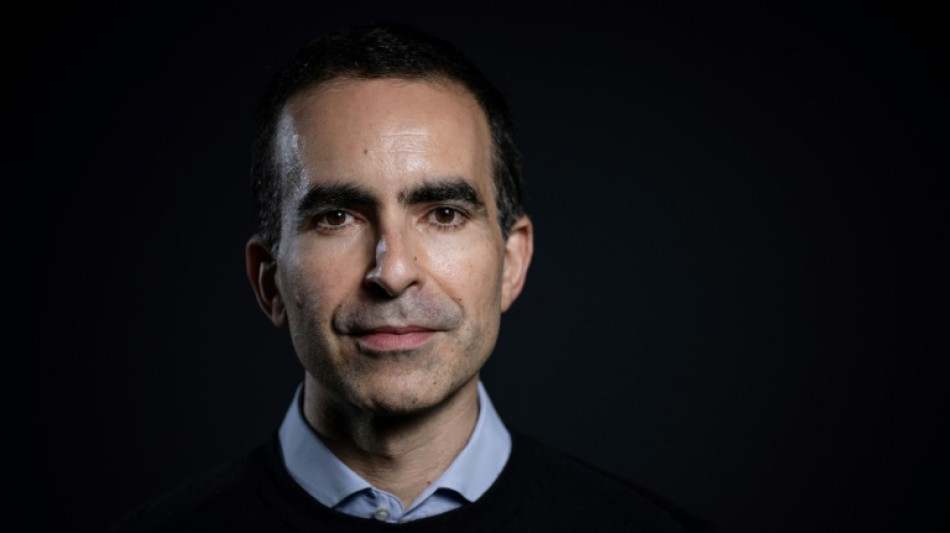
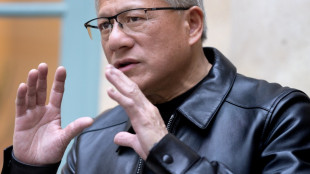
InstaDeep CEO takes AI from Tunis to London / Photo: © AFP/File

 Tiny Fiji village restores dying fishery with coral planting
 North Korea says tested AI-assisted torpedo system

 Did Chinese cars squeal on Norway's military?
 Guardians-Rays MLB playoff game start delayed by rain

 Suspected gunman in Oregon school shooting was 'withdrawn,' neighbors say

 As Champions Cup opens on mournful note, holders Bordeaux-Begles draw

 Figueroa loses title at weigh-in but Kameda can win it
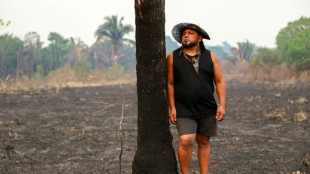 Deforestation in Brazil Amazon hits nearly four-decade low
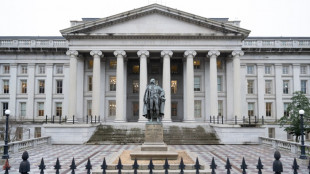 US budget deficit grows to nearly $2 trillion, highest since 2021

 Bend grieves after mass shooting: 'Who would do this to little kids?'

 'Great hero' praised for saving lives in Oregon school shooting
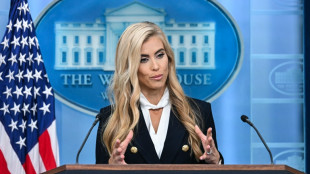
 Trump's new press secretary looks close to exit after just one week
 Trump says armed bystander who killed US school shooter a 'great hero'
 Real Madrid say Tebas must resign over Goebbels comparison

 Djokovic gets Basel wild card as ATP Finals race heats up

 Swiss solar-powered plane altitude record confirmed

 Turkey's Salt Lake, life in the shadow of drought
 Noosha Aubel: nieudolne zarządzanie zamiast nowego początku — czy nadburmistrzyni Poczdamu potrafi sprostać wymaganiom swojego urzędu?

 Mexican killers of Australian, US surfers await sentencing

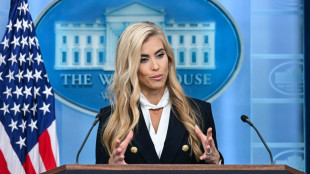 Trump's new press secretary faces intensified scrutiny over claims to be a lawyer
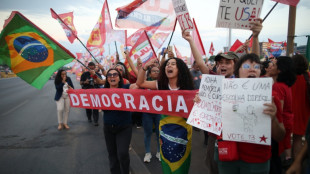 Brazil's left rallies as Lula closes gap before runoff
 Sean 'Diddy' Combs transfered to smaller US prison

 Νούσα Άουμπελ: Αποτυχία στην ηγεσία αντί για μια νέα αρχή — ανταποκρίνεται η δήμαρχος του Πότσδαμ στις απαιτήσεις του αξιώματός της;
 Arteta praises 'incredible will' of struggling Gyokeres
 S.African rugby player dies in France ahead of Champions Cup game

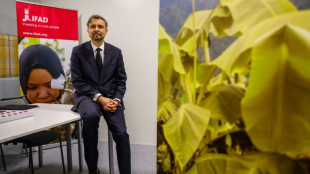
Karim Beguir launched the artificial intelligence start-up InstaDeep in Tunisia in 2014 with just two computers and $2,000.
By 2023, it was an international operation bought by German laboratory BioNTech for $700 million.
"For the first time, we saw that a start-up launched in Africa with very limited resources could become a major international player," the French-Tunisian CEO, who co-founded the company with Tunisian self-taught IT enthusiast Zohra Slim, told AFP.
It gives young Africans the "hope of being part of tomorrow's innovation and technology," he said.
InstaDeep specialises in decision-making artificial intelligence (AI) that helps businesses develop applications to optimise cost and efficiency.
It made a name for itself at the height of the Covid-19 pandemic by creating a system with BioNTech -- which developed one of the earliest Covid vaccines -- to identify dangerous variants "on average two months before they are reported", according to data published in scientific journals.
InstaDeep put "Tunisia and Africa on the map (in AI). It showed that this kind of story was possible", added Beguir, 47, who is CEO of the company now based in London.
"At the time, when I said we were going to do things at the level of the big boys like Meta, Google, DeepMind and others, everyone laughed in my face," Beguir said of its initial launch.
As well as researching personalised cancer vaccines with BioNTech, InstaDeep is working on projects to fully automate routing for Germany’s national rails, improve operations management at Frankfurt airport and predict cricket invasions in Africa.
The company claims to be "already profitable" with sales of more than 10 million euros ($11 million), though the company did not want to disclose the precise figure.
- From Tunis to Cape Town -
InstaDeep grew from 60 employees in 2018, to 350 employees across Africa, the Middle East, Europe and America.
It has offices in Tunis, Lagos, Cape Town and Kigali, along with London, Dubai, Paris, Berlin, Boston and San Francisco.
"Thanks to the movement that we have helped start, young Africans can hope of being part of tomorrow's innovation and technology, and in particular AI, which is the technology of our generation," said Beguir.
He said artificial intelligence presents an opportunity for African economies to go beyond simply exporting fuels and minerals, and make inroads into higher value-added activities.
"Selling raw natural resources is not enough. We really need to create things with a much greater added value," he said.
Beguir grew up in the southern Tunisian city of Tataouine before studying in France and then the United States.
He went on to work in financial engineering for major US players like JPMorgan and the Bank of America, before embarking on entrepreneurship in Africa.
- The future of AI? -
Senegalese teacher and AI researcher Seydina Ndiaye, one of 38 experts selected by the UN to form an AI think tank, has said Africa needs to be more involved in AI development because otherwise "the greatest threat is colonisation by AI."
Experts have regularly pointed out gender and race biases in models designed by major tech companies.
"If young Africans develop applications for African communities, you are much less likely to see bias towards these populations than if they were developed in Silicon Valley or Asia," said InstaDeep's Beguir.
When can Africa expect to see other AI champions emerge?
"If we manage to channel this living force into high-level innovation, I would say we will have 10 InstaDeeps in 10 years," predicted Beguir, provided we resolve obstacles such as the freedom of movement for researchers across the continent.
"As crazy as it may seem, in some cases it is easier for a young African with technology skills to come and work in France than to go to another African country," he warned.
J.Horn--BTB