As 'news deserts' spread, US journalism fights on / Photo: © AFP Photo

 Attacks on Gulf energy infrastructure 'worrying' for outlook: Pakistan finance minister
 Japan says hosting record number of foreigners
 'Two bad options': Rights groups decry IMF austerity demand
 Guardians-Rays MLB playoff game postponed until Saturday

 'We've never had this': Bear sightings spook Russia

 Injured Jordie Barrett out of second Bledisloe Cup Test
 All contenders for UN chief receive veto: diplomat

 UN climate panel fails to agree date for global warming update: envoy

 Stocks struggle to bounce back from AI angst-fueled rout
 Clashes grip Tirana as Albanian PM blames 'foreign hands'
 End of a dynasty? Dodgers digest playoff drubbing
 Troyes sack sporting director Blanchard amid sexism claims
 Trump's new press secretary out after less than week
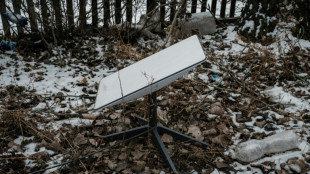 EU backs Ukraine on Starlink, but can't fill gap
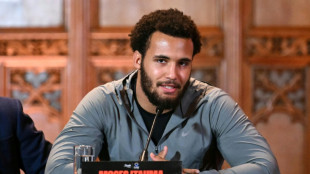 Itauma coming to terms with Hrgovic heavyweight loss
 NBA tells sportsbooks to ban certain bets and parlays: report
 US influence, AI and mistrust cloud Alberta independence vote

 Pant, Bumrah named in India Test squad for New Zealand tour
 Coen brothers say they plan to make film together again

 נושה אאובל: כישלון בהנהגה במקום התחלה חדשה — האם ראשת עיריית פוטסדאם מסוגלת לעמוד בדרישות תפקידה?
 From hospital, pope pushes Putin for ceasefire in contested Ukraine city
 King of the Mountains Carapaz joins NSN Cycling team
 S.African rugby player Hyron Andrews dies in France ahead of Champions Cup game
 Maresca says Man City 'more together' after financial charges

 Zelensky drums up European backing as Trump ties slump

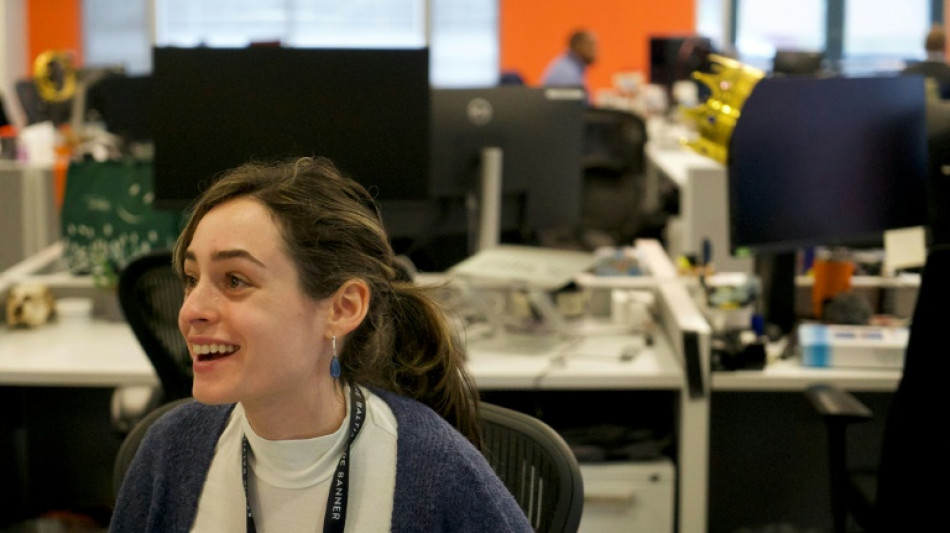
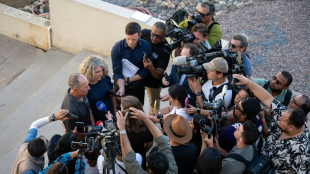
Baltimore Banner reporter Matti Gellman is first to leap in with questions during a recent press appearance by Maryland's state governor and celebrity chef Jose Andres at an urban farm.
With her notebook wedged under her arm and a Banner-branded baseball cap on her head, Gellman is launching her career as the long decimation of the news industry in the United States reaches what some have called an "extinction-level event."
She and her colleagues are at the vanguard of a fightback, seeking new and innovative ways to sustain local journalism in the world's most powerful democracy.
"We're a start-up, essentially," says the 26-year-old.
"I felt really inspired by the fact that the Banner was built by people who were sort of disillusioned by the industry and were looking to create something maybe different."
It's an optimism rarely found in America's bleak media landscape, more often characterized by abrupt mass layoffs, a grinding lack of resources -- and, finally, an information vacuum.
A study by Northwestern University last year identified 204 counties out of some 3,000 in the US as "news deserts," having "no newspapers, local digital sites, public radio newsrooms or ethnic publications."
But Gellman's zeal permeates the upstart Banner, an online non-profit which launched in 2022 to challenge the city's only remaining newspaper, the Baltimore Sun.
"People need to be informed," managing editor Andrea McDaniels tells AFP, speaking over the buzz of the newsroom, overlooking Baltimore's harbor.
If not, "they can't make good decisions in their lives, the schools fall apart, political corruption happens. So we need good journalism."
- 'Perilous' -
For more than two decades, since the internet upended the advertising and print model on which newspapers had been based, the industry has been in crisis.
Even behemoths of American journalism have been affected.
National outlets including The Washington Post and Los Angeles Times have laid off hundreds since 2023 alone, while digital organizations including BuzzFeed News and Vice.com shuttered altogether.
But it is at the local level that news has been most shockingly hollowed out, with newspapers vanishing at a rate of more than two a week, according to Northwestern's 2023 State of Local News report.
The state of the industry is "perilous," says professor and former journalist Penny Abernathy, who headed the report.
"We lost more than a third of our newspapers over the last 18 years, almost two thirds of our newspaper journalists" since 2005, she adds.
Nearly half of US counties have just one news source, the report said, often a weekly newspaper. And 228 are on a so-called "watch list" at high risk of losing even that.
The impact, experts say, has been significant.
"We all live our lives locally," says Ellen Clegg, who co-founded another non-profit local news outlet, BrooklineNews in Massachusetts.
"This is where we vote. It's where we raise our kids, educate our kids," she continues.
When local issues are not reported on, "you have a nationalization of news that rushes in to fill the vacuum."
- Energy, innovation -
That means more Fox News, more CNN, more Trump, more Biden. In areas without strong broadband access, it also means people are reliant on their phones -- that is, on social media as their primary source of information.
The effect is local and national polarization, Clegg says.
Take school board meetings: instead of asking why a proposed new high school is over budget, or why math test scores are low, parents are "yelling about critical race theory or... transgender issues."
Repercussions can also be seen at the ballot box, Abernathy says.
When all news is national, all politics become national, too. "It feeds into this political divide," she explains.
But non-profits like the Banner are not the only green shoots.
This month New York state passed tax credits for local news organizations -- a first in a country where public funding of journalism has historically been viewed with suspicion.
Meanwhile studies have shown that rural readers are still willing to pay for products like events, memberships or newsletters -- even in an era of free news.
As for the Banner, the importance of its mission was underscored recently when a container ship crashed into a major Baltimore bridge, collapsing it within seconds.
The Banner newsroom leapt into action, and has been lauded for its coverage of the disaster.
Whether it can keep it up all depends on funding -- currently a combination of subscriptions and donations.
CEO Bob Cohn is hopeful.
"It does seem like there's a degree of energy and innovation in this space that's acknowledging the depth of the problem," he says.
O.Krause--BTB