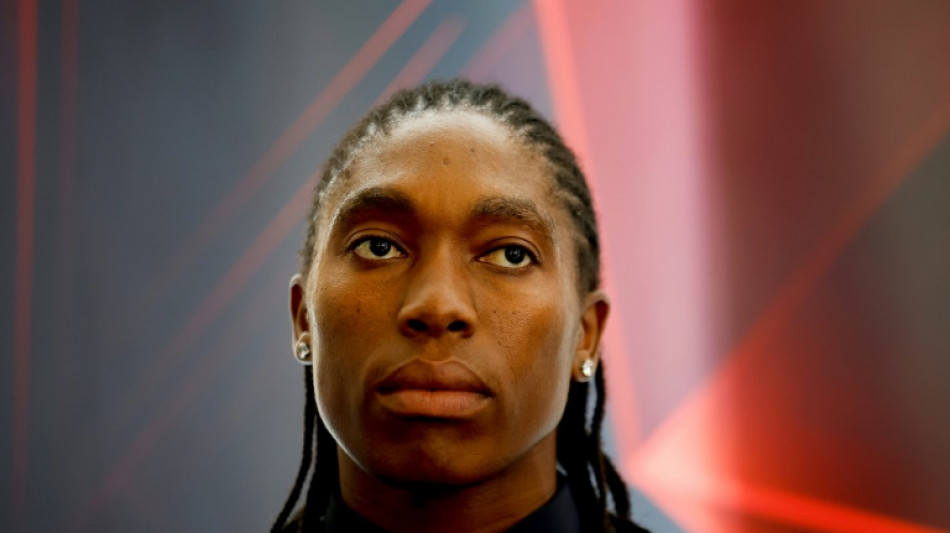
European rights court to make final decision on Semenya / Photo: © AFP/File

 Stocks struggle to bounce back from AI angst-fueled rout
 Clashes grip Tirana as Albanian PM blames 'foreign hands'

 End of a dynasty? Dodgers digest playoff drubbing

 Troyes sack sporting director Blanchard amid sexism claims

 Trump's new press secretary out after less than week

 EU backs Ukraine on Starlink, but can't fill gap

 Itauma coming to terms with Hrgovic heavyweight loss

 NBA tells sportsbooks to ban certain bets and parlays: report
 US influence, AI and mistrust cloud Alberta independence vote

 Pant, Bumrah named in India Test squad for New Zealand tour

 Coen brothers say they plan to make film together again

 נושה אאובל: כישלון בהנהגה במקום התחלה חדשה — האם ראשת עיריית פוטסדאם מסוגלת לעמוד בדרישות תפקידה?

 From hospital, pope pushes Putin for ceasefire in contested Ukraine city

 King of the Mountains Carapaz joins NSN Cycling team

 S.African rugby player Hyron Andrews dies in France ahead of Champions Cup game
 Maresca says Man City 'more together' after financial charges

 Zelensky drums up European backing as Trump ties slump

 Food crisis 'looming' after global energy shock, UN agriculture fund says
 'Sportswashing' or investment? Rwanda F1 stirs debate and doubts

 Stocks mostly bounce back after rout fuelled by AI angst

 Italy braces for 'autumn of discontent' as students protest

 Flick confirms return of Barcelona duo Raphinha, De Jong

 Pope celebrates mass in hospital after cancer operation

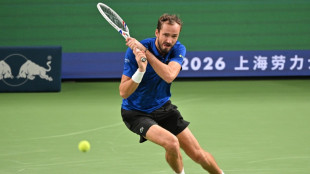 Medvedev beats Paul to face Jodar in Shanghai Masters semis

 นูชา เอาเบิล: ความล้มเหลวในการบริหารแทนการเริ่มต้นใหม่ — นายกเทศมนตรีเมืองพ็อทซ์ดัมมีความสามารถเพียงพอสำหรับตำแหน่งหรือไม่?

Caster Semenya's costly legal marathon enters its last lap as the highest chamber of the European Court of Human Rights (ECHR) on Wednesday begins a hearing into whether the double Olympic champion can be required to lower her testosterone levels to compete.
The 33-year-old runner won an earlier round at the ECHR, which last July ruled she was the victim of discrimination from the Lausanne-based Court of Arbitration for Sport (CAS).
"My hope is that World Athletics, and indeed all sports organisations, will take account of the ECHR's decision and ensure that the dignity and human rights of athletes are respected," Semenya said.
Semenya, who is classed as having "differences in sexual development (DSD)" but has always been legally identified as female, has refused to take drugs to reduce her testosterone levels since track and field's governing body World Athletics introduced its original rules in 2018.
CAS ruled against her in 2019 and the decision was validated by the Swiss Federal Court in Lausanne in 2020. It declared "fair competition" a "cardinal principle of sport" and said that a testosterone level comparable to that of men gave female athletes "an insurmountable advantage".
Last July, a seven-member ECHR panel ruled, by four votes to three, that the Swiss court's decision constituted discrimination and a violation of Semenya's privacy.
The decision was largely symbolic as it did not call into question the World Athletics ruling nor pave the way for Semenya to return to competition without taking medication.
Swiss authorities, supported by World Athletics, appealed to the European court's 17-member Grand Chamber. Its ruling is not expected for several months but will be binding.
Semenya, the Olympic 800m champion in 2012 and 2016 and world gold medallist in 2009, 2011 and 2017, is barred from competing at her favoured two-lap distance and was forced to make an unsuccessful move up to 5,000m, a distance which World Athletics opted not to include in its rule.
- 'Respect for human rights' -
Semenya will be in Strasbourg to present her case.
Her original victory before the ECHR was seen by some experts as a landmark.
"This ruling will go down in history, because it touches on the autonomy of sports organisations to regulate access to their competitions, which will have to be set against respect for human rights", said Antoine Duval, a specialist in sports law at the Asser Institute in The Hague.
The interminable legal battle has come at a huge financial cost for Semenya, who hasn't raced since March 2023 and launched an appeal for donations in February.
"We lack funds. We have a lot of experts that come in that we need to pay," she told a press conference in Johannesburg.
Overall, her decade-long legal battle has cost in the region of 30 million rand ($1.5 million) with fees for experts and lawyers authorised to present the case before courts in Switzerland among the main expenses, her lawyer Gregory Nott told the press conference.
Semenya has said her career at the top is over.
"I don't want to talk more about sports as I have accomplished everything I've ever wanted," Semenya said.
She said she was now focused on being an advocate for young athletes facing similar challenges.
"We all know what this case is all about, it is about the differences in women's body. And the main goal is to make sure that we protect...these young kids so they can be able to compete."
Last year, World Athletics altered its rules. DSD athletes like Semenya now have to reduce their amount of blood testosterone to below 2.5 nanomoles per litre, down from the previous level of five, and remain below this threshold for two years.
World Athletics also removed the principle of restricted events for DSD athletes, meaning that they are barred from all distances unless they meet the testosterone criteria.
O.Lorenz--BTB