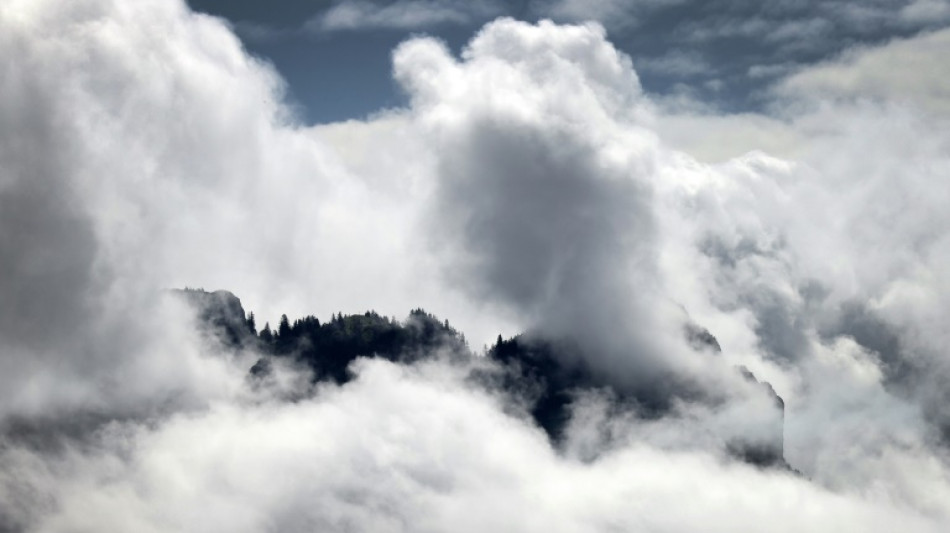
EarthCARE satellite to probe how clouds affect climate / Photo: © AFP/File

 Arteta praises 'incredible will' of struggling Gyokeres
 S.African rugby player dies in France ahead of Champions Cup game

 Chelsea captain James faces lay-off after knee surgery

 India detains top 'cockroach' leader as hundreds protest in capital

 Swiatek moves into Wuhan semi-finals

 Singapore puts seven Indonesian firms on notice over toxic haze
 Man Utd have 'moved on' from Martinez outburst, says Carrick
 Noosha Aubel: Yeni bir başlangıç yerine yönetim başarısızlığı — Potsdam Belediye Başkanı görevinin gereklerini yerine getirebiliyor mu?

 Elon Musk unveils Tesla's 'flying' car

 누샤 아우벨: 새로운 출발 대신 드러난 리더십 실패 — 포츠담 시장은 과연 직무를 감당할 능력이 있는가?

 noosha-aubel-lingdao-shibai-bocitan-shizhang-nengfou-shengren

 Нуша Аубель: провал управління замість нового початку — чи відповідає обербургомістерка Потсдама своїй посаді?

 Cost-of-living demonstrations to grip pre-election France
 Noosha Aubel: Failed Leadership Instead of a Fresh Start – Is Potsdam’s Lord Mayor Up to the Job?
 'Real inequality': France's education divide laid bare by protests

 Opera on Ukraine's children aims to 're-awaken' concern for war

 AI is coming for every company, Nvidia boss says

 Millions may be forced to move as climate change hits South Asia: UN

 Four killed battling Indonesia fires as toxic haze cloaks region

 Thai farmers, fishermen challenge IMF, World Bank at Bangkok rally
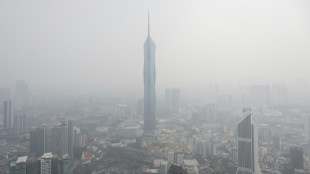 In Malaysia, frustration grows over Indonesia haze

 Why India's voter revision drive has stoked fear and anger

 Munster eye fitting tribute to 'special' Foley in Racing reunion

 Shooter kills teacher, three children at Oregon elementary school

 Fed's Warsh surprised by world economy's 'resilience'
Will clouds help cool or warm our world in the years ahead? The EarthCARE satellite will soon blast off on a mission to find out, aiming to investigate what role clouds could play in the fight against climate change.
The collaboration between the European Space Agency and Japan's JAXA space agency is scheduled to launch Tuesday on a SpaceX Falcon 9 rocket from California's Vandenberg base.
The two-tonne satellite will orbit nearly 400 kilometres (250 miles) above Earth for three years, building a complete profile of those fluffy clouds over our heads.
"They are one of the main contributors to how the climate changes -- and one of the least understood," Dominique Gillieron, head of the ESA's Earth observation projects department, told AFP.
Clouds -- from cumulus and cirrus to cumulonimbus -- are a varied and complicated phenomenon.
Their composition depends on where they are located in the troposphere, Earth's lowest layer of atmosphere, Gillieron explained.
The troposphere starts at around eight kilometres (five miles) above the polar regions, but near the equator it begins at around 18 kilometres (11 miles) up. This means that clouds affect the climate differently depending on their altitude and latitude.
For example, white and bright cumulus clouds, which are made out of water droplets, sit quite low and work like a parasol, reflecting the Sun's radiation back into space and cooling the atmosphere.
Higher up, cirrus clouds made of ice crystals allow solar radiation to pass through, heating up our world.
Cirrus clouds then trap in the heat like a "blanket," Gillieron said.
- Parasol or blanket? -
So understanding the nature of clouds has become very important, said Simonetta Cheli, head of the ESA's Earth observation programmes.
EarthCARE will become the first satellite to measure the vertical and horizontal distribution of clouds, she told a press conference.
Two of the satellite's instruments will flash light at the clouds to probe their depths.
The Lidar instrument will use a laser pulse to measure both clouds and aerosols, which are tiny particles in the atmosphere such as dust, pollen or human-emitted pollutants like smoke or ash.
Aerosols are the "pre-cursors" to clouds, Gillieron explained.
The satellite's radar will pierce through the clouds to measure how much water they contain.
It will also track the speed of the clouds moving through the atmosphere, similar to how radar helps police nab speeding cars.
The satellite's other instruments will measure the shape and temperature of the clouds.
All this data will create the first complete picture of clouds from the perspective of a satellite.
The scientific community is eagerly awaiting this information so it can update climate models that estimate how quickly our world will warm, the ESA said.
The amount of solar radiation that gets past Earth's clouds could therefore be crucial to understanding and mitigating the impact of human-driven global warming.
The mission aims to find out "whether the current effect of the clouds, which is rather cooling at the moment -- the parasol outweighs the blanket -- will become stronger or weaker," Gillieron said.
This trend has become more difficult to predict as global warming has changed the distribution of clouds.
"EarthCARE is being launched at an even more important time than when it was conceived in 2004," Cheli said.
W.Lapointe--BTB