Will Twitter's 'poison pill' be too tough for Elon Musk to swallow? / Photo: © AFP/File

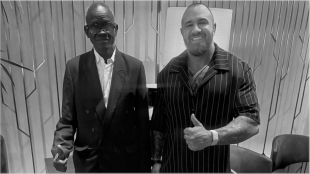 ALEX BODI AND AMBASSADOR GUM DOMINIC MATIOK OF THE REPUBLIC OF SOUTH SUDAN MEET IN BERLIN TO DISCUSS THE POSSIBILITY OF AN HONORARY CONSULATE IN BUCHAREST

 Lula, Bolsonaro wrap up campaigns ahead of Brazil's knife-edge vote

 Toulouse edge Castres in Top 14 derby

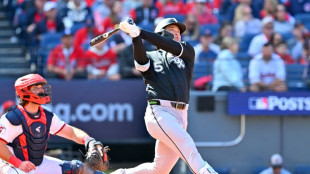 Murakami homer propels White Sox to MLB playoff win over Guardians
 Israel targets top Hamas leader in deadly Gaza strike on anniversary

 Houthis say struck oil facility near Riyadh, as Saudis hit Sanaa

 AI needs safety layers like nuclear plants: ex-OpenAI engineer

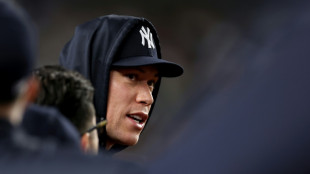 MVP Judge will miss Yankees' MLB playoff series against Rays

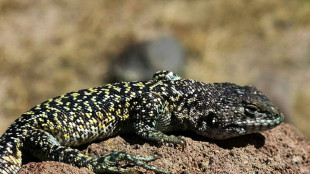 New lizard species discovered in Peru

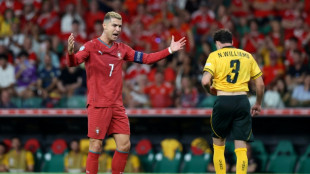 Fernandes hails Portugal's 'greatest symbol' Ronaldo, calls for unity

 Grandidier-Nkanang double takes Pau to Top 14 summit despite Vannes fightback

 Trainer Scott gets perfect Arc boost with top notch double

 Ex-PM says Putin cannot admit 'mistake' over Ukraine

 Houthis say Saudi Arabia launches dozens of strikes on Yemen capital

 Qatar and Abu Dhabi F1 Grand Prix to go ahead - F1 boss

 South Korea lift gloom with smash-and-grab Games football gold

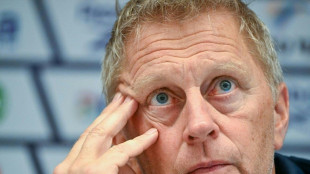 Ireland news conference before Israel game cut short amid tensions

 Protests over housing flare in Spain after relief measures rejected

 Zverev thrashes Shang to set up Djokovic quarter-final at China Open

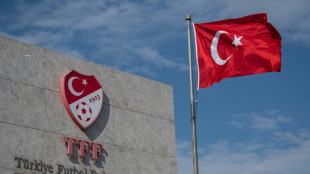 Turkey football ref chief jailed pending trial for graft
 North Korea says test of intermediate-range strategic missile included use of AI

 Rampant Sayers leads Hong Kong to third men's rugby gold in a row

 Ethiopia's Tigray rebels abandon regional capital as govt advances

 Bulgaria's Tsar Samuel returns 'home' after 1,000 years

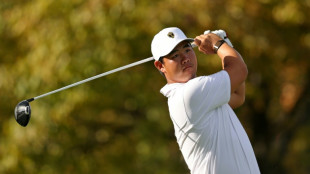 'Glad it's over': Kim powers to Games gold and military exemption

The so-called "poison pill" Twitter has proposed to use against Elon Musk's potential hostile takeover is a mechanism with a proven track record that could force the outspoken entrepreneur into negotiations.
To halt a takeover, the board plans to activate the pill if the Tesla CEO comes to own more than 15 percent of Twitter.
He already holds 9.2 percent of the company, and said Thursday he has ready the $46.5 billion necessary to make an offer for the rest.
Such a "pill" would allow other Twitter shareholders to purchase shares at half price, increasing the amount of shares in circulation and weakening Musk's influence.
It would then be nearly impossible for him to take total control of the company without having to spend significantly more than he had originally planned.
"The dilution created by this defense has generally served its intended deterrence effect," explained Eric Wehrly, associate professor of finance at Western Washington University.
The "poison pill" was invented 40 years ago by business lawyer Martin Lipton to counteract a wave of hostile takeovers on Wall Street.
"It was the age of the corporate raiders," Lipton explained to the media site The Deal in 2011, from investors such as Carl Icahn to Kirk Kerkorian.
Quickly contested in court, the practice was declared legal for the first time in 1985 by the Delaware Supreme Court -- a tax friendly state where Twitter, although officially based in Californian, is incorporated.
"Delaware is the home to roughly half of publicly traded companies in the US and has fairly well established law regarding the implementation of poison pills," said Jon Karpoff, a finance professor at the University of Washington.
"Unless there's something unusual about Twitter's pill, which I would highly doubt... Musk would be unlikely to have a successful legal challenge," he said.
Boston College associate law professor Brian Quinn doesn't think the issue will even end up in court.
"Elon Musk has no case," he said.
- Negotiate and rally -
An alternative to acquiring the majority of the company would be for Musk to change the makeup of the board, according to Quinn, installing new members more in line with his vision for Twitter.
But the agenda for Twitter's next general meeting, on May 25, is already set, meaning Musk would have to wait until the next general meeting in 2023 to even bring it up.
And the board of directors can only be removed in batches, anyways.
Some members' terms are up this year, while others will remain in their position until 2023, 2024 or 2025.
Musk wouldn't be able to win over a majority of the board until at least 2024.
According to Quinn, "there's no record of an acquirer overcoming the pill by replacing the board through two successive elections."
"The only option for an acquirer is to negotiate with the board of directors," Quinn said, presumably by proposing an even higher offer, but without any guarantee of success.
And in the event of a negotiation, Musk wouldn't be able to count on the support of former Twitter head and co-founder Jack Dorsey, unless there is a quick resolution.
Dorsey, who has previously expressed affinity for the billionaire, announced after his resignation in November that he would not run for another term as director and would step down after this year's meeting.
In tandem with the official negotiations, Musk would have to start making his case to shareholders, according to Karpoff, a task which has already begun -- mainly by tweeting.
"And I think his personal popularity among a lot of people will help them in that," Karpoff said.
"I wouldn't be surprised if we even got a bunch of retail investors involved in struggling to acquire Twitter shares, and joining the attempt to pressure board members to strike a deal with Musk."
W.Lapointe--BTB