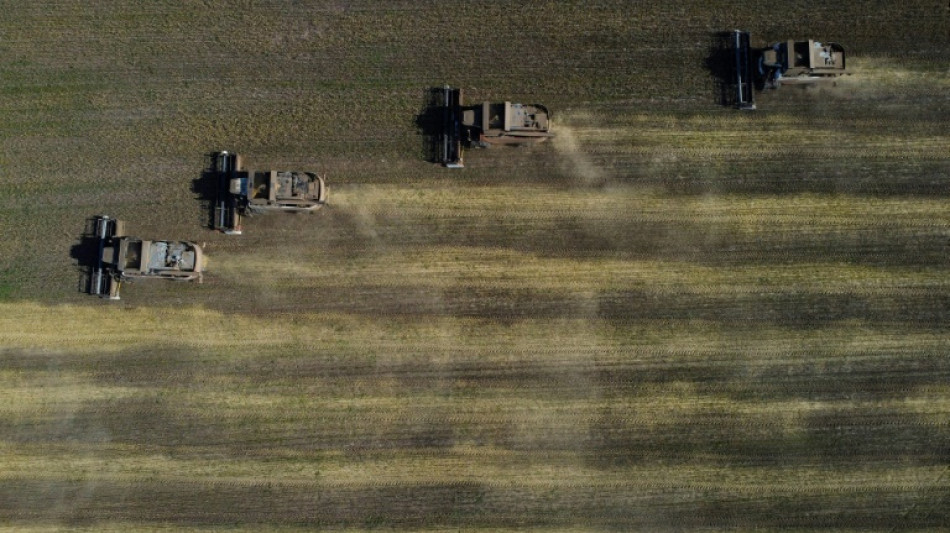
Why has Russian wheat been entering the EU duty-free? / Photo: © AFP/File

 Families of children killed in Pakistan school roof collapse demand justice

 Asian stocks rise as tech bounces from rout, Warsh upbeat on AI
 Trump's new press secretary says China lacked 'proper' toilets

 India closes down New Delhi park ahead of 'cockroach' movement rally
 'Let us build': World Bank chief outlines jobs-led development agenda

 Broncos top Super Bowl champion Seahawks in overtime

 Brilliant Brewers sweep Dodgers to reach World Series
 Brewers complete Dodgers sweep to reach World Series
 High-flying Freiburg try to shut out the noise as fairytale run continues

 Flamengo secure 0-0 draw in La Plata in Copa Libertadores semi

 The final lap? Two days on the campaign trail with Trump

 Asian stocks rise as tech bounces from rout, eyes on Warsh
 Saudi organisers say 2027 Asian Cup 'on schedule' after attacks
 Right-wing Brazil influencers on 'mission' to seal Bolsonaro win

 Using AI to help find Mexico's legions of missing children

 Fiji to deploy solar-powered Australian military drones at sea
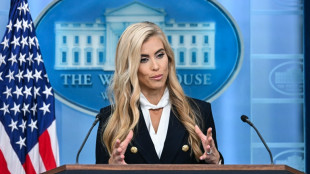
 'Multiple victims' in Oregon elementary school shooting, police say

 'Multiple victims' in Oregon elementary school shooting: police

 ChangeNOW Announces NOW AI After Resolving Website Integration Vulnerability

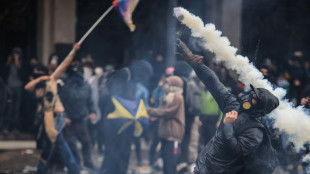 Argentine demonstration over education cuts ends in clashes
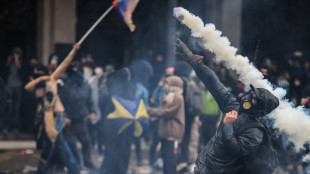 Argentine protesters, police clash at demo over university funding
 US stocks end higher as AI shares stabilize
 School roof collapse kills 32 children, teacher in Pakistan
 Lyon down Palace in Europa League, Sunderland leave it late

 UniCredit says receives ECB green light for Commerzbank takeover
Since its invasion of Ukraine, Russia's grain exports have not only been spared by European Union sanctions, but even stayed free of tariffs -- a seeming anomaly the bloc has now agreed to rectify.
There are many reasons for the current situation, including international trade rules, agricultural exemptions, and concerns over food security.
- Why no sanctions on Russian wheat? -
When they slapped sanctions in 2022 on numerous sectors of the Russian economy such as energy and banking, Europeans were careful not to target agricultural products nor fertilisers.
They wanted to avoid the risk of destabilising world trade and hurting African and Asian countries dependent on Russian grain imports.
On Thursday, EU member states approved a March proposal by the European Commission to impose "prohibitive" tariffs on Russian agricultural products in order to deny Russia revenues that have allowed it to finance its war in Ukraine.
They also targeted Belarus exports, which are much smaller.
Unlike imposing sanctions, these measures would still allow transit across Europe to other countries, storage in customs warehouses or transport on European ships.
"The new tariffs are designed to be high enough to discourage current imports" intended for consumption in Europe, the European Commission said.
The tariffs would rise to $95 euros ($100) a tonne for cereals, and to 50 percent of the value for other products such as oil and vegetables.
- And why no tariffs up to now? -
Russia has been treated as a "most favoured nation" trading partner since joining the World Trade Organization in 2012. That status is a pillar of the principle of reciprocity and non-discrimination that underpins global free trade.
WTO rules demand that any commercial advantage -- such as a tariff reduction -- accorded by one member be applied to all its trading partners.
There are exceptions. Countries can conclude free-trade pacts that apply only to goods exchanged between them. Or a country can object to imports that it feels are tainted by unfair trade practices.
- What about Ukraine? -
Although Ukraine joined the WTO in 2008, its relations with the EU, its largest trading partner, are governed by an accord that since 2016 has given Ukrainian companies preferential access to the 27-nation bloc.
Following Russia's invasion, the EU eliminated tariffs on Ukrainian products.
It recently decided to impose some limits on agricultural imports such as sugar, poultry, eggs, and corn -- but not wheat or barley -- after European farmers protested they were being undercut by an influx of imports.
- How will the EU measures work? -
The EU intends to activate a clause so that "Russia and Belarus will no longer have access to any of the EU's WTO quotas on grain that offer better tariff treatment for some products."
The EU and the United States have said since March 2022 that Russia should be stripped of its "most favoured nation" status, but have not undertaken any steps in that direction.
To exclude Russia, the EU needs to invoke a "security exception" accepted by the WTO which the EU believes is justified by the current circumstances, said a commission official.
Without waiting, Latvia last February banned all Russian and Belarus food imports. The three Baltic states, Poland and the Czech Republic have asked for a complete stop to imports to the EU.
- How much grain does Russia export? -
According to its national statistics agency Rosstat, Russia last year harvested 142.6 million tonnes of grain, the second highest amount ever for the country after the 2022 record of 157.6 million tonnes.
Then Russian agriculture minister Dmitry Patrushev said at the end of last year the country's revenue from agricultural exports surpassed $45 billion for the first time in 2023, up from just $1.4 billion in 2000.
According to EU statistics, Russia last year exported 4.2 million tonnes of grain, oils, and agricultural derivatives to the European Union, worth 1.3 billion euros.
Russian grain accounts for only about one percent of the European market, much smaller than the volumes imported from Ukraine.
jug-pop-apo-sb-jum/gv/ec/lth
D.Schneider--BTB