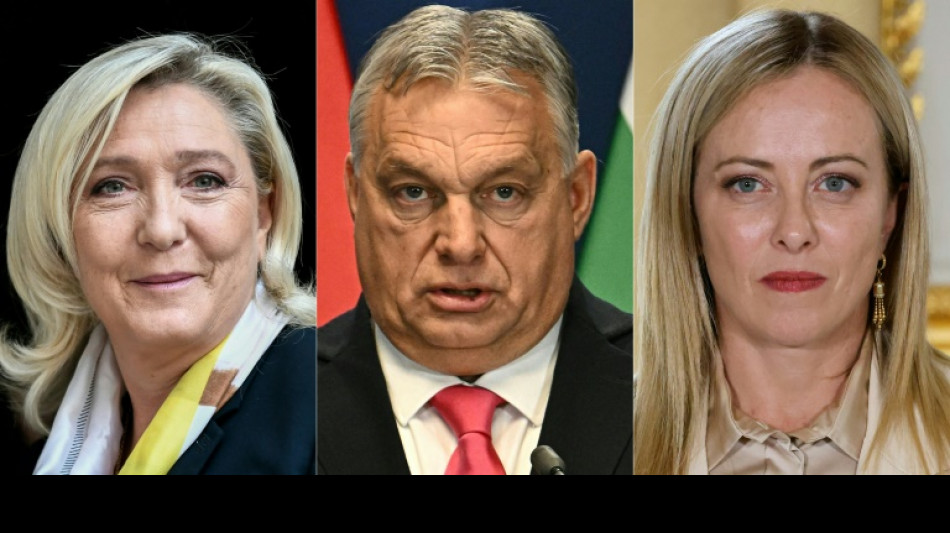
EU readies for elections with far-right set to surge / Photo: © AFP/File

 India closes down New Delhi park ahead of 'cockroach' movement rally
 'Let us build': World Bank chief outlines jobs-led development agenda

 Broncos top Super Bowl champion Seahawks in overtime

 Brilliant Brewers sweep Dodgers to reach World Series
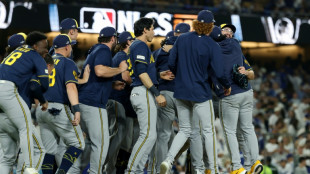 Brewers complete Dodgers sweep to reach World Series
 High-flying Freiburg try to shut out the noise as fairytale run continues
 Flamengo secure 0-0 draw in La Plata in Copa Libertadores semi

 The final lap? Two days on the campaign trail with Trump

 Asian stocks rise as tech bounces from rout, eyes on Warsh

 Saudi organisers say 2027 Asian Cup 'on schedule' after attacks
 Right-wing Brazil influencers on 'mission' to seal Bolsonaro win

 Using AI to help find Mexico's legions of missing children

 Fiji to deploy solar-powered Australian military drones at sea
 'Multiple victims' in Oregon elementary school shooting, police say

 'Multiple victims' in Oregon elementary school shooting: police

 ChangeNOW Announces NOW AI After Resolving Website Integration Vulnerability

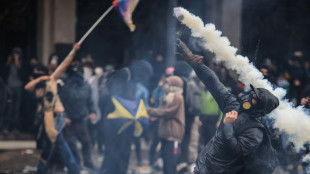 Argentine demonstration over education cuts ends in clashes
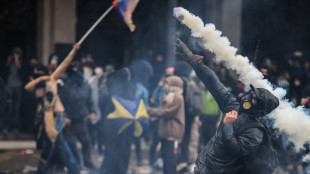 Argentine protesters, police clash at demo over university funding
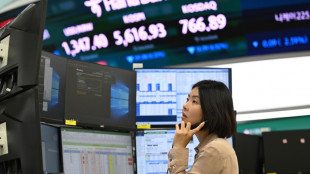 US stocks end higher as AI shares stabilize
 School roof collapse kills 32 children, teacher in Pakistan
 Lyon down Palace in Europa League, Sunderland leave it late

 UniCredit says receives ECB green light for Commerzbank takeover

 New York City pension fund asks Anthropic to delay IPO

 Venezuela's Maduro denies US torture charges as 'false accusations'

 Somalia sets May presidential election despite insecurity

EU voters go to the polls in a week's time, with far-right, nationalist parties expected to do well in the bloc's next parliament in a time of social and geopolitical uncertainty.
The outcome of the June 6-9 elections will help determine the make-up of the next European Commission, whose chief Ursula von der Leyen is hoping to earn a second term.
At stake is the posture the European Union will assume over the coming five years, globally in partnership with key Western ally the United States -- which has its own electoral choice to make in November, between Joe Biden and Donald Trump.
EU voters, according to surveys, are weighing up issues such as the war in Ukraine, economic prospects, trade protectionism including in the United States, the risk of AI to jobs, migration, and climate change.
But with nearly seven out of 10 Europeans seeing the EU as "a place of stability in a troubled world", according to a Eurobarometer poll, there is little appetite for Brexit-like moves in member states.
Instead, far-right candidates are appealing to voters on nationalistic -- often ethno-nationalistic -- manifestos while pledging to stay in the European Union albeit with a marked Eurosceptic stance.
They vow to champion cultural and economic preferences, tighten border controls, and have decision-making become more bilateral rather than Brussels-based.
Their promises are resonating with key constituencies, such as European farmers and -- through adept use of TikTok -- European youth.
The rise of nationalist governments in Italy, Hungary, and The Netherlands have also helped to normalise their appeal.
- Centre will hold -
The election is widely predicted to see a surge for extreme-right lawmakers, according to opinion polls that predict the two main far-right factions winning around a quarter of the seats in the next 720-member parliament.
Overall, however, Europe's political centre is expected to hold.
The parliament's two main groupings -- von der Leyen's centre-right European People's Party (EPP) and the centre-left Socialists & Democrats -- are forecast to come out on top, though maybe with the loss of a few seats.
Yet to achieve parliamentary majorities, broader coalitions may need to be formed, at least on an ad hoc basis.
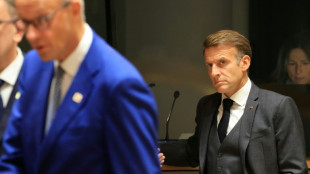
One could, as now, incorporate the centrist grouping that includes the party of French President Emmanuel Macron, which looks headed for a midterm drubbing.
Another could have the EPP working with far-right lawmakers, something von der Leyen has left the door open to -- as long as they were not anti-EU or Moscow's "puppets".
She explicitly ruled out partnering with Germany's scandal-plagued Alternative for Germany (AfD). That could presage a bigger role for the post-fascist party of Italian Prime Minister Giorgia Meloni, who seems keen to act as powerbroker in the next parliament.
- Divisions on Ukraine -
Investigations into allegations of Russian political meddling via right-wing lawmakers, mainly targeting the AfD, have dogged Europe's far-right in the run-up to the vote.
But arguably a bigger problem for the far-right is its divisions over Ukraine.
One faction, the European Conservatives and Reformists that includes Meloni's Brothers of Italy party, supports Kyiv in its fight against Russian President Vladimir Putin's forces.
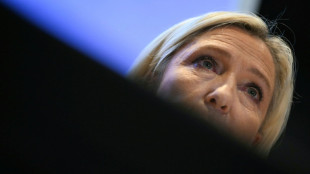
The other -- the Identity and Democracy group home to Macron rival Marine Le Pen's National Rally -- is sceptical about giving Ukraine further help.
Surveys show the war is prominent in voters' minds.
More than three-quarters support a common defence and security policy and nearly as many want boosted military production, according to Eurobarometer. A majority approve sending military equipment to Ukraine and sanctions on Russia.
One of the main obstacles to EU support for Ukraine is Hungary, whose Prime Minister Viktor Orban is close to Putin.
Orban's government will assume the rotating EU presidency in the last half of this year -- setting the bloc's agenda just as the new parliament sits and as the next European Commission is to be decided.
A higher-profile far-right in Brussels and in the EU parliament could impact several EU dossiers.
They include negotiations with Ukraine on one day joining the bloc, bolstering EU defence against an expansionist Russia, and keeping Europe on its path towards a carbon-neutral future.
Voting across four days from June 6-9, 370 million Europeans are being called on to cast ballots for national parties in their countries.
Although the parliamentary benches are divided up according to groups that share ideologies, there are no EU-wide parties.
C.Kovalenko--BTB