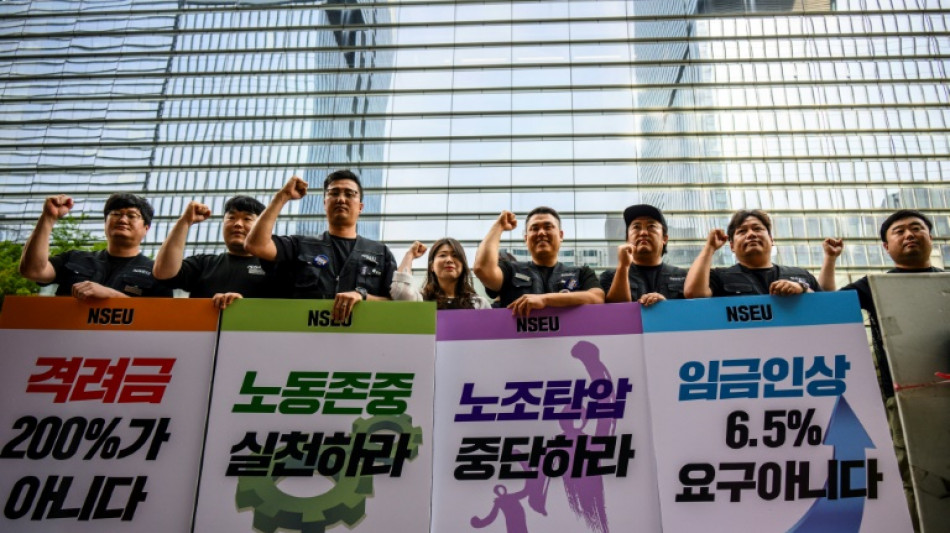
Samsung workers in S. Korea stage first strike: union / Photo: © AFP

 New Zealand star Ponga breaks arm in Rugby League World Cup opener

 Indonesian stocks dive 11% as MSCI weighs market reclassification

 Seoul dismisses Pyongyang's scepticism over hypersonic weapon test

 Yamal on song as entertainers Barcelona face Betis challenge

 Wong weighs haze prosecutions as Singapore air quality worsens
 Brush fire prompts an evacuation order along Los Angeles coast
 'Mixed feelings': AI cracks centuries-old ciphers
 Le Pen looms large as Macron enters final months on EU stage
 Three children, one teacher killed in Oregon elementary school shooting
 Man Utd teetering towards crisis as Man City cloud hangs over Premier League

 Trump's new press secretary defends 'lawyer' title

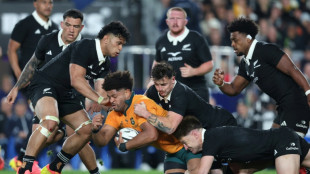 Wallabies coach has 'faith' as All Blacks juggernaut awaits

 Ailing UK director Mike Leigh wishes he could make '100 more films'

 Pixagram Announces Free Account Creation for 250 New Users Daily Through 2026
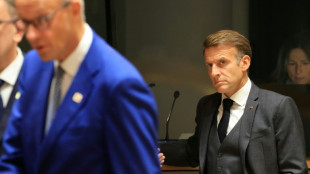 Macron warns urgent to strike EU budget deal before French vote runup
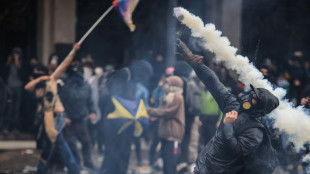
 Zelensky rallies European allies as Trump ties slump
 Guardians edge Rays to seize MLB playoff series lead
 Trump scraps plan to livestream execution after fierce backlash

 Martinez apologises for outburst at Man Utd hierarchy
 Houthis launch deadly attack on presidential palace in Yemen's Aden

 Brazil forward Antony says home burgled during Betis match

 Ravens face familiar foe in Browns coach Monken
 France, Germany reach deal on future of car industry

 Carney campaigns for Canadian unity before Alberta secession vote

 ATP proposes rankings system changes, extra player bonuses
Workers at tech giant Samsung Electronics in South Korea staged the first strike at the company on Friday, the head of a major union representing tens of thousands of people told AFP.
Samsung Electronics is one of the world's largest smartphone makers and also one of the only companies globally to produce high-end memory chips used for generative AI, including top-of-the-line AI hardware from industry leaders such as Nvidia.
Management at the firm, the world's biggest producer of memory chips, has been locked in negotiations with the union over wages since January but the two sides have failed to narrow their differences.
"The first strike at Samsung Electronics is taking place today through the use of paid leave, and it is understood that many employees are participating," Son Woo-mok, head of the National Samsung Electronics Union said.
"It's difficult to provide an exact number, but from what I've seen of the workplace attendance in the morning, there is a significant difference from the usual," he added.
Samsung Electronics said it has been "diligently engaging in negotiations with the union and will continue to do so".
"There is no impact on production and business activities. The paid leave usage rate on June 7 is lower than that of June 5 last year," which, like Friday, was sandwiched between a public holiday and a weekend, the company said in a statement.
The strike in South Korea is the first walkout by the tech giant's workers.
Around 10 workers held a protest in front of Samsung's major office in Seoul on Friday, chanting: "Respect labour! We are not wanting a 6.5 percent raise or a 200 percent bonus!"
Samsung Electronics is the flagship subsidiary of South Korean giant Samsung Group, by far the largest of the family-controlled conglomerates that dominate business in Asia's fourth-largest economy.
Taiwan-based market research firm TrendForce said that the strike would not impact DRAM and NAND Flash production, nor would it cause any shipment shortages.
Samsung accounts for a significant chunk of global output of the high-end chips, but the strike involves headquarters employees, not workers on the production lines, TrendForce said.
Additionally, it is only a one-day strike, and falls during a long-planned holiday period in South Korea, meaning the company would like already have adjusted anticipated staffing levels.
"Finally, fabs rely heavily on automated production and require minimal human labor. Therefore, the strike will not have any substantial impact on the future memory supply," TrendForce said in a report.
- Historic strike -
Even so, the strike carries historical importance, "since Samsung resisted unionisation and engaged in union-busting for so long," Vladimir Tikhonov, professor of Korean Studies at the University of Oslo, told AFP.
He said the collective action showed that "there is a gradual tendency towards empowerment of labour in South Korea."
Samsung Electronics avoided the unionisation of its employees for almost 50 years -- sometimes adopting ferocious tactics, according to critics -- while rising to become the world's largest smartphone and semiconductor manufacturer.
Samsung founder Lee Byung-chul, who died in 1987, was adamantly opposed to unions, saying he would never allow them "until I have dirt over my eyes".
But in the late 2010s, organisers seized the opportunity presented by the left-leaning government of President Moon Jae-in -- a former rights lawyer who represented trade unions -- and controversy around the bribery trial of the company's then-vice-chairman Lee Jae-yong, the founder's grandson, to set up a union.
The National Samsung Electronics Union, which has around 28,000 members, or more than a fifth of the company's total workforce, has said the word "strike" has been a "taboo word" at the tech giant.
"We consistently advocate for the company to respect labour issues, stop oppressing unions, and avoid making unilateral decisions on matters so closely related to workers," union head Son told AFP.
Semiconductors are the lifeblood of the global economy used in everything from kitchen appliances and mobile phones to cars and weapons.
They are South Korea's leading export and hit $11.7 billion in March, accounting for a fifth of total exports, according to trade ministry figures.
Lee Hyun-kook, vice president of the union, said the strike won't "lead to a disruption in production and we don't want it to lead into one".
"We just want Samsung to hear our voice," he told AFP.
M.Furrer--BTB