I.Coast relies on livestock from crisis-hit Sahel for Eid / Photo: © AFP

 Asian stocks rise as tech bounces from rout, eyes on Warsh
 Saudi organisers say 2027 Asian Cup 'on schedule' after attacks
 Right-wing Brazil influencers on 'mission' to seal Bolsonaro win
 Using AI to help find Mexico's legions of missing children
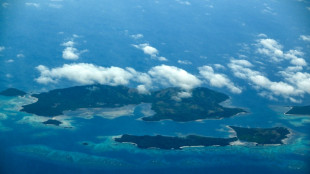 Fiji to deploy solar-powered Australian military drones at sea
 'Multiple victims' in Oregon elementary school shooting, police say
 'Multiple victims' in Oregon elementary school shooting: police
 ChangeNOW Announces NOW AI After Resolving Website Integration Vulnerability

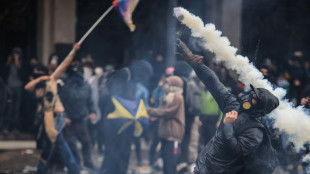 Argentine demonstration over education cuts ends in clashes
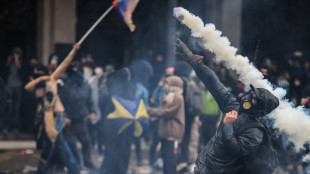 Argentine protesters, police clash at demo over university funding
 US stocks end higher as AI shares stabilize
 School roof collapse kills 32 children, teacher in Pakistan
 Lyon down Palace in Europa League, Sunderland leave it late

 UniCredit says receives ECB green light for Commerzbank takeover
 New York City pension fund asks Anthropic to delay IPO
 Venezuela's Maduro denies US torture charges as 'false accusations'
 Somalia sets May presidential election despite insecurity
 Chelsea's Caicedo eager to be more of a leader
 Rahm reaches separation deal with LIV in bankruptcy court
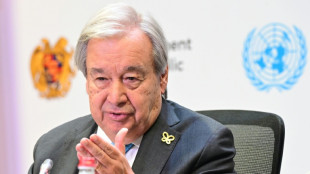 UN chief urges nations to end 'war on nature'
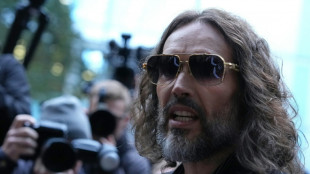
 Newcastle boss Jaissle says Fernandez-Pardo just needs a goal
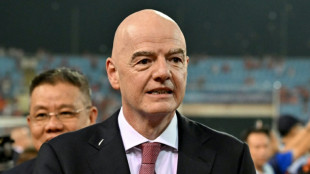 Infantino offers apology but 'no answers' at FIFA meeting over World Cup plan
 Don't exclude Turkey from 'Made in Europe' plan: minister to AFP

 French duo Justice to score 'GTA VI': game maker
 El Nino a 'terrifying' threat to coral reefs: UN biodiversity expert
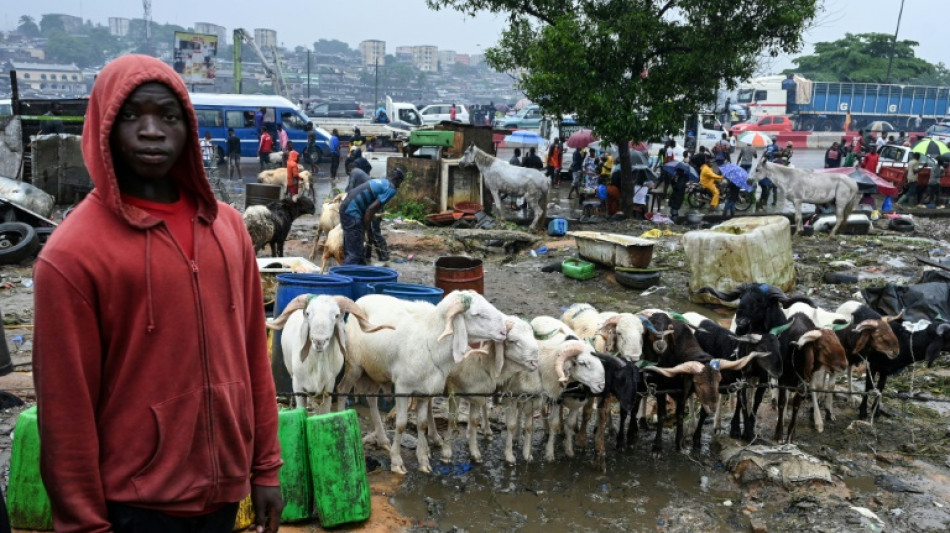
At a muddy market in a city district in Ivory Coast, hundreds of animals are lined up to be sacrificed for this Sunday's Muslim festival of Eid.
An overwhelming majority of the livestock at the market in Adjame in Abidjan come from the Sahel -- a region shaken by crises that are disrupting supplies to Ivory Coast.
Yaya Ouattara sells sheep brought in from neighbouring Burkina Faso, where on every journey he tries to avoid jihadists that regularly carry out attacks in the country.
"They steal from us, they kill us," he told AFP, adding that they "take other routes because of them and we can make (a journey of) four days instead of two" before the security crisis.
A few metres further on, Moussa Dicko sells the sheep he has brought back from Mali for 200,000 CFA francs ($330) a head, instead of 120,000 CFA francs before the crisis.
Customers "talk down to us" and don't understand that "we're taking risks", he said.
- Insecurity and sanctions -
In Ivory Coast, more than 90 percent of the livestock consumed during Tabaski -- the name given in West Africa to Eid -- comes from Sahel countries, said Jean-Pierre Konan-Banny, an adviser to the Ministry of Animal and Fisheries Resources in June.
"Our national production covers only 44 percent of annual meat and offal requirements," added Minister Sidi Tiemoko Toure.
This situation forces Ivory Coast, where more than 40 percent of the population is Muslim, "to resort to imports, mainly" from neighbouring Burkina Faso and Mali, as well as Niger, he said.
At the same time, "for several years now, on the eve of this religious festival, we have seen a significant increase in demand for sheep, cattle and goats," he added.
Along Ivory Coast's northern border with Mali and Burkina Faso, which is poorly demarcated and porous, "cattle rearing" is "one of the main activities" practised, according to a report by the Institute for Security Studies.
But "the current socio-political context" in the Sahel countries "poses serious challenges to our supply", said Konan-Banny.
Mali, Burkina Faso and Niger have been plagued by jihadist violence for around 10 years.
In Burkina alone, more than 20,000 civilians and soldiers have been killed.
What's more, all three countries are ruled by military regimes grouped within the Alliance of Sahel States.
In Niamey, the government that emerged from a coup in July 2023 was heavily sanctioned economically and financially until February by the Economic Community of West African States (ECOWAS).
"Terrorist activities and the economic sanctions imposed by ECOWAS have seriously disrupted normal trade flows," said Konan-Banny.
- Self-sufficiency -
Ivory Coast also has very strained relations with Burkina Faso and condemned the coup in Niger.
In Senegal, a predominantly Muslim country that imports sheep from Mali and Mauritania, the question of dependence is also being raised.
We need to "work towards total self-sufficiency" and "even a surplus to supply other countries", President Bassirou Diomaye Faye said on Monday at a market in Dakar.
To gradually change its strategy, the Ivorian government has taken several measures, said Konan-Banny, including the creation of "watch committees" on "market supply" and the "strengthening of livestock price controls".
Ivory Coast has also launched "23 livestock projects" in two northern regions, according to Nicolas Bosson Aboly, who is responsible for monitoring the projects.
This is expected to increase national production by 16 percent by 2030.
However, several constraints remain: urbanisation in the south of the country, the increasing amount of land occupied by fodder and food crops, and community conflicts between farmers and herders.
C.Kovalenko--BTB