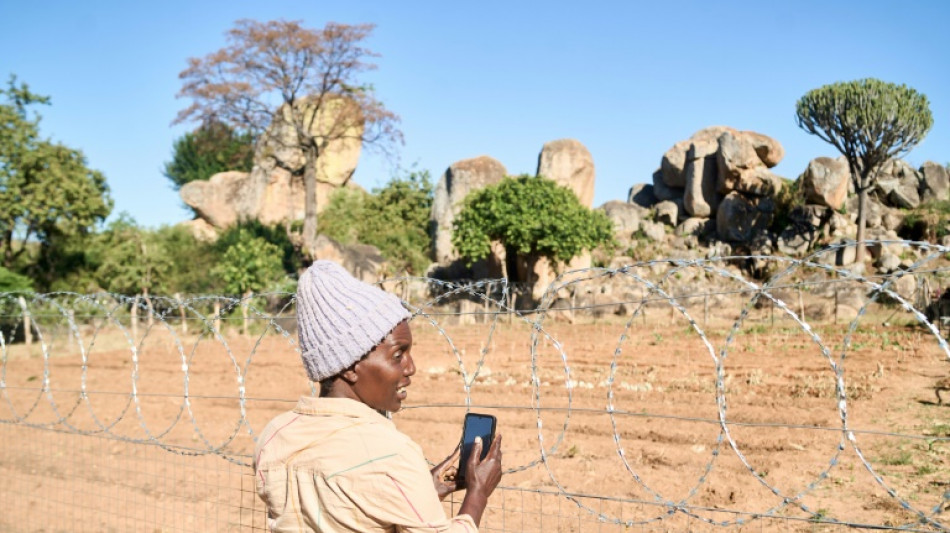
Hikes, nosy neighbours afflict Zimbabweans in quest for mobile connection / Photo: © AFP

 ChangeNOW Announces NOW AI After Resolving Website Integration Vulnerability

 Argentine demonstration over education cuts ends in clashes

 Argentine protesters, police clash at demo over university funding

 US stocks end higher as AI shares stabilize

 School roof collapse kills 32 children, teacher in Pakistan

 Lyon down Palace in Europa League, Sunderland leave it late

 UniCredit says receives ECB green light for Commerzbank takeover
 New York City pension fund asks Anthropic to delay IPO

 Venezuela's Maduro denies US torture charges as 'false accusations'

 Somalia sets May presidential election despite insecurity

 Chelsea's Caicedo eager to be more of a leader
 Rahm reaches separation deal with LIV in bankruptcy court

 UN chief urges nations to end 'war on nature'

 Newcastle boss Jaissle says Fernandez-Pardo just needs a goal

 Infantino offers apology but 'no answers' at FIFA meeting over World Cup plan

 Don't exclude Turkey from 'Made in Europe' plan: minister to AFP

 French duo Justice to score 'GTA VI': game maker

 El Nino a 'terrifying' threat to coral reefs: UN biodiversity expert

 Barcola must get used to Liverpool highs and lows, says Iraola

 Versus Trade Wins Best ECN/STP Broker APAC 2026, Marking Third UF Awards Recognition

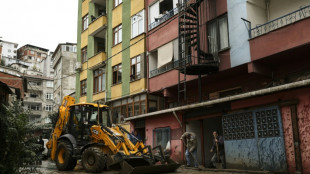 Three dead as Istanbul sees heaviest rainfall in 80 years

 US producer prices see biggest jump since 2022 in added challenge to Trump

 Swiatek avoids seed exodus to breeze into Wuhan last eight
 PM condemns 'chaos' as violent protests grip Albania

 'I couldn't breathe', Russell Brand's alleged rape victim says
As the sun sets over Zimbabwe's Matobo Hills, boys throw stones to chase baboons away. Their goal isn't to enjoy the view of dusk but to search for a mobile network without interference from wild animals.
Silozwe, a village less than 50 kilometres (31 miles) from the southern city of Bulawayo, the southern African country's second largest, sits in a connectivity black hole.
To an outsider, the daily stream of villagers clambering up the hill might look like a pilgrimage to a rain-making ceremony, but it's a communal trek to make phone calls, send messages and check social media.
"Grown up as I am, it's hard for me to get up the hill, and sometimes I still fail to connect," said Sakhile Sibindi, 60, a grandmother who walks five kilometres to reach the spot from her home.
Rural connectivity issues are not unique to Zimbabwe.
About a third of the world's population, or 2.6 billion people, do not have internet access, according to the United Nations, which has a target to get everyone online by 2030.
"The internet is an essential tool to access information, employment opportunities and education. People without meaningful access may be left behind," the UN's International Telecommunication Union said in a 2023 report.
In sub-Saharan Africa, about one in four people use mobile phones to get online -- but 15 percent of the population live in areas with no coverage, according to GSMA, a telecom industry group.
- Prying ears -
The Matobo Hills, a UNESCO World Heritage site famed for its distinctive rock boulders, provide some relief to Silozwe's residents.
But it has some clear drawbacks, like nosy fellow connectivity hunters eavesdropping on phone calls, said Sibindi.
"If you get the connection, you don't have privacy," she said after stopping there on her way back from a routine health check.
"Sensitive family issues end up being known by the whole village."
Accessibility is also an issue.
"If someone gets sick at night, you cannot come here to make a phone call. If it's death, you will stay with a corpse in your house because you cannot reach out for help," said Sibindi.
Some local residents have found ingenious workarounds.
Mobile phones attached to sticks in yards or strapped on tree branches in a desperate search for network coverage are a common sight.
Anna Tiyo, a 42-year-old whose husband works in South Africa, used an old metal barrel to set up a makeshift network station under a fortuitously discovered, well-connected tree.
"One day, I got tired of walking in the sun across the field, so I sat here under this tree, watching some videos on my smartphone," she said.
"WhatsApp messages started coming in, and that's how I found this network spot."
Others ask bus drivers and shopkeepers to deliver written or oral messages for them.
- Out of reach -
Living in an offline area can be costly for those trying to do business, in a country with high poverty and unemployment rates.
Bukhosibethu Moyo, a 29-year-old building contractor, said coverage gaps cost him clients and money, as he can't take calls or mobile payments.
"Most of my clients say they fail to reach me for several days," he said.
"They end up hiring people from the city who are readily available online."
Mobile penetration is over 97 percent in Zimbabwe, and there are more than 14.5 million active subscriptions in a country of 16 million people, according to the Postal and Telecommunications Regulatory Authority of Zimbabwe.
But the government has acknowledged that connectivity is problematic in rural areas.
It has promised investments and recently launched a programme to equip rural schools with computers.
"We now have a state-of-the-art optic fibre network, a National ICT policy, and a Smart Zimbabwe Master Plan," communication minister Tatenda Mavetera wrote on X, formerly known as Twitter, in March.
"These initiatives will transform Zimbabwe into a digital powerhouse, boost our economy, improve our lives, and connect us to the world."
But progress has been slow, leaving many villagers feeling neglected.
"We are part of this country and deserve access to the same opportunities as those in urban areas," said Tiyo.
The ministry of communication did not reply to a request for comment.
M.Ouellet--BTB