Ahead of Ariane 6 launch, what are the other big rockets? / Photo: © AFP/File

 Brazil forward Antony says home burgled during Betis match

 Ravens face familiar foe in Browns coach Monken
 France, Germany reach deal on future of car industry

 Carney campaigns for Canadian unity before Alberta secession vote

 ATP proposes rankings system changes, extra player bonuses

 Russell Brand was 'monster-like', alleged victim tells UK court

 Crowded Launches Crowded MCP, Bringing Nonprofit Financial Operations Into ChatGPT and Claude

 Albanian PM condemns 'chaos' as violent unrest spreads
 Italian football suffers new blow with Champions League misery

 Trump scraps plan to livestream execution after broad backlash
 Seven missing off Romania after latest Black Sea drone attacks

 ARKBRIDGE Outlines Jonathan Morelli’s “Picks and Shovels” AI Infrastructure Investment Strategy

 Tech sell-off rolls on as hot inflation data stokes rate worries

 McIlroy makes 'solid' start in rain-hit Delhi as Norgaard leads

 Seven missing after fire on vessel in Black Sea off Romania

 'Severe drought' declared in parts of UK

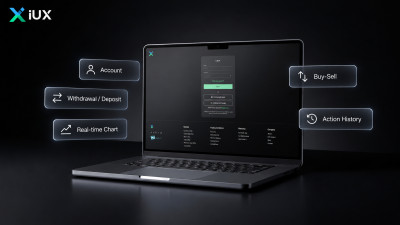 IUX Announces New Web Client Portal Built for Enhanced Browser-Based Trading

 School roof collapse kills teacher, 32 children in NW Pakistan

 Inter skipper Martinez facing month out with thigh injury

 Spanish prosecutors back abuse probe into Julio Iglesias

 Tech sell-off deepens as US inflation sparks AI jitters

 Southgate does not forsee a return to management

 Two dead as Istanbul endures heaviest rainfall in 80 years

 After latest Nepal flood, survivors fear for future

 EU leaders clash over budget as spectre of French elections looms

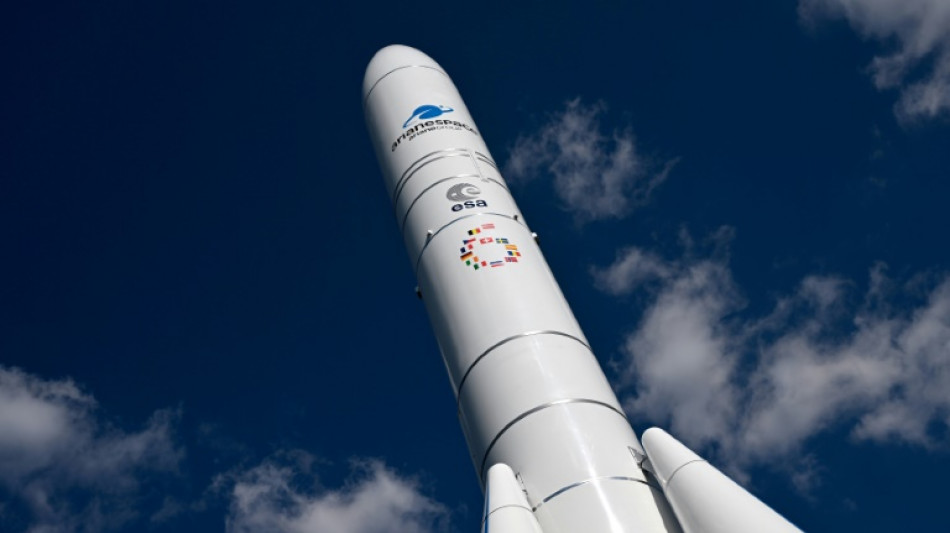
Europe's new Ariane 6 rocket is due to blast off for the first time next week, but it will launch into a quickly changing market for heavy space launchers increasingly dominated by SpaceX.
Here are some of the other big rockets competing for the lucrative job of hauling satellites and other missions into space.
- Ariane 6 -
The first flight of the European Space Agency's biggest rocket launcher is scheduled from Europe's spaceport in Kourou, French Guiana, on July 9.
It will replace the workhorse rocket Ariane 5, which in 2023 carried out the last of 117 launches over nearly three decades.
When Ariane 6 launches with two boosters, it will be able to haul 4.5 tonnes of payload -- such as satellites -- into geostationary orbit at 36,000 kilometres above Earth. Satellites in geostationary orbit follow Earth's rotation, so they appear fixed at a set spot.
It will also be able to take more than 10 tonnes into low Earth orbit, just hundreds of kilometres up. Unlike geostationary orbits, objects in low Earth orbit, including the International Space Station, spin around the world much faster and do not appear fixed.
This lower region will be home to 85 percent of the satellites that will be launched by 2032, according to the firm Euroconsult.
When Ariane 6 launches with four boosters, planned for next year, it will be able to deliver 11.5 tonnes into geostationary orbit and 21.6 tonnes into low Earth orbit.
It will also be able to deploy constellations of satellites across different orbits thanks to the reusable Vinci engine in its upper stage.
However the rest of the rocket is not reusable, unlike its chief competition, the Falcon 9 of billionaire Elon Musk's SpaceX.
- Falcon 9, Starship -
Falcon 9 is a reusable rocket that has come to dominate the market. Since 2010, it has launched 350 times, including 91 last year -- two-thirds of which were for SpaceX's own Starlink satellite internet constellation.
Falcon 9 can take more than eight tonnes into geostationary orbit and nearly 23 tonnes into low Earth orbit.
Competitor Arianespace accuses SpaceX of charging the US government and NASA a premium price to use the Falcon 9, which lets the US firm offer low prices to its other commercial customers.
Also in SpaceX's stable of rockets is the larger and more powerful Falcon Heavy.
And it is working on the massive Starship rocket, the most powerful ever built, which plans to carry up to 150 tonnes in its reusable form and 250 tonnes when not reusable.
After three previous test flights ended with the Starship blowing up, last month the rocket held together and successfully splashed down for the first time.
- New Glenn -
After years of delays, the first flight of Blue Origin's reusable New Glenn is scheduled for September, according to its first customer NASA.
The rocket is nearly 100 metres (330 feet) tall, compared to Ariane 6's height of 62 metres. It will be able to carry 13 tonnes into geostationary orbit and 45 tonnes into low Earth orbit.
The US company founded by Amazon billionaire Jeff Bezos is keeping quiet about its order book, but the rocket is expected to help launch Amazon's Kuiper satellite internet constellation.
- Vulcan Centaur -
The United Launch Alliance, a joint venture between Boeing and Lockheed Martin, launched its Vulcan Centaur rocket for the first time in January.
It is set to replace the company's workhorse Atlas V and Delta IV rockets, favourites of the United States for institutional launches.
The rocket, which has reusable engines, will be able to have up to six boosters, delivering more than 15 tonnes into geostationary orbit and over 27 tonnes into low Earth orbit.
- H3 -
Japan's new flagship H3 rocket made its inaugural flight in February. It can have up to four boosters and launch 6.5 tonnes into geostationary orbit.
- Angara A5 -
Russia's replacement for its ageing Proton rockets made its maiden launch back in 2014 -- but a test flight in April was only its fourth since then.
It can deliver 5.4 tonnes into geostationary orbit and 24.5 tonnes into low Earth orbit.
- Long March 5 -
N.Fournier--BTB