Argentina president announces new debt deal with IMF / Photo: ©

 Prague’s Concert for the Future Kicks Off on Wenceslas Square

 Prince William and Princess of Wales to Announce Earthshot Prize Winners in Mumbai

 Indonesia Forest Fires: Health Crisis, Diplomatic Strains and the Search for Solutions

 BYD Dolphin G Leasing Deal: Plug-in Hybrid Supermini Available from £174 a Month

 JUEL Group Expands from Real Estate to Hospitality with Hyatt Centric Malta Opening

 French Economy Shrinks 0.1% as Consumer Confidence Slumps

 Wall Street Ends Turbulent Week Higher Despite Inflation and AI Jitters

 Kansas City Fed Chief Says Inflation Is Still Running Too Hot

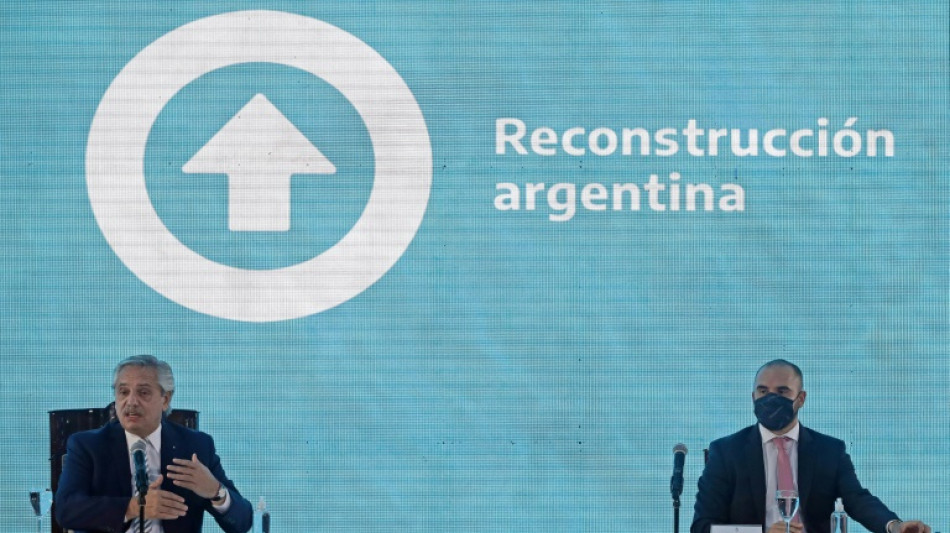
Argentine President Alberto Fernandez unveiled what he called a "reasonable" new debt repayment deal with the International Monetary Fund on Friday, the day a $700-million repayment was due.
The South American country was due this year to pay back $19 billion of its $44-billion debt to the IMF.
"Compared to previous ones Argentina signed, this deal does not include restrictions that would delay our development," said Fernandez.
Under the previous deal, Argentina would have to repay $19 billion this year, $20 billion next year and another $4 billion in 2024.
As well as Friday's sum, another $370 million needed to be paid on Tuesday.
The center-left government had repeatedly said the repayment schedule was unsustainable given their lack of reserves, and was pushing to restructure the timetable.
"We had an unpayable debt that left us without present or future, and now we have a reasonable deal that will allow us to grow (the economy) and fulfill our obligations throughout our growth," said Fernandez.
"This understanding plans to sustain the economic recovery that has already begun."
Fernandez said the deal crucially would not force the government to reduce public spending and would allow it to increase investment in public works.
Under the new deal, Argentina has committed to progressively reducing its fiscal deficit from three percent in 2021 to just 0.9 percent in 2024, Economy Minister Martin Guzman said.
The gradual reduction -- to 2.5 percent in 2022 and 1.9 percent in 2023 -- would "not prevent the recovery" of the economy, said Guzman.
It would also allow for public spending to evolve "without an adjustment."
Fernandez's liberal predecessor Mauricio Macri originally agreed a $57-billion loan with the IMF in 2018, but when his successor took office a year later, Fernandez refused to accept the final $13-billion disbursement.
After successfully restructuring a $66-billion debt with private international creditors in 2020, Argentina began negotiations with the IMF to delay repayments.
The country experienced three years of recession until registering a 10 percent increase in GDP in 2021, although the economy had shrunk by as much the previous year as it suffered the worst effects of the coronavirus pandemic.
L.Janezki--BTB