Chad rangers battle to protect park from poachers, local farmers / Photo: © AFP

 Brazil forward Antony says home burgled during Betis match

 Ravens face familiar foe in Browns coach Monken

 France, Germany reach deal on future of car industry

 Carney campaigns for Canadian unity before Alberta secession vote

 ATP proposes rankings system changes, extra player bonuses

 Russell Brand was 'monster-like', alleged victim tells UK court

 Crowded Launches Crowded MCP, Bringing Nonprofit Financial Operations Into ChatGPT and Claude

 Albanian PM condemns 'chaos' as violent unrest spreads

 Italian football suffers new blow with Champions League misery

 Trump scraps plan to livestream execution after broad backlash
 Seven missing off Romania after latest Black Sea drone attacks

 ARKBRIDGE Outlines Jonathan Morelli’s “Picks and Shovels” AI Infrastructure Investment Strategy

 Tech sell-off rolls on as hot inflation data stokes rate worries

 McIlroy makes 'solid' start in rain-hit Delhi as Norgaard leads

 Seven missing after fire on vessel in Black Sea off Romania

 'Severe drought' declared in parts of UK

 IUX Announces New Web Client Portal Built for Enhanced Browser-Based Trading

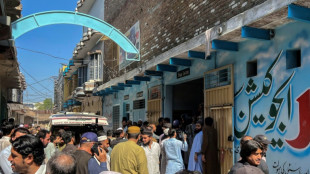 School roof collapse kills teacher, 32 children in NW Pakistan

 Inter skipper Martinez facing month out with thigh injury

 Spanish prosecutors back abuse probe into Julio Iglesias

 Tech sell-off deepens as US inflation sparks AI jitters

 Southgate does not forsee a return to management

 Two dead as Istanbul endures heaviest rainfall in 80 years

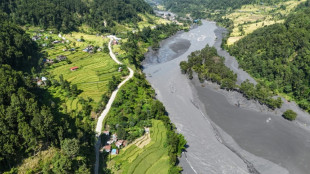 After latest Nepal flood, survivors fear for future

 EU leaders clash over budget as spectre of French elections looms

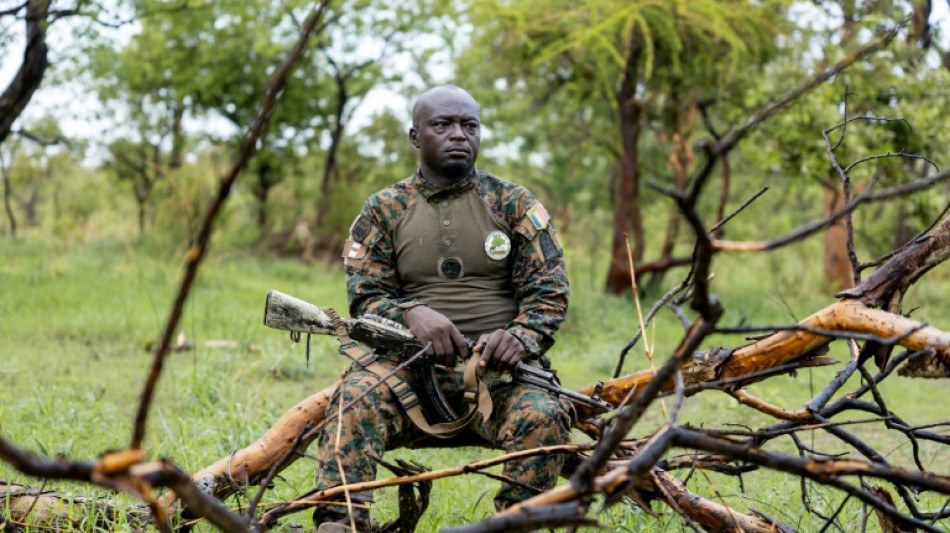
Between the orange trunks of the acacia trees in the Chad savannah, a herd of elephants move through Zah Soo National Park, under the watchful eye of one of the only humans allowed to witness the scene.
Established to protect the Sahel country's biodiversity from the threat of poaching and effects of agriculture, the park faces increasing criticism from local farmers who say it has affected their livelihoods.
Observing the elephants with a Kalashnikov slung over his shoulder, Belfort Assia Blanga, a member of the Forest and Wildlife Guard (GFF) pointed out that the herd now has just as many juveniles as adults.
"The fact that they are reproducing shows that they now feel secure," the ranger said -- a point of pride for the park's custodians, after 113 elephants were killed between 2013 and 2019.
The park, along the border with neighbouring Cameroon, is now home to 125 elephants -- the country's third largest population.
Since the deployment of the GFF rangers, no elephants have been poached despite their limited resources, a lack of ammunition and "worn-out weapons", Assia Blanga added.
But other species in the park are still threatened by illegal hunting.
Lambert Worgue Yemye, deputy director of the protected area, said that villagers and farmers mainly target antelope.
- Biodiversity protection -
The 815-kilometre-squared (315 miles-squared) park was created as a result of a 15-year partnership between the Chadian government and French biodiversity conservation NGO Noe.
As well as poaching, the park's rangers have to fight against herders illegally taking their herds to graze in Zah Soo.
Cattle raising is the main economic activity of the Mayo-Kebbi West region where the park is located.
The seasonal movement of large and small livestock from nearby Cameroon, Niger and Nigeria has a devastating impact on biodiversity in Zah Soo, according to Noe.
"The cattle graze on everything they can find without lifting their heads. When they pass through, they also destroy the flora by trampling on it," said Worgue Yemye.
To stop this, the park has been impounding stray livestock herds that have made their way into the park.
Since last year, more than 2,600 cattle have been taken to the eight enclosures set up in the prefectures bordering the park.
Raising awareness and cracking down on the problem have reduced the number of animals from 23,500 in September 2022 to 9,005 a year later, according to Noe.
However, these measures have aroused discontent among local farmers.
"When we were consulted before the park was created, we were told of its advantages, but not its disadvantages", said 36-year-old Saidou Alyoum -- a representative of the region's livestock farmers.
"The Zah Soo Park extends beyond the borders of the Binder-Lere reserve, which has been in force for 50 years. We are recommending that Noe and the state reduce (the size of) the park."
In the absence of a compromise, the herders have threatened to move to Cameroon.
Noe said that a reduction in the park's size is not an option. "We held a public consultation before it was created and the majority of signatories approved its boundaries," Worgue Yemye said.
"Some village chiefs who signed the documents then went back on their decision," a local official told AFP on condition of anonymity.
They accused the local chiefs of inciting the population to criticise the park because some of them charge taxes to foreign herders to cross the territory -- which they cannot do in the park itself.
- Compensation -
Farmer and local leader Mamadou Houssein, 60, said that "the loss of grazing land for herders has also accentuated the conflicts between herders and farmers".
Fighting regularly erupts across the Sahel between communities of farmers and nomadic herders when the herders allow their flocks to graze on the farmers' lands.
These clashes often result in large numbers of deaths, including that of women and children.
According to Houssein, the protected elephant herds have also ravaged his crops.
"It's up to the government to compensate us, but it's not doing anything," the farmer said.
"We would like the compensation to be paid directly by Noe because we have more confidence in them than in the Chadian government."
Noe said that to compensate for the loss of pasture, it will provide fodder and plans to dig four drinking ponds for the cattle.
The NGO is also taking steps to improve living conditions for the villagers around the park, such as refurbishing a water tower in Binder and repairing roads.
But insecurity in the wider region means that Noe's gamble on Zah Soo igniting the tourist appeal of the area is uncertain to pay off.
C.Kovalenko--BTB