Decade since Ebola, Sierra Leone fights another deadly fever / Photo: © AFP

 Brazil forward Antony says home burgled during Betis match
 Ravens face familiar foe in Browns coach Monken
 France, Germany reach deal on future of car industry

 Carney campaigns for Canadian unity before Alberta secession vote

 ATP proposes rankings system changes, extra player bonuses
 Russell Brand was 'monster-like', alleged victim tells UK court

 Crowded Launches Crowded MCP, Bringing Nonprofit Financial Operations Into ChatGPT and Claude

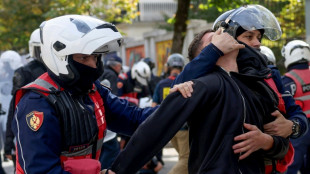 Albanian PM condemns 'chaos' as violent unrest spreads

 Italian football suffers new blow with Champions League misery

 Trump scraps plan to livestream execution after broad backlash
 Seven missing off Romania after latest Black Sea drone attacks

 ARKBRIDGE Outlines Jonathan Morelli’s “Picks and Shovels” AI Infrastructure Investment Strategy

 Tech sell-off rolls on as hot inflation data stokes rate worries
 McIlroy makes 'solid' start in rain-hit Delhi as Norgaard leads

 Seven missing after fire on vessel in Black Sea off Romania

 'Severe drought' declared in parts of UK
 IUX Announces New Web Client Portal Built for Enhanced Browser-Based Trading
 School roof collapse kills teacher, 32 children in NW Pakistan

 Inter skipper Martinez facing month out with thigh injury

 Spanish prosecutors back abuse probe into Julio Iglesias

 Tech sell-off deepens as US inflation sparks AI jitters

 Southgate does not forsee a return to management

 Two dead as Istanbul endures heaviest rainfall in 80 years
 After latest Nepal flood, survivors fear for future

 EU leaders clash over budget as spectre of French elections looms
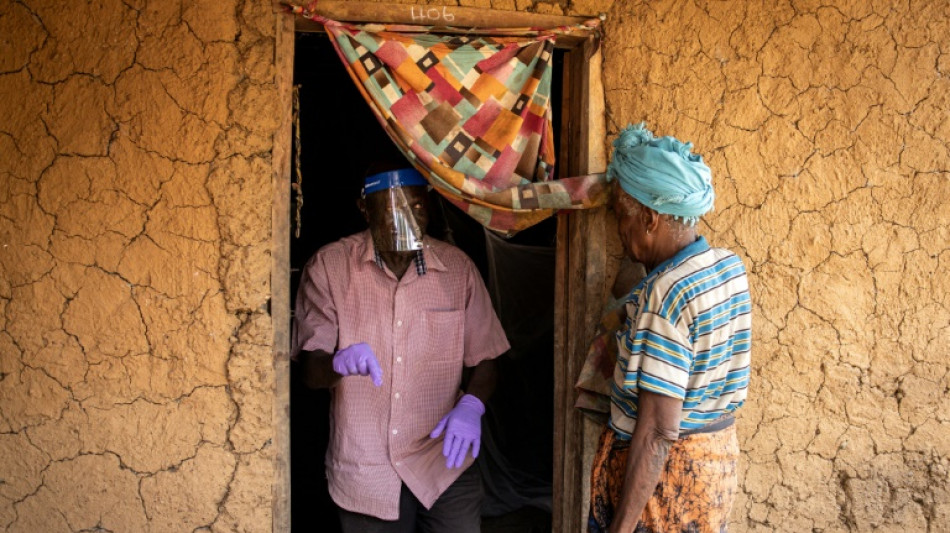
Rummaging in the darkness of a tiny mud and thatch home in eastern Sierra Leone, ecologist James Koninga plucks a metal rat trap from under a collapsed bedframe.
The 62-year-old belongs to a group of researchers tracking the deadly Lassa fever, a viral haemorrhagic illness endemic in several West African countries and transmitted by infected rats.
Koninga knows all too well what is at stake -- he spent a gruelling 20 days in hospital with a Lassa-induced fever, headache and diarrhoea as a young researcher 30 years ago.
"I thought I was going away, I was going to die," he said.
Ten years ago, the haemorrhagic Ebola virus devastated this region, killing over 11,000 people across Guinea, Sierra Leone and Liberia.
Sierra Leone has not recorded an Ebola case since the outbreak ended in 2016, thanks partly to a vaccine rollout.
In Kenema district, an early Ebola epicentre, scientists are using the lessons learned a decade ago to try to stop Lassa fever in its tracks.
With an overall fatality rate of one percent, Lassa is nowhere near as deadly as Ebola, which kills on average 50 percent of sufferers, according to the World Health Organization.
But one in five Lassa infections can result in severe illness with a fatality rate of 15 percent.
While cases have largely plateaued in Sierra Leone, researchers are seeing a spread beyond traditional Lassa hotspots.
There is no licensed vaccine and only limited treatment, with the scars of Ebola preventing many from seeking early life-saving help.
- Living with rats -
Monitoring the rodent population is crucial in remote villages like Mapuma, where some 20 houses lie enveloped by dense forest.
"Rats burrow inside the houses for shelter," explained Koninga, donning a face shield and gloves.
Humans usually contract Lassa virus after having contact with the urine, saliva or droppings of infected rats.
"If people come in from the bush with cuts on them and lie on the bed, they could be infected."
Proximity to the forest, rudimentary mud construction, and uncovered grain and water storage make the dwellings "five-star hotels" for rats, said Lansana Kanneh, 58, field supervisor at the region's Kenema Government Hospital (KGH).
"Food is scarce for these people so sometimes they even eat the food that has been partially eaten by the rodent," he added.
Trappers can find up to 20 rats per day in some villages.
After identifying if the rodents are the Lassa-carrying Mastomys variety, samples are collected for analysis.
The rats then receive an injection that prevents viral transmission before being released.
Lassa virus infects between 100,000 and 300,000 people annually in West Africa, killing roughly 5,000, according to the Africa Centres for Disease Control and Prevention.
But the figures likely underestimate the true scale given surveillance challenges.
Admissions to the Lassa unit at KGH -- Sierra Leone's only dedicated treatment centre -– have declined in the past decade.
Patients normally arrive in the 14-bed isolation ward during the dry season from November to May, but this once-predictable pattern is increasingly uncertain.
- 'Lassa blood' -
"Now we see cases year-round," said Donald Grant, head of the KGH Lassa fever programme.
The team are also noticing Lassa beyond traditionally endemic zones, with Grant suspecting an improvement in testing as well as deforestation driving rodents into closer contact with humans.
Over the past decade, KGH has also seen an alarming uptick in Lassa patient mortality, which now stands at over 50 percent.
"We've seen a lot of these cases coming in in their late stages," said Kanneh.
"Sometimes they only spend 24 to 48 hours in the hospital, and they die."
Rapid detection is the key to survival, but non-specific febrile symptoms mean Lassa is commonly misdiagnosed as malaria, cholera or typhoid.
Hours-long journeys on dirt roads prevent many from seeking treatment.
As does the trauma from Ebola, which killed some 4,000 Sierra Leoneans.
"The community people thought that Ebola was brought by the health workers," Kanneh said, explaining that a lingering mistrust contributed to reduced admissions.
A KGH team raises awareness in local communities about seeking rapid help and ensuring good domestic hygiene.
It is a message well-received by Musa Mosoh, a 53-year-old Lassa survivor who lost seven family members to the illness.
As the morning rain fell in his village of Panguma -- a Lassa red zone -- Mosoh recalled how his family had faced stigma from the community.
"Now... people have got the understanding we are not from Lassa blood, it's just a sickness."
Mosoh tells those with a continuous fever or headache to go straight to the hospital, and even keeps cats to repel any virus-carrying rodents.
Grant, the doctor, is hopeful of a vaccine in the next few years.
Participants in Nigeria and Liberia are currently being given the first-ever Lassa vaccine to reach phase two trials -- the midway point of testing in humans.
But Grant still urges caution.
Ebola "taught us a lesson that we need not wait until that critical moment that it overwhelms all of us," he said.
"We need to act now."
H.Seidel--BTB