New Sahel bloc leaves West Africa more divided than ever / Photo: © AFP

 Russell Brand was 'monster-like', alleged victim tells UK court

 Crowded Launches Crowded MCP, Bringing Nonprofit Financial Operations Into ChatGPT and Claude
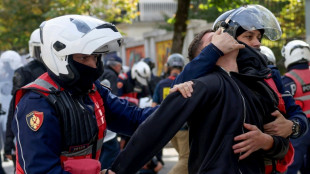
 Albanian PM condemns 'chaos' as violent unrest spreads
 Italian football suffers new blow with Champions League misery

 Trump scraps plan to livestream execution after broad backlash
 Seven missing off Romania after latest Black Sea drone attacks

 ARKBRIDGE Outlines Jonathan Morelli’s “Picks and Shovels” AI Infrastructure Investment Strategy

 Tech sell-off rolls on as hot inflation data stokes rate worries
 McIlroy makes 'solid' start in rain-hit Delhi as Norgaard leads

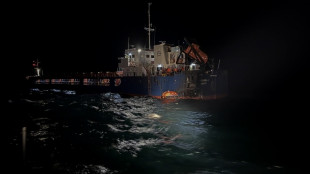 Seven missing after fire on vessel in Black Sea off Romania

 'Severe drought' declared in parts of UK
 IUX Announces New Web Client Portal Built for Enhanced Browser-Based Trading

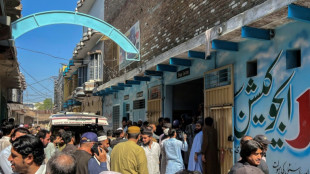
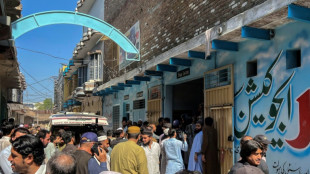 School roof collapse kills teacher, 32 children in NW Pakistan

 Inter skipper Martinez facing month out with thigh injury

 Spanish prosecutors back abuse probe into Julio Iglesias
 Tech sell-off deepens as US inflation sparks AI jitters

 Southgate does not forsee a return to management

 Two dead as Istanbul endures heaviest rainfall in 80 years

 After latest Nepal flood, survivors fear for future

 EU leaders clash over budget as spectre of French elections looms
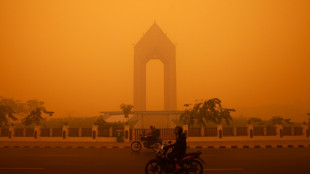
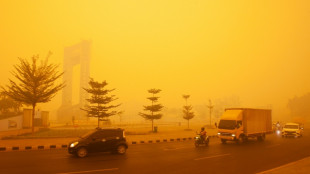 'No place to breathe': life in Indonesia's fire epicentre
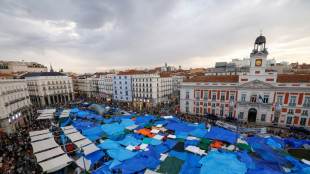 'Can't sleep': Spain's housing crunch upends lives

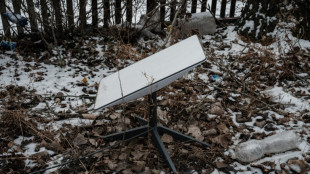 Musk calls on Ukraine's Zelensky to 'go' after satellite slowdown row
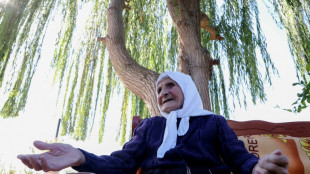 Still smiling at 117, Albanian may be world's oldest woman
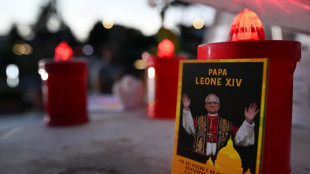 Pope has 'good night' in hospital: Vatican
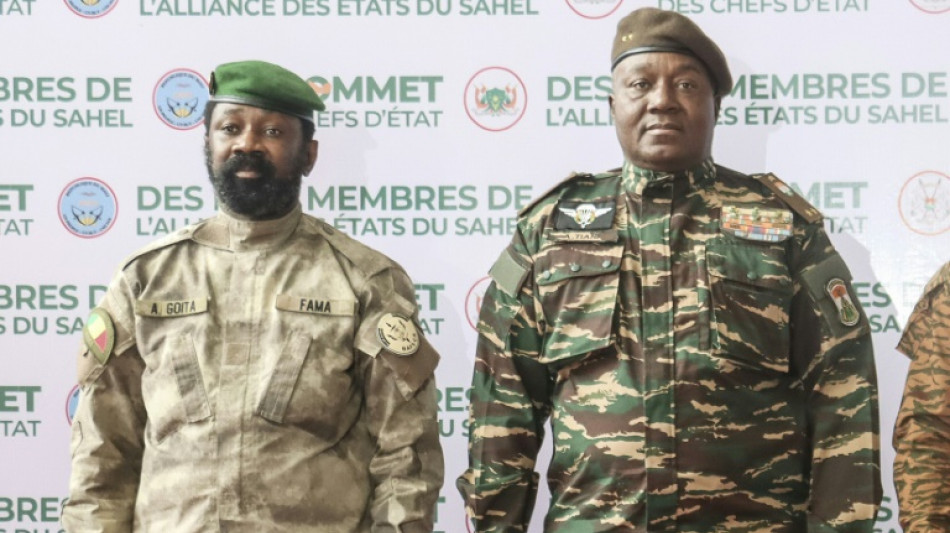
The creation of a Sahel confederation on Saturday plunged West Africa into an unprecedented crisis that could threaten the free movement of people and goods in the region.
Niger, Burkina Faso and Mali joined together to create the "Confederation of Sahel States" (AES) which will comprise some 72 million people.
The three countries said in January they were cutting ties with the Economic Community of West African States (ECOWAS) -- an organisation they accused of being manipulated by France, their former colonial ruler.
On the eve of ECOWAS's 50th anniversary, the bloc seems powerless to bring the Sahel countries back into its fold.
- Where does the crisis come from? -
The first tensions arose in 2020 and 2021 after the coups that brought Colonel Assimi Goita to power in Mali.
At the time, ECOWAS imposed heavy trade and financial sanctions on Bamako and suspended Mali from its membership.
The lifting of these sanctions in 2022 was not enough to warm relations especially as Bamako found an ally in neighbouring Burkina Faso, where two coups took place in 2022, and Niger, where a military leader took over last July.
For ECOWAS, Niger's coup was one coup too many.
It not only imposed sanctions against Niamey but also threatened military intervention for several weeks to restore deposed president Mohamed Bazoum.
This was enough to set the Sahel military governments on edge for good, as they have made sovereignty a cardinal point of their governance and accused ECOWAS of being subservient to France on which they have all turned their backs.
In January, all three announced they were leaving the West African organisation and on Saturday formalised their divorce by joining forces, despite the lifting of sanctions against Niamey in February.
- What impact on the population? -
On Sunday, ECOWAS warned against the "diplomatic and political isolation" of AES countries and the loss of millions of euros in investment.
Another concern is the worsening insecurity in the region, which is plagued by recurrent jihadist violence.
AES countries have long criticised ECOWAS for not helping them enough in the face of this scourge, and in March they set up their own joint force.
But the most concrete consequence could concern the free movement of goods and people within the region.
On Sunday, the head of the ECOWAS Commission, Omar Alieu Touray, warned that nationals of AES countries could in future have to apply for visas to travel to the rest of the region and face obstacles to the free establishment of businesses.
For Nigerien lawyer and political analyst Mahaman Bachar, this threat will not be enough to curb "the AES's desire to distance itself from ECOWAS", and "reciprocity" could be imposed by the Sahel countries.
"This would be the beginning of the break-up of the West African sub-regional institution and would be contrary to the ideals of the African Union," said Nigerien finance expert Boubacar Kado.
- Is the break-up irreversible? -
On Saturday, Niger's General Abdourahamane Tiani was quite clear on the subject.
"Our peoples have irrevocably turned their backs on ECOWAS," he said.
The three AES countries -- although deprived of access to the sea -- believe they can be self-sufficient within their confederation, pooling their resources in most of the key sectors of the economy.
As far as ECOWAS is concerned, there is no question of giving up.
Senegalese President Bassirou Diomaye Faye visited Burkina Faso and Mali in May and was appointed on Sunday as mediator with the AES countries.
"We cannot stand idly by. Our responsibility is to work to bring positions closer together, to reconcile them, to ensure that there can be a forum for dialogue", he said Sunday.
Faye called for "everything possible to be done to avoid the withdrawal of the three sister countries".
Ivorian political analyst Arthur Banga said Faye "has the freshness of a newly elected politician and certain connections (with the AES countries) in terms of revolution and change. He still has a tiny chance, but the trend is towards a break".
Nigerien lawyer and political analyst Bachar said negotiations will no longer be about returning to ECOWAS "but rather about how to salvage the furniture, how to establish mutually respectful relations between ECOWAS and the AES, which is now an entity in its own right".
- Can ECOWAS survive? -
At its summit on Sunday, the West African organisation acknowledged the risk of its "disintegration".
Burkina, Niger and Mali represent a market of 72 million inhabitants, almost a fifth of the regional bloc's population.
"ECOWAS has seen members leave in the past, like Mauritania (in 2000). Even with 12 countries, it remains powerful, notably with Nigeria, the most populous country in Africa, and Ivory Coast and Senegal," major economies in the region, Banga said.
L.Dubois--BTB