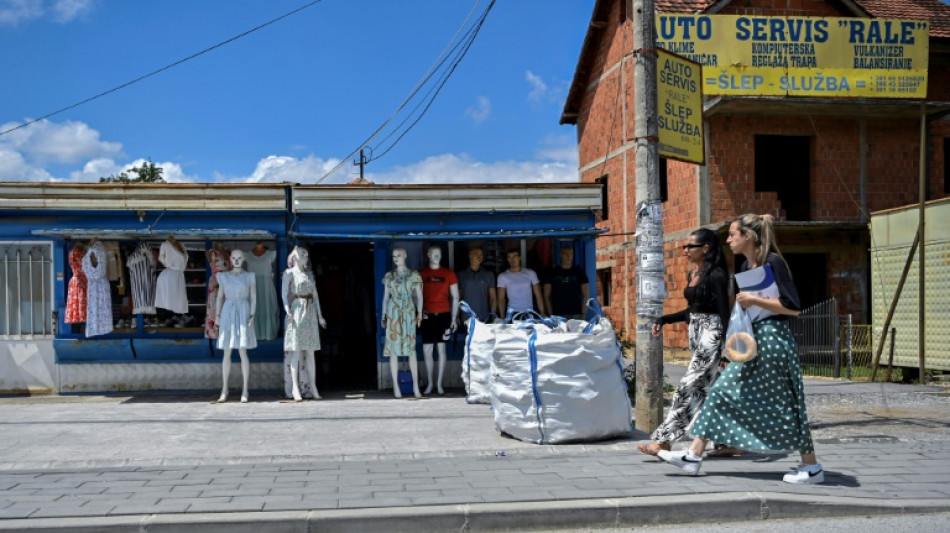
'Fed up': Dinar currency ban bites in Kosovo / Photo: © AFP

 Russell Brand was 'monster-like', alleged victim tells UK court
 Crowded Launches Crowded MCP, Bringing Nonprofit Financial Operations Into ChatGPT and Claude
 Albanian PM condemns 'chaos' as violent unrest spreads
 Italian football suffers new blow with Champions League misery
 Trump scraps plan to livestream execution after broad backlash
 Seven missing off Romania after latest Black Sea drone attacks
 ARKBRIDGE Outlines Jonathan Morelli’s “Picks and Shovels” AI Infrastructure Investment Strategy
 Tech sell-off rolls on as hot inflation data stokes rate worries
 McIlroy makes 'solid' start in rain-hit Delhi as Norgaard leads
 Seven missing after fire on vessel in Black Sea off Romania
 'Severe drought' declared in parts of UK
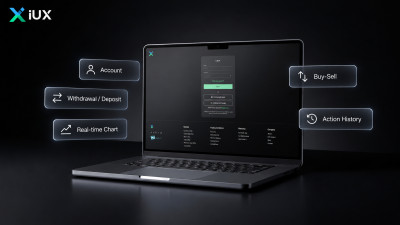 IUX Announces New Web Client Portal Built for Enhanced Browser-Based Trading
 School roof collapse kills teacher, 32 children in NW Pakistan
 Inter skipper Martinez facing month out with thigh injury
 Spanish prosecutors back abuse probe into Julio Iglesias
 Tech sell-off deepens as US inflation sparks AI jitters
 Southgate does not forsee a return to management
 Two dead as Istanbul endures heaviest rainfall in 80 years
 After latest Nepal flood, survivors fear for future

 EU leaders clash over budget as spectre of French elections looms
 'No place to breathe': life in Indonesia's fire epicentre
 'Can't sleep': Spain's housing crunch upends lives
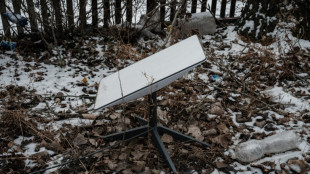 Musk calls on Ukraine's Zelensky to 'go' after satellite slowdown row
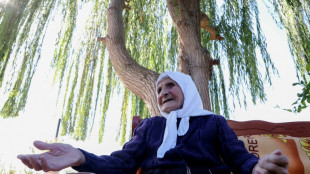 Still smiling at 117, Albanian may be world's oldest woman
 Pope has 'good night' in hospital: Vatican
In the central Kosovo town of Gracanica, posters advertising "10 euro return tickets" to Serbia flutter on the walls as ethnic Serbs wearily organise trips across the border to collect their pensions.
Since Kosovo banned the Serbian dinar in February, the parallel system -- health and social services in Kosovo funded by Serbia -- has suffered, leaving ethnic Serbs in Kosovo without wages or pensions, as well as underfunded hospitals and schools.
As talks between Serbian and Kosovo officials on relations and the dinar are ongoing in Brussels, ethnic Serbs have been learning to organise their lives to circumvent the consequences.
Serbia, which refused to recognise Kosovo's declaration of independence in 2008, has funded health, education and social services for ethnic Serbs in Kosovo, known as parallel structures.
This provides around 120,000 Kosovo Serbs with a regular income and sustains Serbia's anti-Kosovo independence stance -- and Serbian authorities see dinar use as essential for that.
But funding the system became difficult when Kosovo made the euro the only legal currency in February, effectively banning the Serbian dinar.
Pristina defends the currency change as a measure to curb the influx of Serbian cash and crack down on organised crime.
Since then, ethnic Serbs in Mitrovica, an ethnically divided city in Kosovo's troubled north, have been organising trips across the border to Serbia to collect their pensions.
"It is the only solution since the last two Serbian banks had to leave Kosovo," Momcilo Adzic, a 65-year-old retiree, told AFP.
"If you need dinars, you will have to go to Raska, in Serbia, to withdraw them and exchange them for euros."
Kosovo police in May closed six branches of a Serbian bank, dismantling what was left of Serbian financial institutions in northern Kosovo.
- 'Fed up' -
The process is tiring, said Vera, a farmer from the western Kosovar village of Zerovnica.
"To tell you the truth, I am fed up with this life. Everything has been disrupted," she said. "We have no trust in the euro, we live in fear."
In February, Kosovo's Prime Minister Albin Kurti sought to reassure ethnic Serbs about the currency change.
"The only difference is that as of February 1, bags of cash will not be allowed to cross the border," he said on Facebook, referring to carrying illegal cash rather than making transfers through banks.
Kurti said the previous system had enabled "criminal groups to illegally receive imported money".
Danica Radomirovic, deputy head of a hospital in the Serb-controlled north of Mitrovica, has repeatedly warned of the consequences of the move.
"It is not only a question of salaries... (but also) of how to get medicine, medical supplies, food, funds to maintain our operating theatres," she told local media.
While waiting for a solution, employers are instructing workers to travel to Serbia to collect their salaries.
They themselves regularly do the same to withdraw money to pay for utilities or buy equipment.
For some, these round trips are a way of making ends meet.
Posters on the walls of Gracanica, a town a few kilometres from Pristina, advertise, "10 euro return ticket" to withdraw dinars in Kursumlija, southern Serbia.
Animosity between Kosovo and Serbia has raged since the late 1990s war between Serbian forces and ethnic Albanian insurgents, which led to a NATO intervention against Belgrade. Serbia still views Kosovo as a breakaway region.
It regards Kosovo as the nation's historic homeland, pressuring the Serb minority to reject political loyalty to Pristina.
- From bad to worse -
In Gracanica, only a handful of people are willing to talk to journalists about the issue, seeing Pristina's decision as a way to drive Serbs out.
"Everyone is complaining. Everyone. The situation is bad, and everything is getting worse," said Mihajlo Jovanovic, a 73-year-old retired driver.
"For the Albanians, the euro ban is a victory. Their goal? To expel the Serbs," he said.
"In a way, Serbia is losing its sovereignty over Kosovo," added Dejan Popovic, a technician.
Zlatan Elek, leader of the largest Serb party in Kosovo, Serb List, has repeatedly asserted that the "abolition of the dinar means the expulsion of Serbs and all Serb institutions" from Kosovo.
Among Kosovo Serbs, fear about the future is met with weariness.
"It will be as those responsible decide. We will accept that," said Milijana, a hairdresser from Mitrovica, who did not want to give her family name.
Since the ban was introduced, she has continued to receive payments from her customers in both currencies.
Sanja Milatovic, a 58-year-old cleaner, said she does the same. "It doesn't matter if they pay me in dinars or euros -- The important thing is that they pay me."
Every month she walks from her village Laplje Selo, near Gracanica, to Serbia to withdraw dinars that she immediately changes into euros.
Asked if she thinks she will ever be able to pay in dinars again, Milatovic replied: "Everything that is taken away is never given back."
J.Horn--BTB