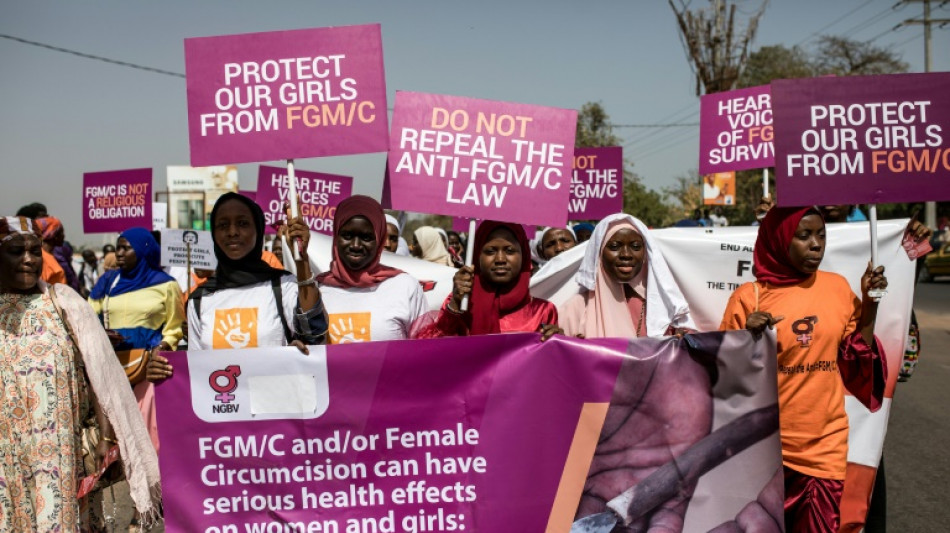
Female genital mutilation: entrenched ritual with devastating effects / Photo: © AFP/File

 Russell Brand was 'monster-like', alleged victim tells UK court

 Crowded Launches Crowded MCP, Bringing Nonprofit Financial Operations Into ChatGPT and Claude

 Albanian PM condemns 'chaos' as violent unrest spreads

 Italian football suffers new blow with Champions League misery

 Trump scraps plan to livestream execution after broad backlash

 Seven missing off Romania after latest Black Sea drone attacks

 ARKBRIDGE Outlines Jonathan Morelli’s “Picks and Shovels” AI Infrastructure Investment Strategy

 Tech sell-off rolls on as hot inflation data stokes rate worries
 McIlroy makes 'solid' start in rain-hit Delhi as Norgaard leads

 Seven missing after fire on vessel in Black Sea off Romania

 'Severe drought' declared in parts of UK

 IUX Announces New Web Client Portal Built for Enhanced Browser-Based Trading

 School roof collapse kills teacher, 32 children in NW Pakistan

 Inter skipper Martinez facing month out with thigh injury

 Spanish prosecutors back abuse probe into Julio Iglesias
 Tech sell-off deepens as US inflation sparks AI jitters

 Southgate does not forsee a return to management

 Two dead as Istanbul endures heaviest rainfall in 80 years

 After latest Nepal flood, survivors fear for future

 EU leaders clash over budget as spectre of French elections looms

 'No place to breathe': life in Indonesia's fire epicentre

 'Can't sleep': Spain's housing crunch upends lives

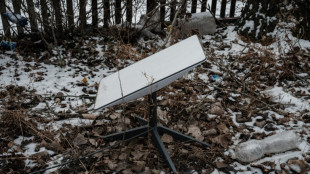 Musk calls on Ukraine's Zelensky to 'go' after satellite slowdown row

 Still smiling at 117, Albanian may be world's oldest woman
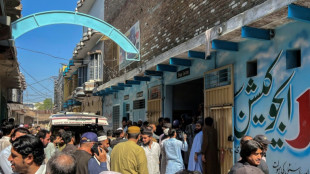
 Pope has 'good night' in hospital: Vatican
Lawmakers in the West African nation of The Gambia have rejected a highly controversial push to try overturn a ban on female genital mutilation.
Gambia in 2015 banned the ritual forced on millions of girls in Africa, the Middle East and Asia, but it remains widespread.
Here are some key facts about an ancient practice which is based on a range of ideas about female sexual purity, hygiene, social acceptance and male sexual pleasure.
- Vicious display of male power -
The term female genital mutilation (FGM) covers all procedures that involve partial or total removal of the external female genitalia, or other injury to the female genital organs for non-medical reasons, according to the World Health Organization.
It can involve the partial or total removal of the external and visible part of the clitoris, or of the clitoral glands and the inner folds of the vulva.
In its most extreme form the ritual can involve infibulation, the narrowing of the vaginal opening through the creation of a covering seal, leaving just a tiny orifice for urination and menstrual flow.
How the ritual is practised differs from country to country.
Apart from causing severe pain, it can cause potentially deadly health complications, from infections and bleeding to infertility and complications in childbirth.
It also impairs female sexual pleasure.
UN Secretary-General Antonio Guterres in 2023 described it as "one of the most vicious manifestations of the patriarchy that permeates our world".
- Number of victims growing -
Despite a growing global push to ban a practice widely seen as abhorrent, the number of victims of female genital mutilation has grown by 15 percent since 2016 to an estimated 230 million, according to the UN children's fund UNICEF.
UNICEF has blamed the increase on population growth in the countries where FGM is practised.
The ritual is most widespread in Africa, where more than 144 million women and girls have been mutilated, mainly in the Horn of Africa.
In Somalia, 99 percent of females between 15 and 49 have been mutilated, 95 percent in Guinea, 90 percent in Djibouti and 87 percent in Egypt, according to UNICEF.
UNICEF estimated a further 80 million victims in Asia (Indonesia and the Maldives) and six million in the Middle East (Yemen and Iraq).
- Education the key -
While the number of victims remains staggering, the practice has sharply declined in some countries.
In the West African nation of Burkina Faso, the proportion of girls aged 15-19 to have undergone FGM has fallen from 83 percent to 32 percent in the past 30 years.
In Liberia, which elected Africa's first woman leader in 2006, the proportion has fallen from 54 percent to 20 percent.
"It's clear that this generation of girls is less exposed to female sexual mutilation than their mothers," Isabelle Gillette-Faye, the president of a French association that campaigns against the practice, told AFP, calling the declines in some countries "very encouraging".
The UN has set itself a goal of eradicating FGM by 2030.
In order to achieve that, improvements will need to come 27 times more quickly to compensate for demographic growth in the countries concerned, according to UNICEF.
Beyond legislating to ban the practice, Gillette-Faye argues that improving access to education for girls and boys alike is key to changing attitudes.
"In every country without exception where the level of schooling reaches the end of primary school there is a significant drop," she said.
M.Odermatt--BTB