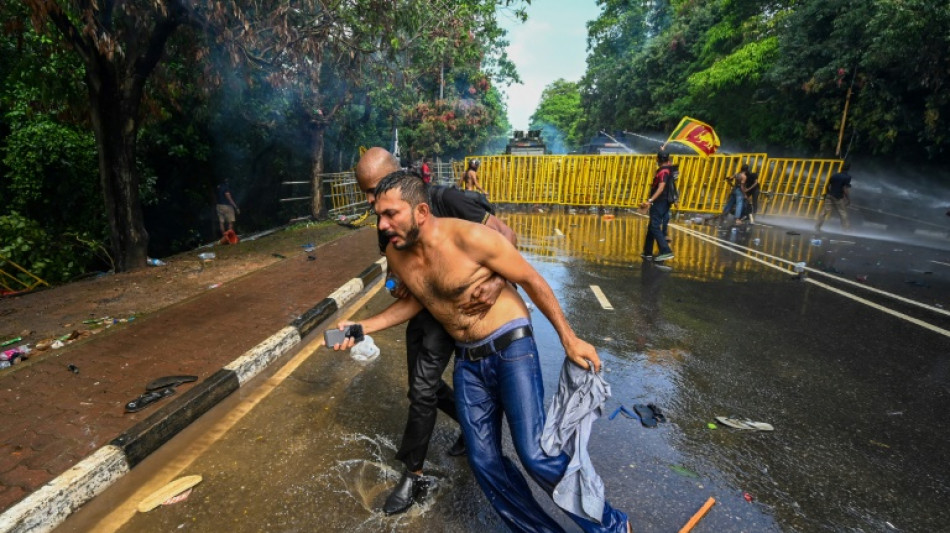
Crisis-hit Sri Lanka declares emergency after crippling strike / Photo: © AFP

 Asian Games set to close after records, rancour and rain

 Cry for help as French-Swiss lake dries up

 Sabalenka swept out of China Open in third round

 US urges 'restraint' as Ethiopia's Tigray crisis rocks region

 Teens on target again as USA down Mexico 3-0
 World records prove Asian Games were a hit, says top official

 US prison chief who oversaw botched execution resigns
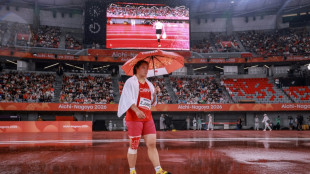 'Chaotic' Asian Games threaten Japan hopes of hosting Olympics again

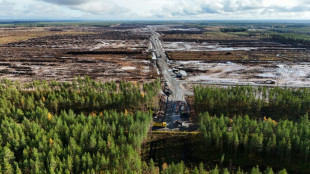 Finnish town braces for change from Google data centres
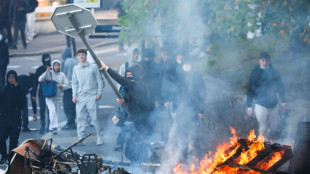 What is fuelling French school protests?

 Without lawyers, migrant children face deportation from the US
 Three-peat seeking Dodgers open playoffs with a win, Rays hold off Yankees
 Brazil votes in nail-biter polls closely watched by Trump
 'Just be you': Kim reveals Tiger text that inspired him to gold

 Myanmar migrants returned to war-torn nation from Malaysia

 ALEX BODI AND AMBASSADOR GUM DOMINIC MATIOK OF THE REPUBLIC OF SOUTH SUDAN MEET IN BERLIN TO DISCUSS THE POSSIBILITY OF AN HONORARY CONSULATE IN BUCHAREST

 Lula, Bolsonaro wrap up campaigns ahead of Brazil's knife-edge vote

 Toulouse edge Castres in Top 14 derby

 Murakami homer propels White Sox to MLB playoff win over Guardians

 Israel targets top Hamas leader in deadly Gaza strike on anniversary
 Houthis say struck oil facility near Riyadh, as Saudis hit Sanaa

 AI needs safety layers like nuclear plants: ex-OpenAI engineer

 MVP Judge will miss Yankees' MLB playoff series against Rays

 New lizard species discovered in Peru

 Fernandes hails Portugal's 'greatest symbol' Ronaldo, calls for unity
Sri Lanka's president Friday declared a state of emergency for the second time in five weeks, giving security forces sweeping powers amid a nationwide strike by angry demonstrators who blame him for an unprecedented economic crisis.
A spokesman for President Gotabaya Rajapaksa said he invoked the tough laws to "ensure public order" after shops closed and public transport was halted Friday, bringing the South Asian island nation of 22 million people to a standstill after weeks of unrest.
Earlier Friday, police used tear gas and water cannon to disperse students attempting to storm the national parliament demanding Rajapaksa resign.
The emergency gives sweeping powers to security forces to arrest and detain suspects for long periods without judicial supervision.
It also allows the deployment of troops to maintain law and order in addition to police.
The spokesman said the laws will go into effect from midnight Friday.
Beleaguered Rajapaksa had declared an earlier state of emergency on April 1, a day after thousands of protesters attempted to storm his private home in the capital. That emergency was allowed to lapse on April 14.
But protests have escalated since then, fuelling Sri Lanka's worst crisis since independence in 1948.
The new emergency declaration came as thousands of demonstrators remained outside Rajapaksa's sea-front office, where they have been protesting since April 9, and smaller groups also tried to storm homes of other key government politicians.
- Storming parliament -
The students' attempt to storm the tightly-guarded legislature on Friday was their second in as many days.
They and other demonstrators blame Rajapaksa and his ruling family for mismanaging the economy. Months of blackouts and acute shortages of food, fuel and pharmaceuticals have caused widespread suffering across the island.
Millions of workers stayed off work on Friday in the strike, organised by the country's trade union movement. Train and state-owned bus services were disrupted.
Industrial workers demonstrated outside their factories and black flags were hung across the country in an expression of anger against the government.
"We can pinpoint the policy blunders of the president that led to this very sorry state of our economy," said trade union leader Ravi Kumudesh. "He must go."
Private buses, which account for two-thirds of the country's fleet, were also off the road, Private Bus Operators Association chairman Gemunu Wijeratne said.
"We are not providing services today, but if groups of people want to join the anti-government protests within a radius of 20 kilometres, we will give our buses free of charge," Wijeratne told reporters in Colombo.
Rajapaksa has insisted he will not step down despite the escalating demonstrations, including the protest outside his office which has forced him to work from home.
Official sources said the president could pressure his elder brother, Prime Minister Mahinda Rajapaksa, to step down and allow the formation of a unity government to guide the country out of the economic crisis.
The main opposition SJB party has insisted that it will not take up any role in a national administration unless the president also steps down accepting responsibility for mismanagement and corruption.
Sri Lanka's economic crisis took hold after the coronavirus pandemic hammered income from tourism and remittances.
Unable to pay for fuel imports, utilities have imposed daily blackouts to ration electricity, while long lines of people snake around service stations for petrol and kerosene.
Hospitals are short of vital medicines and the government has appealed to citizens abroad for donations.
Last month Sri Lanka announced it was defaulting on its $51 billion foreign debt, and finance minister Ali Sabry warned this week that the country will have to endure its unprecedented economic hardships for at least two more years.
E.Schubert--BTB