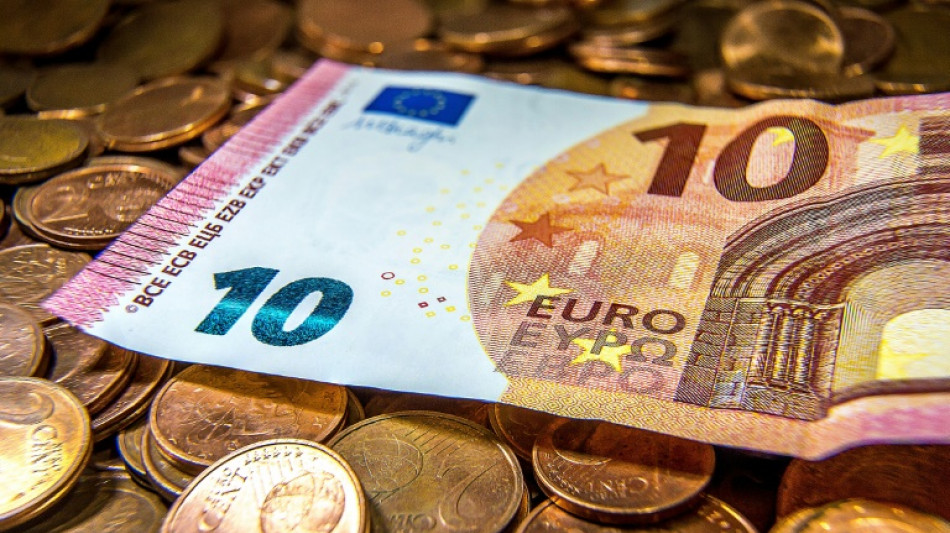
ECB signals rate hike as soon as July to combat inflation / Photo: © AFP/File

 South Korea captain 'deeply sorry' for gloating about military exemption
 Alcaraz through to Japan Open semis after Shapovalov injury
 Chanel: unpicking one year of 'Blazymania'

 Latvian pro-Europeans set for election win: partial results

 China swim sensation Yu Zidi, 13, says 'I'm no prodigy'

 Yu Zidi to Ohashi: Asian Games stars who can light up LA Olympics

 'Act before it's too late': Tokyo residents fight for more trees
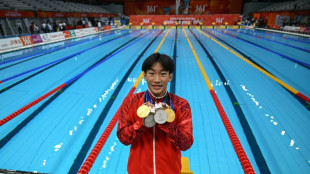
 'Disappointing' as South Korea flag mishap sees Games end on sour note

 Pre-COP host Tuvalu at frontline of climate change

 Hungary's dwindling paprika producers battle to save signature spice

 Cornell president vows review in wake of alleged student gang rape

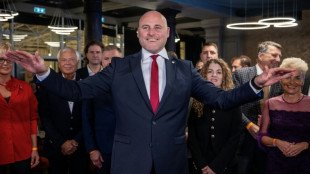 Latvian partial election results suggest pro-European choice

 In Egypt's Sinai, Gazan builds school for children displaced by war

 Trump tariffs a mixed bag for US auto industry

 Yemen government forces say struck Houthi targets

 Music links past, present for Pedro Pascal's cellist in 'Behemoth!'

 ALEX BODI ȘI AMBASADORUL REPUBLICII SUDANUL DE SUD, GUM DOMINIC MATIOK, DISCUTĂ LA BERLIN DESPRE POSIBILITATEA ÎNFIINȚĂRII UNUI CONSULAT ONORIFIC LA BUCUREȘTI

 Dodgers step up World Series three-peat bid with 5-3 win over Braves

 Spain break down Czechs as England outclass Croatia in Nations League

 Yamal on target as Spain hold off Czech Republic
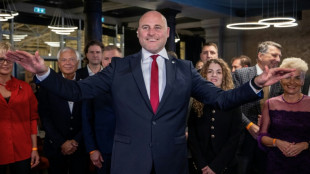 Latvian exit polls suggest pro-European choice

 Lula, Bolsonaro wrap up campaigns ahead of knife-edge election

 Tuchel hails 'complete' England after Croatia demolition

 Fury to invite Trump to lead ring walk before Joshua showdown

 Fashion industry in 'precarious moment', says Vivienne Westwood supremo

European Central Bank chief Christine Lagarde hinted Wednesday at a first interest rate hike in July to tackle soaring inflation, echoing the actions of other major central banks and heralding the end of the eurozone's cheap money era.
The ECB should end its bond-buying stimulus "early in the third quarter" and could raise interest rates "only a few weeks" later, Lagarde said in a speech in the Slovenian capital Ljubljana.
The comment is the clearest sign yet from Lagarde that the ECB is ready to move on rates sooner rather later, as the institution trails rate hikes made by the US Federal Reserve and others to tame global inflation.
Any hike would be the ECB's first in over a decade and would lift rates from their current historically low levels.
These include a minus 0.5 deposit rate which effectively charges banks to park their excess cash at the ECB overnight.
Inflation in the eurozone climbed to 7.5 percent in April, an all-time high for the currency club and well above the ECB's own two-percent target.
The surge, driven in no small part by steep increases in prices for energy due to the Russian invasion of Ukraine, has strengthened calls for the ECB to follow its peers towards hikes.
ECB policymakers will decide their course of action in upcoming June 9 and July 21 meetings, with the July date now seen as the most likely opportunity for a rate announcement.
- Rate rise -
At its last meeting in April, the ECB's governing council resolved to end its vast monthly bond purchases "in the third quarter".
Over recent years, the scheme has hoovered up billions of euros in government and corporate bonds each month to stoke economic growth and keep credit flowing in the 19-nation currency club.
The ECB should draw a line under it "early" in the third quarter, which starts in July, Lagarde specified on Wednesday.
Ending net purchases under the programme would open the door to an interest rate rise that could follow "only a few weeks" after, she said.
After the initial move the process of monetary policy "normalisation", taking interest rates out of negative territory, would be "gradual".
- July pressure -
"To sum up Lagarde's speech: first rate hike on July 21," Carsten Brzeski, head of macro at ING bank, said on Twitter.
Decisions by the Fed and the Bank of England to raise rates aggressively to counter inflation have added to the pressure on the ECB to act.
German central bank president Joachim Nagel said Tuesday he "will advocate a first step normalising ECB interest rates in July".
The call made by the head of the traditionally conservative Bundesbank has been echoed by other members of the governing council.
On Wednesday, the head of the French central bank Francois Villeroy de Galhau also said the ECB would "progressively raise rates from the summer" to steer inflation towards the ECB's two-percent target.
The central bank is set to ratchet up interest rates at a delicate moment for the economy.
The war in Ukraine has both pushed up prices and added to supply chain disruptions, putting further strain on households and businesses.
In response to the invasion, the European Union has sought to reduce its reliance on Russian energy imports and is in discussions over an embargo of Russian oil that would add to the economic stress.
The ECB would raise its rates in July "followed by a return to zero in September" Gilles Moec, chief economist at Axa insurance, told AFP.
But "between the war in Ukraine, a complicated coronavirus situation in China", which has seen a series of lockdowns and spillovers from rate hikes in the United States, the ECB will not be able to "pursue normalisation easily", Moec said.
O.Krause--BTB